


How to Cook Pearl Onions
Sep 07, 2026
Leave a message
The direct answer
Choose the method by the dish and the starting product. A brief peeling blanch for fresh pearl onions is separate from final cooking. Follow frozen-pack directions, allow for released water and check the largest bulbs for tenderness while preserving the layers and base.
Keep these distinctions in mind
Choose roasting, glazing or simmering by the dish
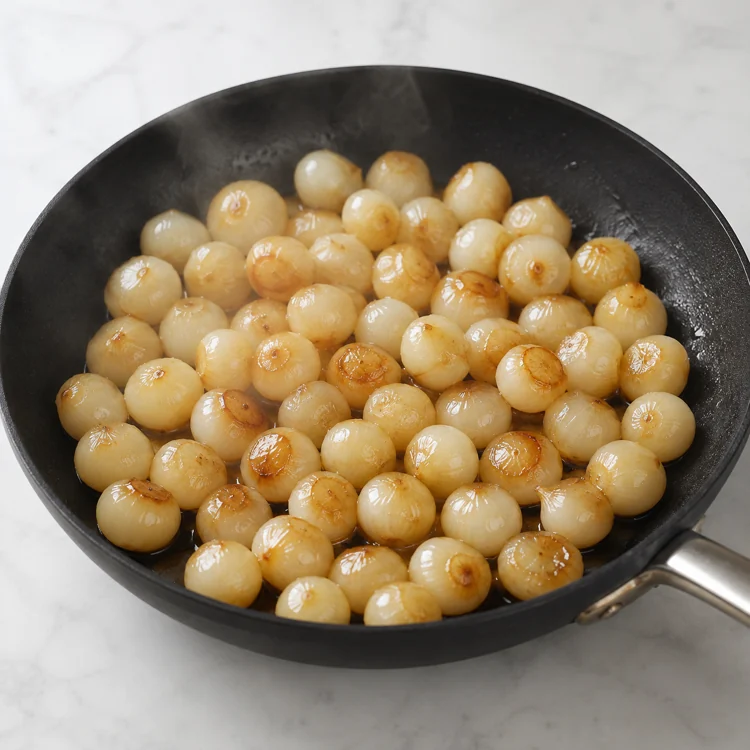
Cook pearl onions by roasting for browned surfaces, glazing in a pan for a shiny coating, or simmering for a tender addition to stews and cream sauces. Fresh pearl onions usually need peeling first; frozen peeled pearl onions remove that preparation step but may release more water as they heat. Keep the bulbs whole, allow enough time for the center to soften and judge the result by size and texture rather than one fixed cooking time.
For preparation details, see How to Cook Frozen Peppers and Onions Without Excess Water.
The main choice is the role of the onion. A roasted garnish needs visible color and intact bulbs. A glazed side dish needs a tender center with a coating that clings. An onion in a long braise must survive the cooking and serving sequence without disappearing into loose layers. Each result asks for a slightly different process.
Pearl onions are small whole onions, but the term should not be used loosely for every small-looking bulb. Commercial size ranges matter. A batch with a broad diameter spread can leave small onions collapsing while larger ones remain firm inside. For purchasing, the diameter specification is often more useful than the word pearl on its own.
We begin an application review with the desired finished dish, the bulb size and the supplied form. That allows a kitchen to compare preparation labor, cooked yield and whole-bulb retention before choosing a pack or approving an order.
Fresh, frozen peeled and pickled onions are different starting points
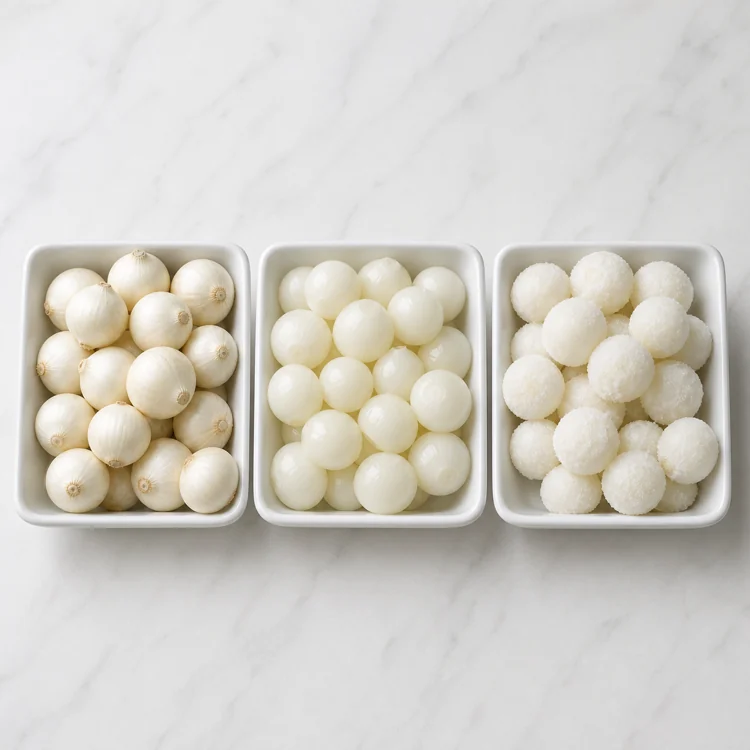
Fresh pearl onions generally arrive with dry outer skins and require sorting, washing as appropriate and peeling. The preparation takes time, especially when many small bulbs are needed. Trimming too deeply can also reduce yield and loosen the layers that should remain together during cooking.
Frozen peeled pearl onions are prepared for a different workflow. They can reduce peeling labor and simplify portioning, but the pack instructions determine whether to cook from frozen or use another handling route. Their moisture behavior should be tested in the recipe instead of assumed to match freshly peeled bulbs exactly.
Pickled cocktail onions are already acidified and flavored by their packing medium. They are not a neutral replacement for fresh or frozen pearl onions in a cream sauce or mild braise. Rinsing may reduce some surface flavor, but it does not turn the product back into an untreated onion.
| Starting product | Main advantage | Adjustment needed |
|---|---|---|
| Fresh unpeeled pearl onions | Flexible preparation and fresh-bulb choice | Peeling labor, trimming loss and size sorting |
| Frozen peeled pearl onions | Reduced preparation and convenient storage | Follow pack directions and account for released moisture |
| Chilled peeled onions | Immediate access to peeled bulbs | Product-specific chilled shelf life and hygiene controls |
| Pickled onions | Ready-made acidic flavor for suitable dishes | Treat acidity and seasoning as part of the recipe |
Compare the forms on usable output. A kilogram of unpeeled bulbs includes discarded skin and trimmings, while a kilogram of peeled frozen onions enters the cooking stage more directly. The final difference depends on the lot, the recipe and the amount of acceptable whole onion served.
Peel fresh pearl onions without losing the bulb
Begin with sound onions and clean equipment. Wash produce under running water where appropriate before preparation; the FDA advises against washing produce with soap. Remove damaged or decayed bulbs rather than hiding them in a strongly flavored sauce.
A brief blanch is a common way to loosen the skins of fresh pearl onions. Trim carefully, place the onions briefly in hot water according to the peeling method, then cool enough to handle and slip off the loosened skin. The purpose here is peeling. It is not the complete cooking step for the finished dish.
Keep the root end trimmed neatly without cutting away so much that the bulb loses its structure. Work with a small trial first. Different sizes and varieties can peel differently, and overly aggressive trimming may create more waste than the blanching step saves.
- Sort the bulbs for soundness and reasonably consistent size.
- Trim only what is needed to remove the ends and damaged outer material.
- Use a brief peeling blanch if it helps the selected onions.
- Cool safely for handling and remove the skins.
- Keep the peeled onions protected and appropriately chilled until cooking.
For a restaurant trial, weigh the onions before and after preparation and record the labor time. This makes the comparison with frozen peeled supply concrete. Do not judge the fresh option from its purchase price alone, or the frozen option from a promise of convenience without checking its cooked performance.
Roast for a browned surface and tender middle
Roasting works when the onion surface can lose moisture and make contact with a hot tray or moving oven air. After the required preparation, coat the bulbs evenly with the recipe's oil and spread them in a layer with space between them. A deep pile encourages steaming and gives less even color.
Use the recipe and equipment settings as a starting point, then check both browning and tenderness. Pearl onions can vary enough in diameter that a time suitable for the smaller end of a batch leaves larger centers too firm. Test a representative large bulb rather than only the first browned one near the tray edge.
Turn or shake the tray carefully where needed for even exposure. Vigorous tossing can break softened bulbs. If the onions brown before their centers are ready, review the size range, oven setting and the balance between covered and uncovered cooking in the recipe. More intense heat is not always the answer.
Frozen onions may release enough moisture to delay browning. Follow their instructions and use a suitable tray load. Allowing space and planning for that moisture can be more effective than extending the roast indefinitely. A product intended for a sauce may need a separate test before being approved as a browned garnish.
Assess the onions after the intended service delay. Roasted surfaces can soften under a cover or inside a takeaway pack. If the dish must retain a roasted character after holding, include that stage in the trial and choose the portioning and packaging around the result.

Glaze in a pan without burning the coating
Glazing combines tender cooking with a concentrated coating. The onions need enough moisture and time to cook through, followed by controlled reduction so the glaze clings. A common failure is to focus on the shiny surface while the center remains too firm or the sugar in the pan begins to burn.
Use a pan large enough to move the bulbs gently. Add the recipe's liquid and seasoning in measured amounts. As the liquid reduces, watch the consistency and the bottom of the pan. The final stage can change quickly, particularly with sweet ingredients or a small quantity of liquid.
Turn the onions gently to coat them instead of stirring aggressively. Whole-bulb presentation is part of the dish, so the handling method should preserve it. If loose layers begin to accumulate, investigate trimming, cooking intensity and the original bulb condition rather than adding more glaze to hide the damage.
For frozen peeled onions, account for the water they contribute. Adding the full liquid quantity from a fresh-onion recipe may produce an unnecessarily long reduction. That extra time can soften the onions beyond the target. Test a measured adjustment, while still following the product's required preparation route.
Taste after the glaze reaches its final concentration. Salt and sweetness increase as water evaporates, so seasoning a thin starting liquid to the desired final intensity can overshoot. In commercial production, record the final batch yield and coating condition alongside the ingredient weights so the next run can be compared meaningfully.
Simmer for creamed onions, stews and braises
Simmering suits dishes where the onions should become tender in a surrounding liquid. A gentle simmer helps preserve their shape better than violent boiling. The desired cooking time depends on bulb diameter, starting condition and the recipe, so check the center of a representative piece.
For creamed onions, consider whether the bulbs should be cooked in the sauce or prepared separately before being combined. A thick sauce can scorch while the onions are still firm. Separate preparation can offer more control, but it adds handling and should fit the kitchen's food-safety procedure.
For stews and braises, decide when the onions enter the pot. Adding small bulbs at the very beginning of a long cook may cause them to break down before the main ingredient is ready. Adding them later can preserve their identity, provided the complete dish still receives its required cooking treatment.
Acidity and sauce composition can affect the cooking experience and final flavor. A wine-based braise, a sweet glaze and a cream sauce are not interchangeable test liquids. Approve the onions in the intended formulation rather than assuming a plain-water test settles every application.
In a prepared meal, include cooling, storage and reheating. Pearl onions that remain intact after the first cook can split or soften further during the next stage. The useful quality target is the bulb served to the diner, supported by an appropriate process through all earlier stages.

Cook frozen peeled pearl onions according to the pack
Read the product instructions before deciding to thaw. Some frozen peeled onions are intended to enter cooking directly from frozen. Others may have a specified preparation route. An unnecessary counter thaw creates handling problems and does not reliably improve the finished dish.
Remove the portion needed and return the remaining stock to frozen storage promptly. Do not warm an entire bag repeatedly to separate a few bulbs. If portioning is difficult under normal conditions, review the pack size, product characteristics and storage history.
The cold load changes the pan or sauce temperature. A small amount added to a large simmering batch behaves differently from a large bag added to a shallow pan. Test the normal production quantity and allow the equipment to recover under the approved procedure.
Our whole frozen onion page distinguishes pearl-size onions from larger whole-onion grades. A buyer should still confirm the exact diameter range, lot specification and preparation instructions for the proposed order. "Whole frozen onion" by itself does not guarantee the size needed for a pearl-onion dish.
We review whole-bulb retention, peeled condition and cooked texture against the application. For a roast, surface moisture and browning are central. For a braise, the ability to remain intact after longer heating may matter more. Those differences should guide the sample test and the final acceptance criteria.
Solve burst bulbs, watery sauce and pale roasting
When a pearl-onion dish disappoints, identify the defect before changing the cooking time. A watery sauce and a firm center may occur together, but they do not necessarily have the same cause. The size range, frozen load, trimming and heat profile all deserve attention.
| Problem | What to check | Practical adjustment to test |
|---|---|---|
| Bulbs split or lose layers | Deep trimming, rough handling or excess total cooking | Preserve the base and move the onions gently |
| Sauce is too thin | Frozen moisture contribution and starting liquid | Measure released liquid and revise the formula |
| Roasted onions remain pale | Crowding, surface water and oven performance | Reduce tray load and improve spacing |
| Centers remain firm | Diameter spread and actual heat exposure | Tighten size grading and test the largest bulbs |
| Glaze burns before cooking is complete | Early sugar concentration and excessive heat | Separate tender cooking from final reduction |
Do not use sauce thickness alone as the signal to stop. A glaze may be ready before the onion center is tender. Likewise, a fully tender onion may be sitting in excess liquid that needs a separate reduction. Managing those endpoints independently can preserve both the bulb and the coating.
For commercial comparisons, use the same equipment and recipe for each sample, then adjust deliberately if a format change requires it. Record the adjustment. A frozen product should not be penalized for a predictable moisture contribution that the final recipe can accommodate, but that contribution should not be ignored in the cost or texture assessment either.
Plan portions and a restaurant service test
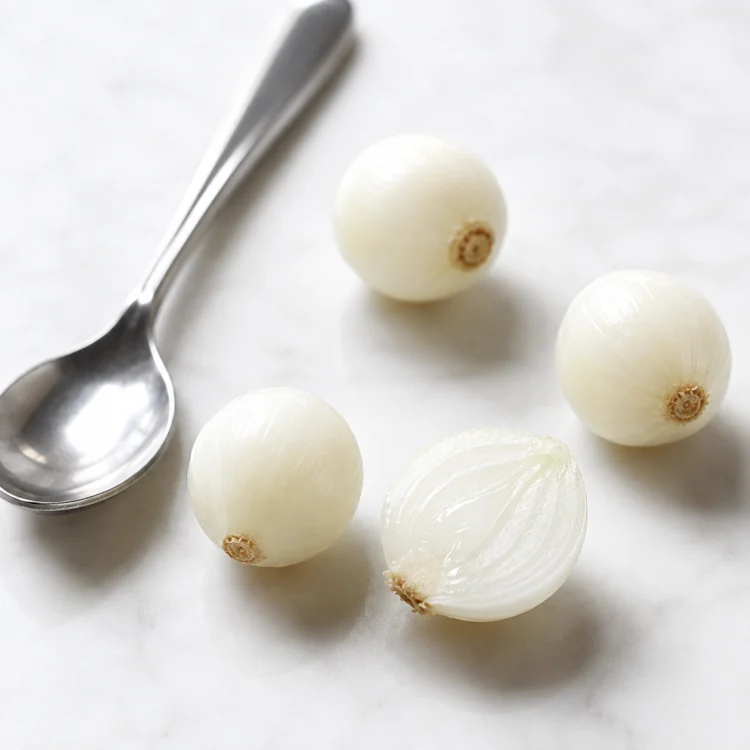
Pearl onions are often counted as well as weighed because whole-bulb presentation matters. A portion of several small onions looks different from the same weight in one or two larger bulbs. Decide whether the dish is controlled primarily by weight, count or both.
Measure the actual cooked yield. For fresh supply, include peeling and trimming loss. For frozen supply, include any drained liquid and rejected or broken bulbs. The acceptable output is the amount that meets the dish's presentation and texture standard, not simply everything left in the pan.
Run the service test under realistic conditions. Cook the usual batch, hold it under the approved procedure and plate portions at the normal service intervals. Note whether bulbs continue to soften, the glaze thickens or the sauce becomes diluted. These changes may matter more than the first tasting.
For takeaway or chilled meals, test the final container. Condensation, sauce absorption and reheating can change the appearance. A pearl onion that looks attractive on an open plate may behave differently inside a sealed meal tray. The packaging test belongs in the approval process when that is how the food will be sold.
Keep the score sheet focused: whole-bulb retention, tenderness, size consistency, coating or sauce behavior and usable cost. Add operator comments about portioning and labor. That gives the buyer a defensible basis to select the product rather than relying on a general impression that one sample is more convenient.
Specify diameter and whole-bulb quality before ordering
A pearl-onion specification should state the diameter range and how it is measured. A nominal size without tolerance leaves room for a broad mix that cooks unevenly. Where count per unit weight is useful, agree its role alongside diameter rather than treating the two measures as automatically interchangeable.
Describe peeled condition, trimming, whole-bulb retention and allowed defects. Residual skin, deep cuts, split bulbs and loose layers have different consequences in a visible garnish and in a long-cooked sauce. Set acceptance criteria that reflect the actual use while maintaining the required food-safety standard.
Confirm the onion type and ingredients. Color, flavor and any added components should match the intended dish and labeling. A pickled or seasoned product should never enter a neutral frozen-onion specification by assumption. Photos are helpful, but the written description controls what is supplied.
We can review a frozen onion requirement with the buyer's target grade, packing and cooking route. Minimum order quantity and lead time depend on the exact format and program. Private-label packs, custom grading or additional document requirements should be raised before the order schedule is agreed.
For samples, request enough material to test the normal recipe and a representative range of bulbs. A few hand-selected onions may demonstrate appearance without showing the size spread or breakage rate of commercial supply. Keep the approved sample findings connected to the final written specification.

Compare preparation yield, packing and supply documents
Calculate cost at the point of use. Fresh onions may have a lower purchase price but require peeling labor and generate trimming waste. Frozen peeled onions may reduce those tasks while changing the moisture balance in the recipe. The better option depends on acceptable cooked output, labor and service consistency.
Packing should fit the quantity used per run. A restaurant preparing small portions may benefit from manageable inner packs, while a manufacturer may prefer larger units. Confirm net weight, carton dimensions and pallet arrangement so the planned order fits the freezer and handling equipment.
At receipt, inspect package integrity, lot identification and the agreed cold-chain evidence. Store frozen onions under the labeled conditions, commonly at or below -18°C. Investigate unusual clumping or damaged seals with the transport and storage history rather than drawing a conclusion from appearance alone.
Request the product specification, ingredient information, relevant quality reports and the documents needed for the destination. Where certification is part of supplier approval, check the facility, product scope and validity. A generic certificate title does not establish that every proposed product or process is covered.
Send the required diameter, whole-bulb standard, application, packing, quantity and destination with the inquiry. Add private-label needs and the planned cooking and reheating sequence. That information lets us assess a concrete supply requirement and helps the kitchen receive pearl onions that work in the dish it intends to serve.
Source frozen onion with GreenLand-food
GreenLand-food is a professional frozen onion supplier and manufacturer in China, providing factory-direct wholesale supply for importers, food manufacturers, foodservice distributors and private-label programs.
Specify the required small whole-onion diameter range, peeled condition and the roasting, glazing or braising application.
Send your product form, specification, packing, quantity, application and destination, together with private-label needs and requested documents. We will review the requirement and confirm the available sample, packing and commercial options for your order.