


How to Cook Yard-Long Beans
Sep 07, 2026
Leave a message
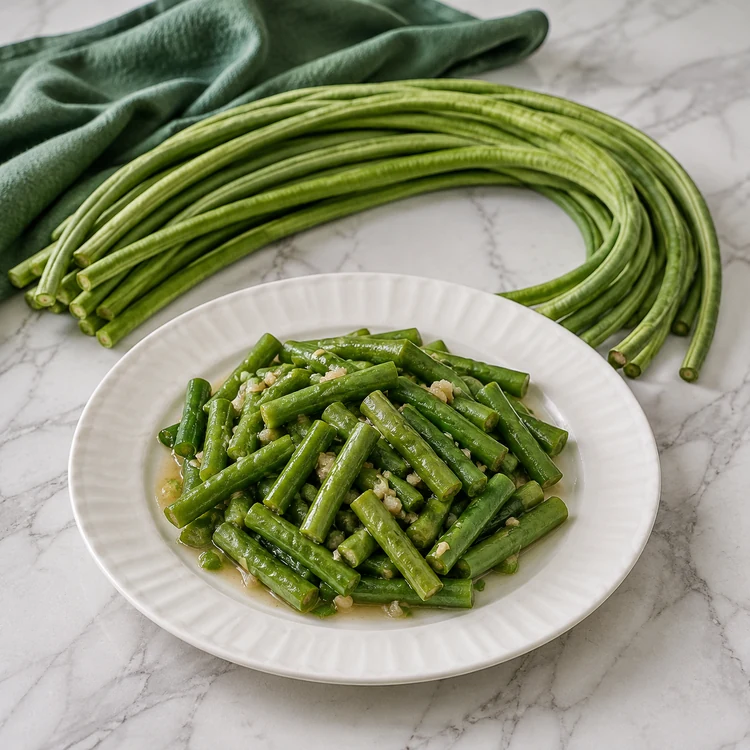
Tender pods, even cuts and a complete cook
Do not use surface blistering or bright green color as the only sign that the beans are done. Frozen cut long beans can simplify preparation, but their supplied cooking instructions and performance in the finished dish should determine the method. For a repeat menu, evaluate the beans after the full cooking and holding cycle. A frozen sample, a freshly cooked pan and a reheated meal reveal different characteristics; approve the product in the state the customer will actually eat.
Choose tender pods and consistent cut lengths; overmature walls and developed seeds can remain unsuitable despite extra seasoning.
Use effective cooking throughout the batch, with controlled moisture when needed; surface blistering is not the sole endpoint.
Compare fresh and frozen forms through the actual portioning, holding and reheating process before choosing a repeat supply format.
Know the long bean you are cooking
Yard-long beans are the long, slender edible pods often called asparagus beans or snake beans. They are associated with Vigna unguiculata subsp. sesquipedalis, rather than being an unusually long version of every ordinary green bean. Garden Organic's growing guide provides the crop identity and highlights the importance of harvesting suitable young pods.
The name does not mean every pod should measure a yard. Tenderness and maturity matter more than achieving the longest possible pod. A shorter tender pod may cook better than a very long one with strongly developed seeds and fibrous walls. Judge the ingredient for the dish rather than treating length as a universal grade of quality.
For purchasing, name the product and form clearly: whole long pods or cut long beans, fresh or frozen, with an agreed length and diameter range where relevant. Do not confuse them with bean sprouts or with dried cowpeas. Those ingredients need different preparation and acceptance checks, even though their names may share the word bean.
For a closer explanation, see What Are Long Beans?.
Choose tender pods and discard damaged sections
Look for pods that are sound, reasonably even in diameter and suitable for the intended cooked texture. Strongly swollen seeds and coarse walls can indicate a more mature pod that will not perform like a tender vegetable. Inspect for deterioration, slime, mold and damaged material. Do not buy a poor-condition lot on the assumption that a strong sauce will conceal its texture.
For a small kitchen batch, sort the pods before washing and cutting so unsuitable material does not move through the whole process. Minor trimming and rejection should follow the fruit and vegetable handling practices appropriate to the operation. A visibly spoiled product is not rescued by removing a tiny spot and mixing the rest into a large batch.
For commercial supply, agree a maturity and physical-quality reference. Photographs can show diameter and seed bulging, but the final cooked trial is still necessary. A pod may look attractive in a frozen state and remain fibrous after preparation. Record both the raw appearance and the result in the dish so purchasing and production share the same definition of acceptable tenderness.

Prepare equal lengths before heating
Wash fresh pods under running water using clean equipment, then trim the stem ends and any unsuitable tips. Align a manageable bundle on the board and cut it into lengths suited to the dish. Keep the pieces reasonably similar so the batch heats and portions more consistently. Avoid an unstable stack that makes the cutting action awkward.
As a kitchen trial, pieces around 3–5 cm can be convenient for a stir-fry or braise, while a smaller cut may suit a mixed filling. This is a suggested preparation range, not a universal product specification. The best length depends on how the food will be eaten, mixed and portioned. Test the actual spoon, tray or serving format if appearance matters.
Drain surface water after washing, but keep the planned cooking moisture separate. A dripping load adds an uncontrolled amount of water to the pan; a measured addition supports a repeatable method. Prepare aromatics and sauce before heating so the beans can proceed through a deliberate sequence without waiting half-cooked while another ingredient is found.
Cook yard-long beans through in a skillet
A practical skillet approach uses both contact heat and a moist cooking stage. The aim is a thoroughly cooked pod with a texture suited to the dish. Follow any product-specific directions, especially for frozen material. A short dry toss that colors the surface is not a general guarantee of adequate cooking.
- Heat a suitable pan. Use a broad skillet or wok that can hold the planned quantity without a dense pile. Add a modest amount of cooking oil appropriate to the recipe.
- Add the prepared beans. Turn them through the heated pan to distribute the oil and begin cooking evenly. Work in smaller batches if the load cannot be moved effectively.
- Introduce controlled moisture. Add a measured small amount of water or suitable cooking liquid and cover for a thorough moist cooking stage. Maintain effective cooking heat; do not leave the beans merely warming at a low temperature.
- Turn and check the batch. Stir or turn as needed so all pieces cook. Continue until the pods are cooked through and suitably tender, including the thicker pieces. Follow the product's required process rather than a color-only test.
- Finish the flavor. Add garlic, sauce or other aromatics at a stage that prevents burning and allows the combined dish to heat properly.
- Reduce excess liquid and serve. Uncover and finish to the desired sauce consistency without drying the pan into a burnt glaze. Serve promptly or move into the appropriate controlled holding process.
Hong Kong's Centre for Food Safety includes yard-long beans in its advice on proper bean cooking. It emphasizes adequate cooking and the value of moist heat. That is why tenderness and thorough cooking take priority here over a dramatic blistered surface or a promise of the shortest possible cook.
For a manageable flavor trial, start with about 250 g of tender fresh pods cut to a consistent length, roughly one tablespoon of neutral oil, a small garlic clove and a measured sauce portion. Keep a small measured quantity of water ready for the moist cooking stage, adding more as needed to maintain effective cooking without letting the pan dry out. These are recipe-development quantities, not a time-and-temperature validation.
Choose the pan so the beans can be turned freely. Follow the full cooking sequence and continue the moist stage until the beans are thoroughly cooked, checking the thickest pieces rather than only the thinnest. If the outside colors rapidly while the pods remain inadequately cooked, lower the dry-heat intensity and maintain the necessary moist cooking. Do not solve the problem by serving early.
After the required cook, adjust the sauce consistency with a short uncovered finish. Record how much liquid was added and how the dish looked at service. If a second trial is needed, change one main variable such as cut uniformity or batch size. This gives the kitchen a repeatable method while preserving the complete cooking requirement.
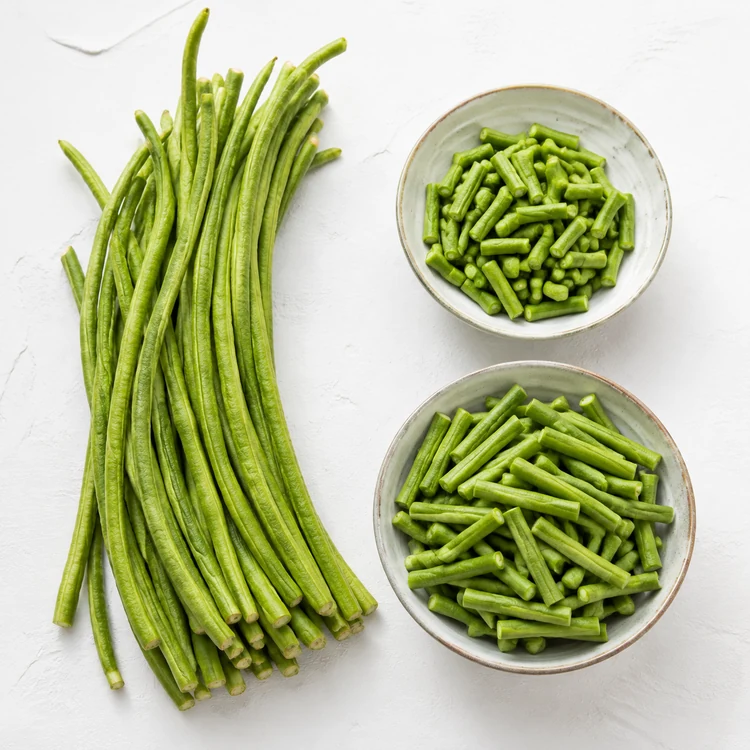
Braising and steaming for larger batches
Braising can be useful when a kitchen needs a more evenly cooked, sauced long-bean dish. Use a vessel and liquid quantity suited to the load and maintain effective heat through the batch. Turn the product as required and check the thicker pieces. A large covered container does not guarantee uniform cooking if the load is too deep or the heat distribution is poor.
Steaming can also be evaluated with suitable equipment and a process that cooks the beans thoroughly. Avoid tightly packed trays that prevent consistent heating. The time required depends on the product, cut, load and equipment, so a small household demonstration should not become the production standard for a full catering tray.
For foodservice, record the loading arrangement and process used during the approved trial. If the tray depth, batch weight or equipment changes, review the cooking performance. A recipe that succeeds in one shallow tray may fail when doubled into a deep vessel. Select the method for the amount of food that must be cooked and the texture needed at service, rather than choosing only from the name of the dish.
Flavor the beans without burning the aromatics
Garlic, ginger and other aromatics can burn before the beans finish cooking if they are exposed to strong dry heat for too long. Prepare them in advance and choose an addition point that suits the method. One option is to add delicate aromatics later in the cook, when the beans are closer to done and the remaining time is easier to control.
Measure sauce rather than pouring freely until the pan looks wet. Soy-based, sweet or fermented sauces bring different salt, sugar and flavor levels, and sweet sauces can scorch as liquid evaporates. Review their ingredients when the dish has dietary or declaration requirements. A change in sauce is a formulation change, not merely a different cooking color.
Taste only after the beans and any other ingredients have received their required cooking. Adjust the finishing seasoning in a measured way and record the approved recipe for repeat service. If the dish needs a lot of sauce to make coarse pods pleasant, review the raw-material maturity as well. Seasoning can support good long beans, but it cannot reliably turn fibrous overmature pods into a tender ingredient.
Why long beans stay tough or turn watery
Persistent toughness can come from mature pods, uneven pieces or insufficient cooking. Wateriness can result from an overloaded pan, excess surface water, too much cooking liquid or an unsuitable holding method. Identify the cause before changing every part of the recipe at once.
| Result | What to investigate | Useful adjustment |
|---|---|---|
| Fibrous walls despite continued cooking | Pod maturity and raw-material grade | Trial younger, more suitable pods |
| Thick pieces tough while thin ones soften | Diameter variation and uneven heating | Sort or specify a narrower range and review the load |
| Large pool of liquid | Input water, sauce, frozen release and pan capacity | Measure additions and use an appropriate batch size |
| Burnt surface with an undercooked center | Excessive dry heat without an adequate cooking stage | Use a thorough moist stage and controlled finish |
| Acceptable at cooking, soft at service | Holding duration and reheating | Test the full service cycle and adjust scheduling |
Do not solve a watery result by stopping the cooking before the beans are done. Reduce avoidable water or change the equipment and load instead. Keep the food-safety requirement fixed while improving the quality process. For a supplier discussion, send the method and observed result so the issue can be assessed against the actual product specification.
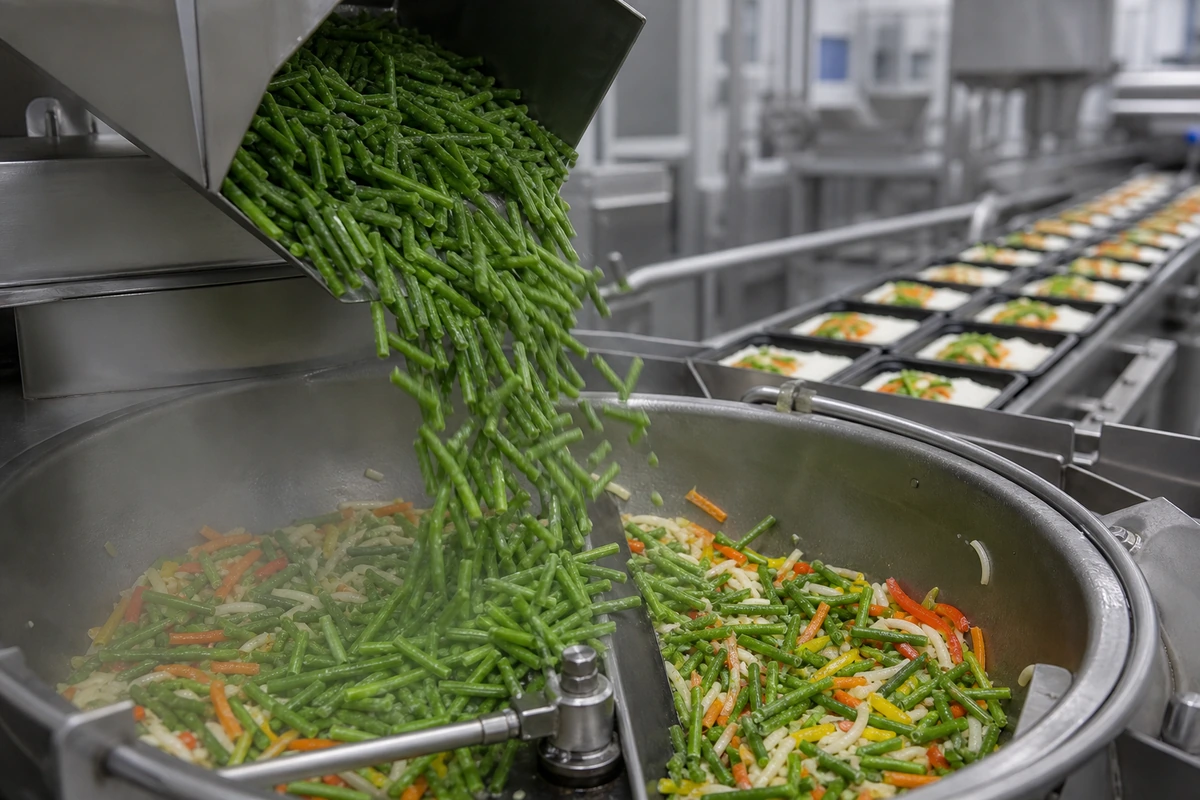
Fresh pods versus frozen cut long beans
Fresh pods give the kitchen control over trimming and cut length, but they require sorting, washing and cutting before cooking. Frozen cut long beans arrive further along that preparation sequence. They can simplify dosing and reduce daily preparation work when the supplied cut and cooked texture fit the menu.
| Decision point | Fresh whole pods | Frozen cut long beans |
|---|---|---|
| Preparation | Sort, wash, trim and cut | Follow the supplied handling instructions |
| Size control | Set at the cutting station | Confirm in the purchase specification |
| Storage | Manage the fresh holding period | Maintain the required frozen chain |
| Cooking trial | Test maturity and cut consistency | Test from the instructed starting condition |
| Yield | Measure trim and rejection | Measure acceptable output after the actual process |
We supply frozen long beans and review the form against the intended cooked application. Confirm whether the product is to be cooked from frozen and what further processing is required. A blanching step, where specified, should not be assumed to make the ingredient ready to eat. Keep the supplier's instructions with the kitchen's approved recipe.
Match cut length to the serving format
The cut should make the dish easier to eat and portion. Longer pieces can look appealing in a vegetable side, while shorter cuts distribute more evenly in mixed meals and fillings. Very long pieces may tangle during mixing or extend beyond a small tray compartment. Very short pieces may lose the visual identity the menu expects.
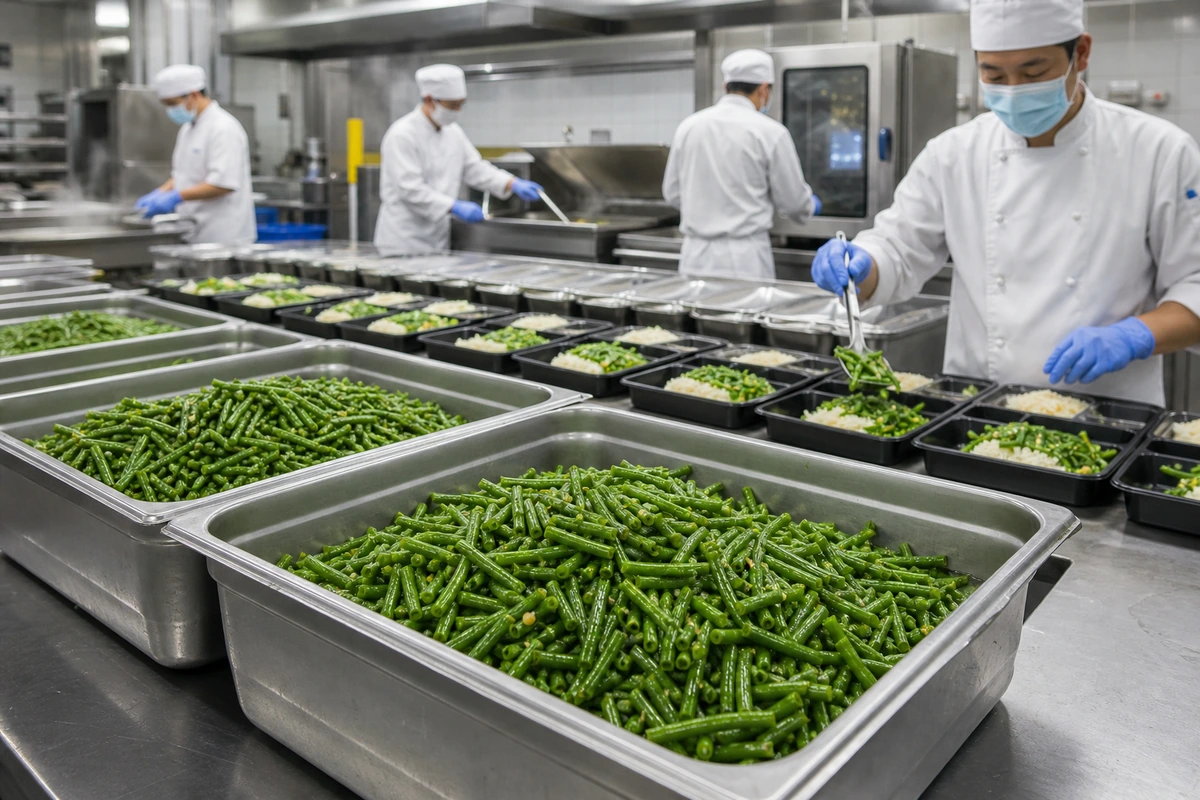
For a ready meal, trial the actual tray and portioning equipment. Check whether pieces bridge across an opening, collect unevenly in a hopper or require extra manual adjustment. For a catering buffet, evaluate the serving utensil and the proportion of beans delivered in a normal scoop. These simple tests connect cut size to labor and presentation.
When ordering, define the nominal cut length, allowed variation and the tolerance for short ends or broken pieces. Diameter and maturity can be as important as length because they influence cooked texture. A request for "3 cm long beans" is incomplete if the pack can contain a wide mix of tender thin pods and coarse thick ones. Use a sample to connect the dimensional description with the eating result.

Test performance after holding and reheating
Evaluate long beans at the point the customer eats them. A sample tasted immediately after cooking may not represent a dish held for service, chilled for later use or reheated in a ready meal. Follow the operation's applicable safety controls for each stage, then assess the quality outcome under those conditions.
Record color, tenderness, visible seed development, liquid release and portion integrity after the full cycle. If the beans are acceptable initially but poor after holding, investigate the schedule and recipe before rejecting the ingredient outright. Conversely, a raw-material defect that remains obvious after appropriate cooking should be addressed through the specification rather than concealed with a different sauce.
For a comparison trial, keep portion weight, cooking method and hold constant between fresh and frozen inputs. If the frozen product needs a different approved method, record that as a separate process route and compare the final acceptable output. The purchasing decision should include preparation labor and repeatability as well as the immediate taste of a sample from the pan.
A useful ready-meal trial follows the long beans through portioning and the customer's reheating method. Prepare the approved recipe, place it in the actual tray and use the intended cooling, storage and reheating controls. Assess the result after that cycle, not from a fresh pan sample placed beside an empty package.
Look at the beans in relation to the rest of the dish. Long pieces may bridge across tray compartments, while short pieces can collect in one part of a mixed rice or noodle portion. Measure whether a normal portioning action gives the expected amount of bean. If staff must repeatedly rearrange pieces by hand, the cut or dosing method may need adjustment.
Record the liquid in the finished tray and decide whether it is acceptable sauce or unwanted separation. This distinction depends on the recipe. A braised dish may intentionally contain liquid, while a dry-style side may not. Ask the supplier about product performance with the actual process information rather than describing every visible liquid as a defect.
For a fresh-versus-frozen comparison, retain both the preparation labor and the final sensory result. Fresh whole pods may require more sorting and cutting; frozen cuts may require a different cooking load or liquid allowance. Approve the route that meets the dish's specification consistently. If each route serves a different menu need, keep separate recipe instructions so staff do not interchange them without the relevant adjustment.
Receiving and specification checks
For fresh pods, inspect the agreed maturity, condition and dimensions. For frozen cuts, reconcile the product identity, lot and packing with the order, then inspect packaging and the agreed transport conditions. Follow the site's receiving and temperature procedures and keep the product identifiable until it is released.
A useful physical specification addresses cut length, diameter where relevant, seed maturity, broken material, discoloration, foreign material and the intended cooked texture. Agree how defects are assessed and which sample state is used. Frozen hardness, for example, does not reveal the final tenderness, so a cooked assessment may be necessary for meaningful acceptance.
Review the frozen long green bean product information with the order-specific specification and instructions. Ask for the relevant lot and destination documents, and confirm the scope of any supporting certificates. Product photographs help explain the format, but they should not substitute for the agreed physical and intended-use requirements.
Packing and ordering for a repeat menu
Choose packing around the amount consumed in one controlled cooking run. A central kitchen may prefer a larger format, while a foodservice outlet may need smaller inner bags to avoid repeatedly handling an oversized pack. Confirm the actual inner configuration, not only the outer carton weight.
Send the required cut, expected shipment quantity, destination, application and target delivery period. Include private-label needs and the documents required by the customer or market. We confirm MOQ, lead time, packing and loading arrangements against the proposed order. If the menu requires a narrow texture or size reference, provide the trial method and acceptance priorities with the inquiry.
Retain the approved sample result and recipe instruction for repeat purchasing. A change in cut, pack or source lot should be evaluated through the relevant checks before entering production. Consistent long-bean dishes come from a suitable pod, a defined cut and a complete cooking process working together. None of those decisions can be replaced by the product name alone.
Questions about yard-long beans
What should I measure when long beans are used in compartment trays?
Check whether the cut fits the compartment, portions consistently and stays where intended during handling. Assess the final cooked or reheated texture and liquid in the tray. A cut that looks good loose in a bowl may behave differently in the finished meal.
Can sauce liquid and bean drip be combined in one reject figure?
Define what the recipe accepts first. A braised dish may intentionally retain liquid, while a dry-style side may not. Use a consistent trial method and record removed liquid separately when it affects yield, rather than assuming every visible pool is a defect.
Source frozen long beans with GreenLand-food
GreenLand-food is a professional frozen long beans supplier and manufacturer in China, providing factory-direct wholesale supply for importers, food manufacturers, foodservice distributors and private-label programs.
Tell us the product form, required specification, packing and quantity, along with the application, destination and delivery timing. Include seed or cut preferences where relevant, private-label requirements and the documents your team needs. We will review the sample, MOQ, lead time and loading arrangement for the proposed order.