


When Do Mulberries Ripen?
Sep 03, 2026
Leave a message
Late spring through summer, with strong regional variation
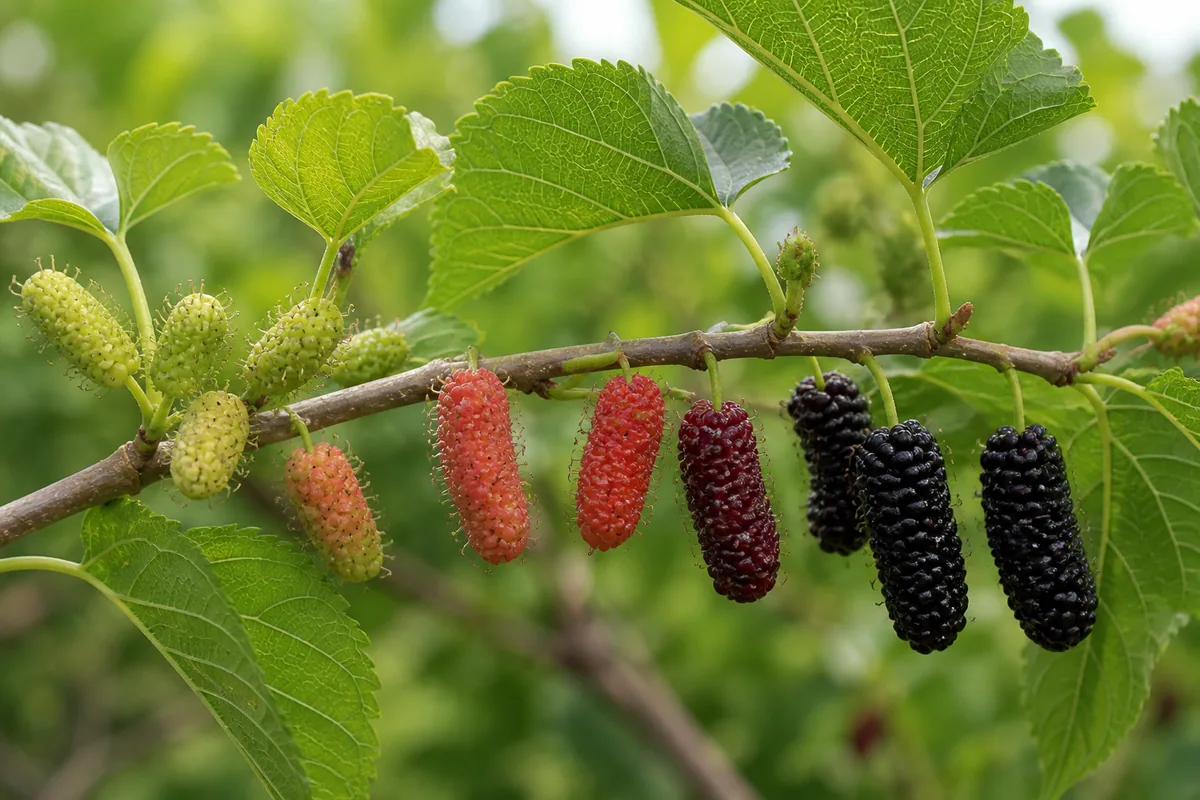
Expect mulberries from roughly May–July in many warmer Northern Hemisphere areas, while cooler regions may harvest black mulberries in August–September. Southern Hemisphere dates shift by about six months. Pick fruit only when it reaches the cultivar's full color, feels soft and releases with a light touch. Do not identify ripeness by darkness alone because white-fruited cultivars may remain pale.
Weather can move a local window from year to year, and species names do not produce one universal season.
Key takeaways
- Season ranges must name a region and hemisphere; a global month without origin context is weak guidance.
- Fruit on one tree ripens gradually, so repeated harvest protects ripe quality and reduces the share of underripe fruit.
- Easy detachment, softness and cultivar-specific full color are stronger harvest cues than date alone.
- Frozen supply can extend shipment beyond the crop period, but stock, lot, specification and contract confirmation still apply.
Quick comparison
| Region or situation | Typical window | Important variation | Supply implication |
|---|---|---|---|
| Warm Northern Hemisphere | Often May–July | Species, elevation and spring weather | Fresh intake can be early and compressed |
| Cool Northern Hemisphere | Often July–September | Black mulberry may be especially late | Longer development and later processing window |
| Southern Hemisphere | Often shifted about six months | Local climate and cultivar still control | Potential counter-season fresh fruit |
| One mature tree | Several weeks of staggered ripening | Not every fruit colors and softens together | Multiple harvest passes and intake lots |
| IQF frozen stock | Shipment after crop subject to stock | Lot age, inventory, specification and cold chain | Plan annual volume before the crop when possible |
A season answer needs a place name
Red mulberry may ripen from late spring into early summer in parts of the United States. In the United Kingdom, black mulberry is often associated with August and September. Warmer sites, low elevation and early cultivars generally move sooner; cooler springs and high elevation move later. Therefore "June" can be useful for one origin and wrong for another. Ask which species, cultivar, region and crop year the date describes.
The Southern Hemisphere reverses the broad calendar, but not with perfect symmetry. Local rainfall, heat, chill, flowering and labor all affect the harvest. A supply planner should build an origin calendar from actual grower and processor data rather than shifting a northern chart by six months and calling it exact.

One tree creates many small harvest decisions
Mulberry fruit does not ripen uniformly in one flush. Green, red, purple and fully ripe fruit can appear on the same branch. Pick only the ripe portion and return every few days. Shaking a tree onto a clean sheet can collect fruit that releases easily, but it also mixes maturity and can bruise soft berries. The best method depends on fruit form, ground hygiene and whether the crop goes to immediate processing.
For an IQF whole-fruit program, gentle selective harvest can improve whole rate and reduce leaf, twig and soil contact. For puree, efficient collection may be acceptable if sorting and hygiene controls remain effective. Labor and grade expectations should be planned together.
Use full color, softness and easy detachment together
A dark cultivar is ripe when it reaches its characteristic deep purple-black color, feels soft and separates with almost no resistance. Red fruit that remains firm and clings tightly is usually not ready. Pale white mulberry requires a cultivar reference because it may mature cream or pink. Taste a known safe cultivated sample: ripe fruit should be sweet and aromatic rather than sharply green.
Fruit that is mushy, leaking, moldy or fermented is not simply extra-ripe. Sort it out. Rain near harvest can dilute flavor and increase cracking or decay; hot dry weather can shrivel fruit. Record weather and maturity when a lot's Brix, acidity or color differs from the approved sample.
Harvest signs protect both flavor and frozen structure
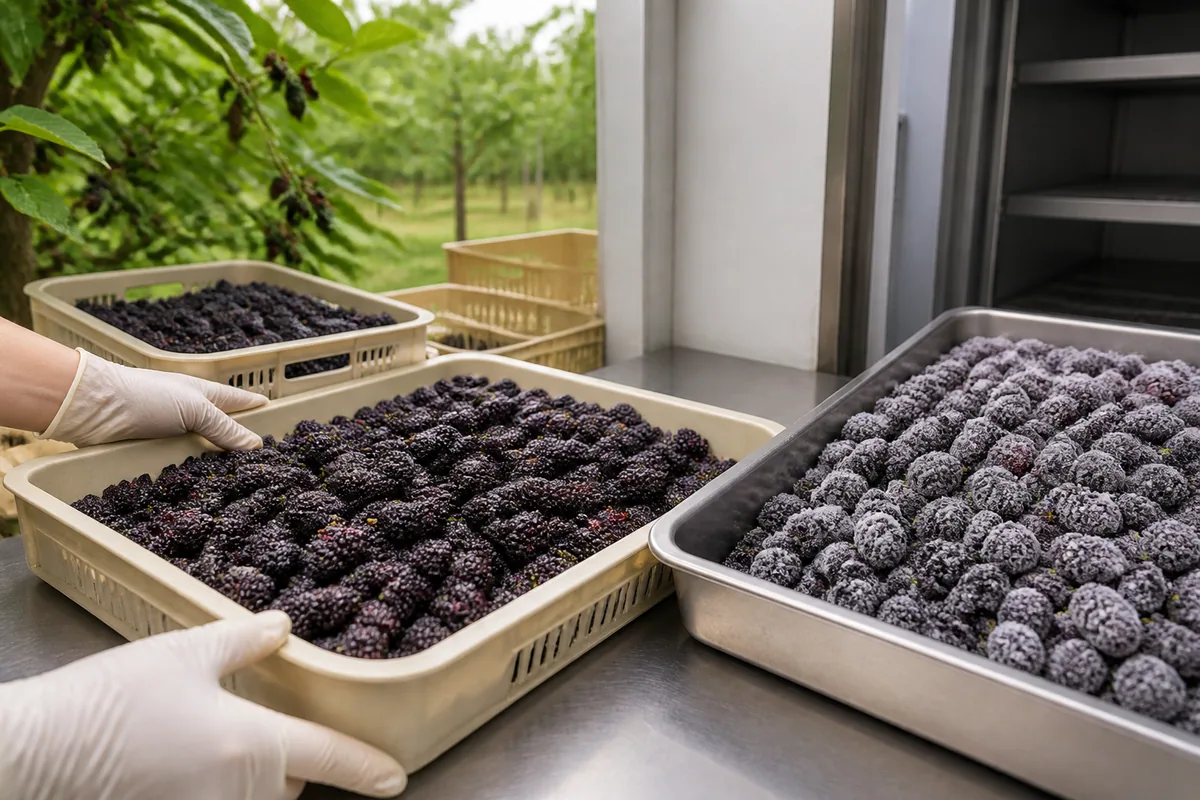
Underripe mulberries handle firmly but can give weak color, high acidity and low sweetness. Fully ripe fruit gives the target sensory profile but bruises easily. Very late fruit may collapse and ferment before the freezer. The processor's intake window is therefore narrower than the entire period during which fruit can be found on a tree. Quick transfer from harvest to cooling and processing protects the decision.
Measure Brix with a representative composite sample rather than selecting only the darkest berries. Inspect maturity distribution, color, decay, foreign material and temperature. A lot can meet average Brix while containing too many pale underripe fruits and overripe leaking fruits at the same time.
- Confirm origin, species or cultivar and local season.
- Harvest only fruit at cultivar-specific full color and easy detachment.
- Use shallow clean containers and avoid compression.
- Move fruit quickly to shade, cooling and processor intake.
- Sort underripe, decayed, fermented and foreign material.
- Record crop lot, maturity, Brix, color and processing yield.
The processing season is not the same as retail fresh season
Fresh market sellers may stretch a season with early and late fruit, cold storage or multiple origins. An IQF factory often concentrates production around the peak weeks when volume, maturity and processing economics align. Early small lots and late fragile lots may not support the same specification. Buyers should ask for the main production window, not only "when are mulberries in season?"
A processor may build frozen inventory during the crop and ship over later months. That changes availability, but it does not make the agricultural season disappear. Lot production date, remaining shelf life, inventory condition and order forecast still matter.
Frozen supply extends use, not unlimited stock
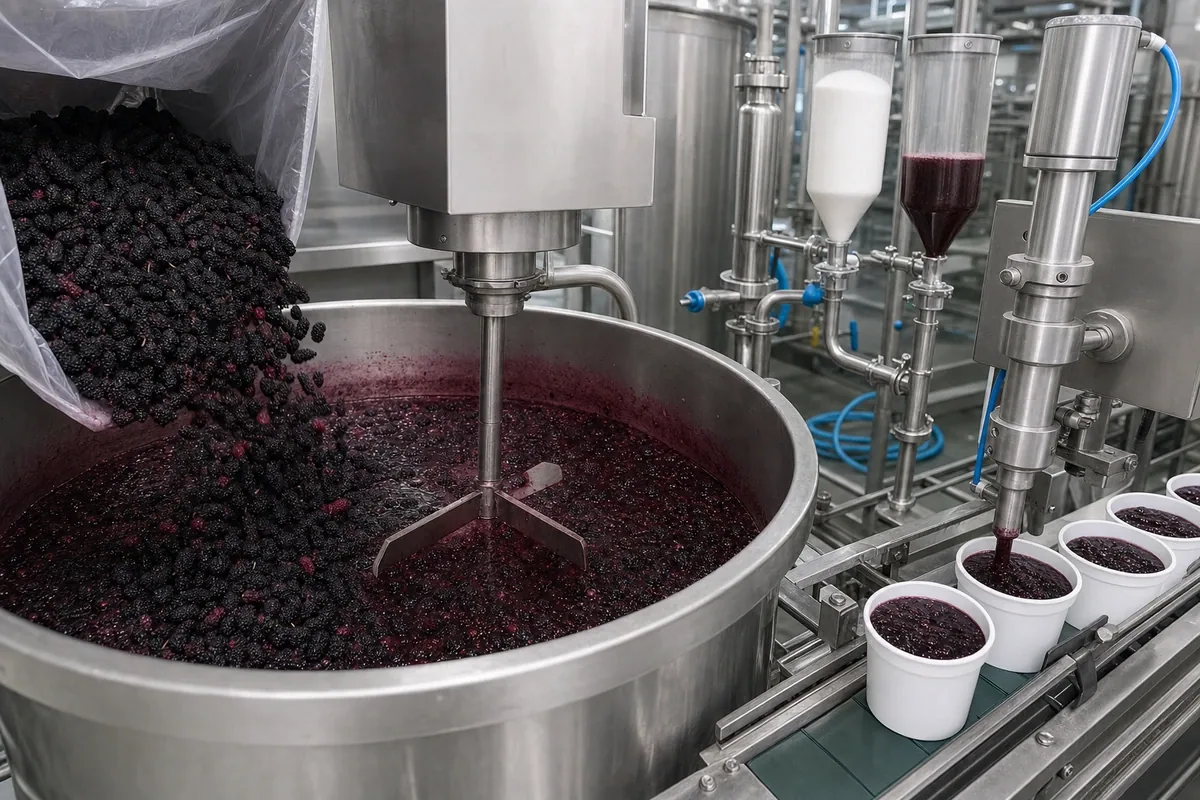
IQF freezing allows mulberries to be used in beverages, dairy, jam, bakery and retail after fresh fruit has left the tree. Product should remain at the declared frozen temperature through storage and reefer shipment. As inventory moves through the year, availability by grade, pack and whole-fruit quality can tighten. A supplier should qualify year-round language with stock and order confirmation.
At GreenLand-food, we discuss frozen mulberry crop, maturity, Brix, color, whole or processing form, broken ratio, leakage, pack, quantity and destination. Final stock, production lot and delivery plan are confirmed at quotation and contract rather than inferred from a general season chart.
For a closer explanation, see Are Mulberries Edible? Fresh, Dried and Frozen Forms.
Annual buyers should connect forecast to crop decisions
Before bloom or early crop, share volume, grade, pack, destination and month-by-month shipment needs. The supplier can review raw-material planning and freezer capacity. Closer to production, approve the current crop through photos, sample or specification evidence. After processing, allocate lots and use first-expire-first-out discipline. Waiting until the off-season to request a rare premium whole grade can reduce options.
Keep flexibility for agriculture. Weather can affect yield, size, color and Brix. A good contract defines how current-lot variation is reviewed and what happens if the crop cannot meet a noncritical preference. It should not weaken safety or foreign-material standards.

A crop report should be useful, not promotional
A practical report states flowering or fruit set observations, expected start and peak windows, weather risks, likely form and grade, sample timing and next review date. It separates forecast from confirmed production. Once freezing starts, add intake Brix, color, whole rate, defects and inventory by lot.
This evidence helps beverage and bakery buyers adjust formulas or promotional calendars. It also reduces surprise when a global search result says mulberries are in season but the requested origin, pack or grade is not available.
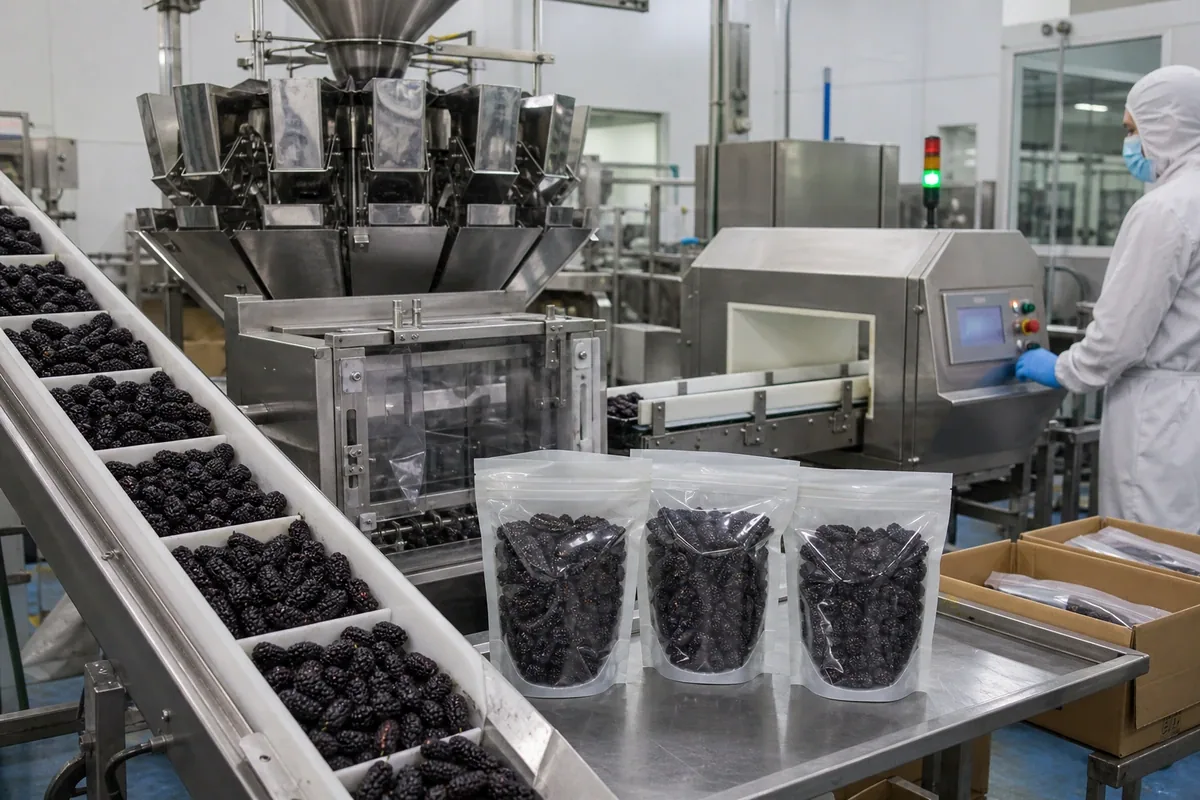
Worked decisions that a short answer cannot cover
Worked regional conflict: June versus September
A US field guide describes fruit in June, while a UK gardener reports black mulberries in August and September. Neither is necessarily wrong. Species, latitude and climate differ. The mistake is quoting either as a global rule.
A supplier article should preserve the origin attached to every month range and use crop-year confirmation for buying.
Rain during harvest changes more than the date
Heavy rain can slow picking, dilute soluble solids, increase splitting and raise decay pressure. The crop may still be "in season," but the accepted whole-fruit yield can fall. A processor may tighten sorting or shift some fruit to puree.
Record weather with intake data so a formulation change is based on evidence, not rumor.
Staggered harvest creates lot variation
Fruit collected in the first week may be firmer and lighter; peak-week fruit may be darkest and most abundant; late fruit may be softer. Combining all dates without controls can hide meaningful differences.
Create lots by intake period and test representative composites. Buyers needing tight color or whole rate may approve peak production separately.
Off-season quotation needs an inventory question
Ask not only "do you have mulberry?" but which crop year, lot, grade, pack, quantity, production date and remaining shelf life are available. Request current photos and documents where appropriate.
This protects against treating generic frozen availability as a guarantee for a specific premium product.
More detail for a repeatable decision
Phenology records make next year's forecast better
Record bud break, flowering, fruit set, first color, first harvest, peak harvest and last commercial intake. Add daily temperature and major rain events. After several seasons, the farm can forecast from biological stages rather than repeating one calendar date.
A late spring can delay fruit even when summer becomes hot. A warm winter can change dormancy and flowering. Yield and timing should be communicated as a forecast with confidence, not a promise months before fruit set.
Processors can align labor, packaging and freezer capacity to the projected peak, then update weekly. A simple crop dashboard reduces rushed decisions when fruit begins to soften.
Harvest frequency changes the maturity mix
Picking every two or three days can capture fruit close to ideal detachment. Waiting a week creates a mix of underripe, ripe and fallen overripe fruit. The same tree can therefore supply different average Brix and whole rate depending on labor.
For shake-harvested fruit, use clean collection surfaces and remove ground-contacted, decayed or foreign material according to the food-safety plan. Keep collection lots traceable.
Compare labor cost with saleable IQF yield. More frequent selective harvest can be justified for premium whole fruit but unnecessary for a screened puree grade.
Processor intake should separate time from condition
A truck arriving during the peak week is not automatically good. Check fruit temperature, maturity distribution, mold, fermentation, leaves, twigs, insects, color and Brix. Conversely, a late-season lot can be usable if it meets the agreed grade.
Use shallow sampling across containers. Soft fruit at the bottom may show more leakage than fruit on top. Record container type and transport time when comparing growers.
Release decisions should follow specification and hazard controls, not pressure to keep the line full. A poor intake frozen quickly remains a poor frozen ingredient.
Frozen inventory needs a seasonal aging policy
Apply FEFO by declared expiry, but also monitor production date, pack condition and lot performance. Premium whole fruit may lose visual value through temperature movement even while remaining within calendar life.
Review remaining stock before the next crop. Decide whether it still suits its approved application, can move to a compatible processing grade through documented agreement or must be held or disposed of. Do not silently relabel grade.
The new crop creates an opportunity to compare color, Brix and thaw performance. Keep old and new lots separated until the buyer approves any transition.
Build one supply calendar from farm evidence
Create rows for origin, species or cultivar, historical first harvest, peak week, last commercial intake, main grade, processor capacity and expected frozen yield. Mark historical averages separately from the current forecast. This prevents last year's dates from becoming an unsupported promise.
Update the calendar after flowering and fruit set, then again two weeks before expected harvest. Record rain, heat and pest pressure that could affect timing or quality. Buyers do not need daily farm drama, but they do need a dated change when volume, color or processing start moves materially.
During harvest, report intake quantity, Brix range, maturity distribution, whole yield and rejected defects by lot. A peak week can produce the most volume and still miss a premium whole-fruit target after heavy rain. Tie the report to the grade that can actually be packed.
After IQF production, replace forecast quantity with allocated inventory by lot, pack and remaining shelf life. Separate committed, available and provisional stock. A sales statement that says available year-round is too broad when a specific private-label bag or premium whole grade is already allocated.
At season end, compare forecast with outcome. The record improves next year's labor, freezer and contract decisions. More importantly, it gives the buyer a truthful bridge between a fresh-season search question and a frozen-supply plan.
Putting the answer into practice
A consumer planning to forage or harvest should use local identification and current regional timing. A date from another country cannot confirm either species or ripeness. Check the tree repeatedly and collect only fruit that matches the known cultivar's mature color and releases easily.
A processor should translate the same cues into intake data. Maturity distribution, Brix, color, defects, temperature and harvest date provide a clearer decision than the phrase peak season. Sort quickly and preserve lot identity before freezing.
A buyer planning off-season use should ask for frozen lot evidence, not fresh-season reassurance. Production date, grade, pack, quantity, remaining shelf life and current photos determine whether the requested product is available for the shipment month.
The season answer is thus a chain: local flowering and weather set ripening, repeated harvest sets maturity mix, processing sets frozen grade, and inventory planning sets later availability. Each link needs its own evidence.
That chain also prevents keyword variants from becoming separate thin articles. Questions about when mulberries ripen, when they are in season and how to tell ripe fruit belong together because the useful answer combines calendar, biology and supply. Keep origin, hemisphere and current crop date beside every public month range so the answer remains interpretable next season. When the fresh window closes, update the page only if the crop evidence changes; do not rewrite a biological season into an unqualified frozen-stock promise. Crop timing and frozen availability should remain two separate fields in every commercial record.
What to confirm before approving volume
A useful inquiry describes the ingredient and the job it must do. Send the product identity, form, target application, packing, quantity, destination and the quality points your team will measure. We will review current availability and an appropriate supply route where possible. Final size, process, ingredients, limits, microbiology, documents, shelf life, lead time and commercial terms remain subject to the approved specification and order confirmation.
- Name origin, species/cultivar context and target crop year.
- Ask for start, peak and end processing windows with forecast status.
- Define maturity, Brix, color, whole or processing grade.
- Set broken, leakage, stem, leaf and foreign-material limits.
- Confirm production lot, stock, remaining shelf life and shipment month.
- Link annual forecasts to sample approval and inventory allocation.
Frequently asked questions
What month do mulberries ripen?
Often from May through July in warm Northern Hemisphere regions and later, sometimes August–September, in cooler areas.
When are mulberries in season?
Fresh season generally runs from late spring through summer, but a useful answer must name the species, region and hemisphere.
Do mulberries ripen all at once?
No. A tree commonly ripens fruit over several weeks, requiring repeated harvest passes.
How do you know a mulberry is ripe?
It reaches cultivar-specific full color, feels soft, tastes sweet and detaches with very little pressure.
Can ripe mulberries be white?
Yes. Some white mulberry cultivars remain cream or pink when ripe; use cultivar cues rather than darkness alone.
Why are my mulberries sour?
They may be underripe, or the cultivar may naturally have more acidity. Weather and crop conditions also affect the balance.
Should mulberries be picked after rain?
Wet fruit is more fragile and can carry more surface moisture. Follow grower hygiene procedures and move it quickly to sorting and cooling.
When are mulberries processed for freezing?
IQF production normally centers on the origin's main harvest weeks, when volume and maturity support the agreed grade.
Are frozen mulberries available year-round?
They can ship beyond the harvest period, but grade, pack and quantity remain subject to stock, lot and order confirmation.
Can GreenLand-food discuss crop planning for frozen mulberry?
Yes. Send annual volume, pack, grade, application, destination and shipment months so we can review the current crop and supply plan.
Reference points
These sources support the classification, method or supply boundaries used above. The applicable product label, specification, food-safety plan and destination-market rules still control a real batch.
Source Frozen Mulberry for your real application
GreenLand-food is a frozen mulberry supplier and manufacturer in China, providing factory-direct wholesale support for importers, food manufacturers, foodservice distributors and private-label programs. Send the required form, specification, packing, quantity, destination, application and documents. We will review available order options and the next practical step.