


How to Make Passion Fruit Juice from Pulp or Puree
Sep 07, 2026
Leave a message
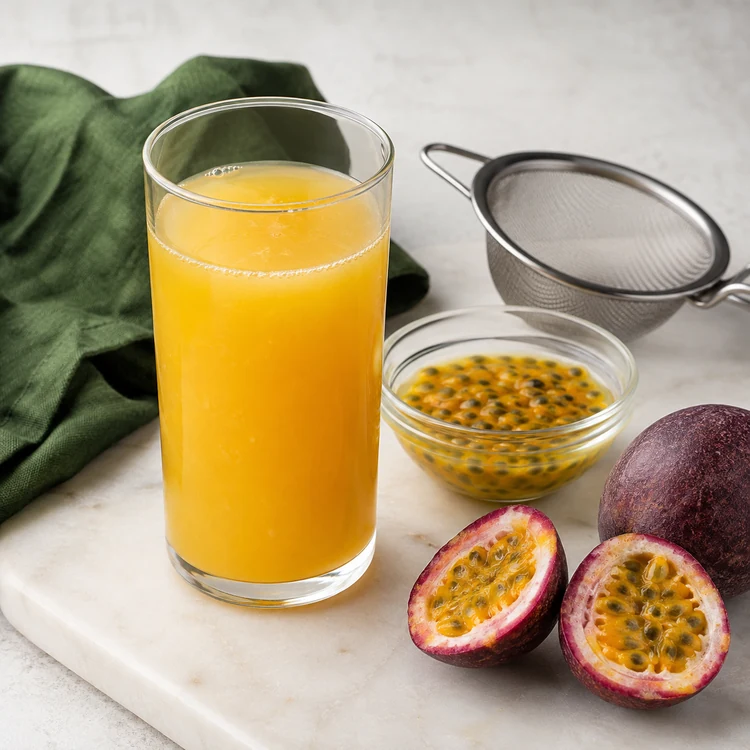
A repeatable drink starts with a defined fruit base
Frozen pulp or puree can replace fresh extraction when its composition is known. A concentrate needs a different calculation because water has already been removed. The most repeatable method starts with weighed fruit input and records the final drink weight, rather than relying on an assumed number of fruits or an unqualified "one part juice" instruction. For a commercial comparison, keep fruit fraction, sweetener and serving conditions visible. A stronger base may need less inclusion, while seed removal, ice melt and pack handling can change both the final drink and its true cost per serving.
Confirm whether the input is seeded, seedless, sweetened, diluted or concentrated before choosing any water ratio.
Use small weighed trials to set fruit strength first, then adjust sweetness and account for syrup and ice in the final formula.
Scale the approved recipe by mass, but recheck mixing, serving yield and handling conditions at the actual batch size.
Choose the input before choosing the ratio
The word juice can describe several things in a kitchen conversation: liquid pressed from fruit, a seeded pulp base or a diluted drink ready to serve. Before following a recipe, establish which one the recipe means. A glass made with undiluted extracted fruit will taste very different from a glass made with the same volume of a sweetened beverage base.
Read the ingredient declaration and specification for a purchased product. Confirm whether it contains added sugar, added water, seeds or other ingredients. Also confirm whether it is single-strength material or concentrate. Codex fruit juice and nectar definitions distinguish product identities; a kitchen nickname should not decide a commercial declaration.
| Starting material | Preparation before formulation | Question to resolve |
|---|---|---|
| Fresh whole passion fruit | Clean, halve, extract and optionally strain | How much usable pulp does the lot give? |
| Frozen seeded pulp | Follow the supplier's handling instructions | Are seeds wanted in the drink? |
| Frozen seedless puree or juice base | Confirm composition and mix uniformly | Is it undiluted and unsweetened? |
| Concentrate | Reconstitute or formulate using its specification | What concentration and reconstitution basis apply? |
We confirm the required form before proposing a frozen passion fruit ingredient. This prevents a sample from appearing unusually strong or weak simply because two different product types were compared as though they were equivalent.
A practical small-batch juice method
The following method is for a fresh drink prepared for prompt consumption. It is not a bottled beverage preservation process. Use sound fruit, clean equipment and water suitable for drinking. Choose a vessel with enough room to stir without spilling, and weigh the bowl before adding fruit if you want a useful yield record.
- Prepare the fruit. Wash the intact rind under running water, then halve the fruit on a clean board. Keep shell fragments out of the pulp. Discard spoiled fruit rather than trimming it into the batch.
- Collect the pulp. Scoop the golden pulp and seeds into a bowl. Weigh the collected material so the recipe can be repeated with a different fruit size or a frozen input.
- Separate seeds when needed. Work the pulp gently through a sieve using a spoon or flexible spatula. Let liquid pass without aggressively grinding the seeds against the mesh.
- Start a measured dilution. Combine a weighed amount of fruit base with a weighed amount of cold water. Begin on the stronger side so more water can be added without rebuilding the entire batch.
- Adjust sweetness. Add a measured sweetener after the fruit level is close. Stir thoroughly, then taste a small sample at the intended serving temperature.
- Record and serve. Note the fruit, water and sweetener weights and any ice allowance. Keep the finished drink chilled and prepare only what the handling plan can support.
If you intend to leave seeds in the drink, skip the fine straining step and distribute the pulp evenly before portioning. Test the actual glass, lid and straw combination: attractive seeds in an open cup can become an obstruction in a narrow drinking system.

Keep seeds whole when separating the pulp
Passion fruit seeds are normally part of the edible pulp, but seed fragments can create an unwanted gritty texture. The goal in a smooth beverage is to release the surrounding pulp and remove the seeds, not turn the seeds into a fine suspension. Manual sieving gives useful control for small batches and lets the operator see what remains in the screen.
A blender can loosen pulp, but aggressive high-speed blending may break seeds and incorporate air. Equipment differs, so there is no universal pulse duration that guarantees the same result. If a blender is used, test a small amount at a gentle setting and inspect both the strained drink and the retained seeds. Stop if the process produces visible fragments or a texture the recipe does not need.
Choose the screen for the finished beverage. A coarse screen removes larger material while retaining more fruit body; a fine screen can improve smoothness but retain more usable solids. Measure both recovery and sensory quality. The highest extraction yield is not necessarily the best commercial result if it comes with gritty mouthfeel, excessive settling or a higher reject rate at the filling line.
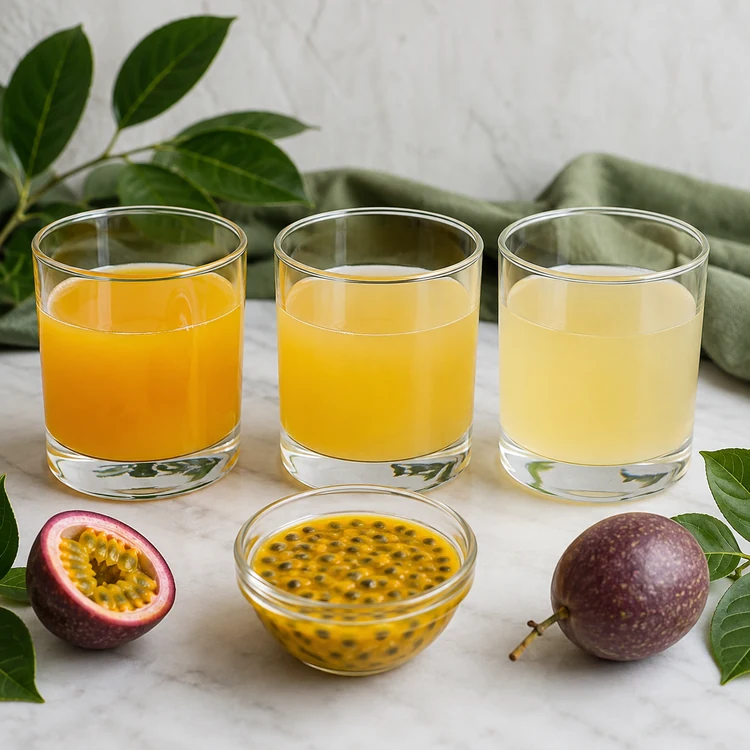
A kitchen can turn the three dilution trials into a simple recipe-development sheet. Label the glasses A, B and C rather than naming one "best." Ask tasters to describe fruit aroma, sharpness and body before revealing the ratios. This reduces the chance that the darkest glass is selected only because it looks stronger. Keep the base lot, sample temperature and assessment time on the sheet.
After selecting a fruit level, prepare another small set with different measured sweetener additions. The first trial established dilution; the second establishes balance. If sweetness is changed during the first comparison without a record, a more diluted sample can appear preferable simply because it received more sugar. Separating those decisions gives the café a recipe it can reproduce when a different employee is on shift.
Retain the actual final mass. For instance, 100 g of base, 200 g of water and 20 g of sugar make 320 g before incidental handling loss, with the base representing 31.25% by mass. This arithmetic describes the kitchen formula, not a legal fruit-content declaration. It also shows why an addition made after the original ratio changes the finished drink. Do not keep calling the formula one-third base once the total has changed.
Set dilution with three measured trials
There is no single water ratio that works for every passion fruit lot and every drink. A tart, aromatic base intended for a mixed beverage may need a different inclusion level from a milder fruit used in a stand-alone juice drink. Establish a starting range with small weighed trials instead of diluting a large container and trying to correct it afterward.
For example, compare 100 g of the same fruit base with 100 g, 200 g and 300 g of water. These are trial points, not a claim that one of them is the correct recipe. Keep sweetener out initially, or add the same defined amount to each final formulation if the trial specifically requires it. Taste in the same order and at the same temperature.
| Illustrative trial | Fruit base | Water | Fruit fraction before sweetener |
|---|---|---|---|
| Strong | 100 g | 100 g | 50% |
| Medium | 100 g | 200 g | 33.3% |
| Light | 100 g | 300 g | 25% |
Calculate the fruit fraction as fruit base weight divided by total formulated weight. If syrup, another juice or ice is added later, the denominator changes. A recipe described as "one third fruit" before those additions is not automatically one third fruit in the served drink. For labels and commercial claims, use the applicable formulation and market rules rather than this informal trial description.
Sweeten after setting the fruit level
Sugar can soften the perception of acidity, but it cannot replace fruit aroma. If an over-diluted drink tastes weak, adding more sugar may produce a sweet drink with little passion fruit character. First decide whether the fruit level is adequate. Then adjust sweetness while keeping the final weight and the method of addition consistent.
Syrup is convenient because it disperses readily, but its water also dilutes the drink. Record the syrup's composition or preparation ratio rather than simply writing "two spoons." Granulated sugar changes the mass without adding the same quantity of water. Honey and flavored syrups bring their own flavor, color and ingredient-declaration consequences, so they should be evaluated as separate formulation choices.
For a foodservice menu, specify the sweetener by weight or by a calibrated dispenser. Check what happens when staff prepare several batches during a busy service. A good tasting recipe can become inconsistent if one operator uses a heaped spoon and another uses a level spoon. Set a short, usable batch instruction that identifies the approved base, the quantities and the mixing endpoint.
Make juice from frozen pulp or puree
Frozen passion fruit reduces the work of opening fruit and managing shells. It does not remove the need to understand the product. Read the supplier's storage, thawing and intended-use instructions, including whether further processing is required. Freezing is not a sterilization step, and a frozen fruit ingredient should not automatically be assumed suitable for every unheated beverage application.
For storage and handling details, see Health Benefits, Nutritional Value, and Proper Storage of Frozen Passion Fruit.
Where thawing is appropriate, use the specified refrigerated method in a covered food-safe container. Mix the thawed material until the usable liquid and fruit solids are distributed evenly before taking a sample. Measuring only the liquid at the top of a separated pack can misrepresent the whole ingredient. Avoid repeatedly warming a large pack just to remove a small portion.
Our frozen passion fruit puree page describes forms that need confirmation against the order. Ask explicitly about seeds and composition. Once the input is identified, use the same mass-based trials as for fresh extraction. Compare flavor at equal final fruit inclusion and record any difference in screen loss, thawing labor or portioning time.
For application details, see How to Make Passion Fruit Puree.
Concentrate needs its own calculation
Concentrate has had water removed. Substituting it gram for gram for a single-strength base usually changes the formulation. Obtain the supplier's concentration specification and recommended reconstitution basis. Do not infer a dilution ratio from the product's thickness or color; fruit solids, temperature and processing can all affect appearance.
A simple solids balance can illustrate the calculation when the necessary assumptions are valid. Suppose an unsweetened concentrate is specified at 50°Bx and the intended reconstituted base is 12°Bx. In an idealized mass balance, 100 g of concentrate would give about 417 g of reconstituted material: 100 × 50 ÷ 12. The added water would be about 317 g. These numbers are an arithmetic example, not a passion fruit product specification or a labeling instruction.
Added sugar or mixed ingredients make that shortcut unsuitable for determining authentic fruit content. Even with a suitable concentrate, Brix matching does not guarantee identical aroma or acidity. Confirm the calculation with the supplier's technical information, then run the beverage trial. A purchasing comparison should use the quantity of acceptable finished drink produced, including the cost of any formulation adjustments.

Control foam, sediment and cloudy appearance
Passion fruit drinks can be naturally cloudy and may settle during holding. Decide whether the intended product should be visibly pulpy, lightly cloudy or more closely filtered. Each target changes the screen choice and the acceptable amount of suspended material. Clarity is a product decision, not a universal sign of better quality.
Foam often increases with vigorous blending and unnecessary air incorporation. Reduce avoidable aeration during trials and assess the drink after a consistent rest period. Do not compare one glass immediately after blending with another that has stood for several minutes. For packaged production, evaluate whether foam interferes with filling accuracy or closure cleanliness using the actual equipment.
Settling should be assessed over the expected service period. If the drink needs gentle mixing before dispensing, put that action in the service instruction. A "shake before use" statement does not solve every stability problem, particularly in automated dispensers or layered drinks. Test the top and bottom portions of a held batch for uniformity. Any stabilizer or process change requires its own formulation and regulatory review rather than an improvised addition at the counter.
For a service-scale example, suppose the approved trial uses 180 g of fruit base, 390 g of water and 30 g of a defined syrup. The total is 600 g. A nominal 12 kg production batch uses twenty times those quantities: 3.6 kg of base, 7.8 kg of water and 0.6 kg of syrup. This is an illustrative recipe, not a universal recommendation for passion fruit flavor. Its purpose is to show a complete formula with every ingredient included.
The team should still verify the final mixed weight and uniformity. Product left in the fruit pack, a dispenser that delivers an inaccurate syrup portion or an unrecorded rinse added to the vessel can change the result. Weighing the components at the mixing station makes those differences visible. Keep any water used to recover material from equipment within the approved formula rather than treating it as a free addition.
Finally, test how many saleable servings the batch actually gives. A nominal 300 g portion would suggest forty servings from 12 kg, but spillage, retained product and the actual serving routine may reduce that number. Measure the real result before using it in a menu-cost calculation. This connects ingredient purchasing to the drink the customer receives instead of stopping at a theoretical batch yield.
Move a good glass into a repeatable service batch
Scale a successful recipe by mass. If a 500 g trial is approved and a 10 kg batch is needed, the nominal scaling factor is twenty. Multiply every ingredient by that factor, then check whether the larger vessel can mix the batch uniformly. The arithmetic is straightforward; the mixing and service conditions may not scale in the same way.
Record the order of addition. Thick or partially thawed fruit material can collect at the bottom if water is added without adequate mixing. Syrup can also remain unevenly distributed. Assess a sample from the top and the lower part of the vessel before release. Use the same clean sampling method each time, and never return a tasted sample to the batch.
Allow for ice at the point of service. A drink formulated with cold water and then poured over a large quantity of melting ice becomes more dilute over time. Test it at the typical drinking interval, not only immediately after pouring. A menu intended for takeaway may need a different service design from a small glass consumed promptly on site. Record the glass size, drink fill and ice portion alongside the bulk recipe.

Keep a fresh beverage within its handling limits
Preparing fruit juice does not create a shelf-stable product. Keep equipment clean, separate raw-fruit handling from finished beverage handling, and maintain a defined chilled service plan. A home recipe should be prepared for prompt use; a commercial operation needs a shelf-life and process basis appropriate to its ingredients, packaging and intended customers.
FDA storage guidance gives 4°C or below as the refrigerator target and advises limiting the time perishable foods spend unrefrigerated. The familiar two-hour limit becomes one hour when the temperature is above 32°C. These general limits are not a validated commercial shelf life for a bottled passion fruit drink.
Acidity, a pleasant smell and a clean-looking bottle do not prove a drink is safe. Neither does freezing the input. If the business wants an extended-life refrigerated or ambient beverage, involve the appropriate food technologist and use a validated preservation and packaging process. Keep that project separate from a freshly prepared juice recipe. Do not add a home bottling or hot-fill claim to a product simply because the fruit tastes sour.
Match beverage equipment to the ingredient
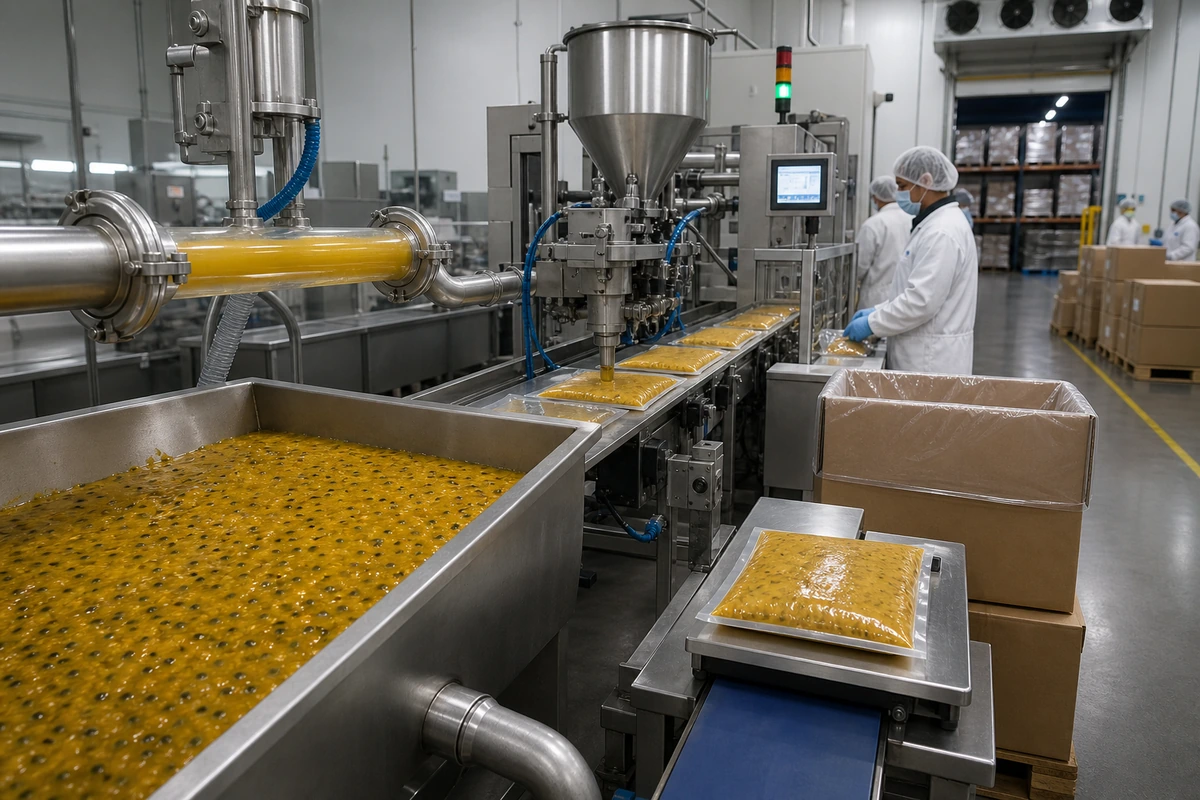
A small café can work with a sieve and a measured mixing jug; a filling operation needs to consider pumpability, screen loading and product distribution. Seeded pulp may suit an open dessert cup but create problems in a narrow valve or nozzle. Check the actual equipment restrictions before approving the ingredient, especially when seed size or fragments matter.
For a production trial, record the screen aperture used, the amount retained, the mixing time and the condition of the filled drink. These observations connect the supplier specification to a practical line result. They also help identify whether a problem originates in the base or in an unsuitable process setting. A sample that passes through a laboratory sieve may still behave differently in continuous production.
Pack format affects labor as well. A large frozen block may be economical for a full production run but inconvenient for a café that needs a small daily quantity. Smaller packs can reduce partial-pack handling at the cost of additional packaging and opening work. Ask for a format that fits the operation's actual batch size and cold-storage capacity instead of choosing only by the lowest unit price.
What to confirm before buying a frozen base
Send the intended drink description and the process first: unheated or subsequently treated, seeded or smooth, fresh service or packaged, and the approximate fruit addition rate. These details let us review the relevant frozen passion fruit juice supply rather than recommend a generic tropical base.
Confirm the ingredient declaration, concentration basis, agreed Brix and acidity checks, seed tolerance, sensory reference, pack weight and storage instructions. Request the specification and the lot or compliance documents appropriate to the destination and use. Do not assume that every document or certificate applies to every product, facility or shipment; establish what is required during order review.
Include shipment quantity, destination, packaging, private-label needs and delivery timing in the inquiry. We confirm MOQ, lead time and the available packing arrangement for the proposed order. Before committing to repeat supply, compare samples in the actual drink and keep the approved recipe with the purchasing file. A successful base is one the team can dose, mix and serve consistently without concealing large adjustments in water or sugar.
Questions about serving and formulation
How should I record fruit left in the sieve?
Weigh the accepted base separately from the retained seeds and pulp. Use the accepted base weight in the drink formula, and record screening loss when comparing ingredient cost. Added rinse water must be counted in the recipe rather than reported as extra fruit recovery.
Can the same recipe be costed by glass volume alone?
Glass volume is useful for service, but it does not establish ingredient consumption when ice, foam and fill levels vary. Record the batch by mass and measure the number of acceptable servings produced under the normal serving routine.
Source frozen passion fruit with GreenLand-food
GreenLand-food is a professional frozen passion fruit supplier and manufacturer in China, providing factory-direct wholesale supply for importers, food manufacturers, foodservice distributors and private-label programs.
Tell us the product form, required specification, packing and quantity, along with the application, destination and delivery timing. Include seed or cut preferences where relevant, private-label requirements and the documents your team needs. We will review the sample, MOQ, lead time and loading arrangement for the proposed order.