


How to Preserve Chestnuts
Sep 09, 2026
Leave a message
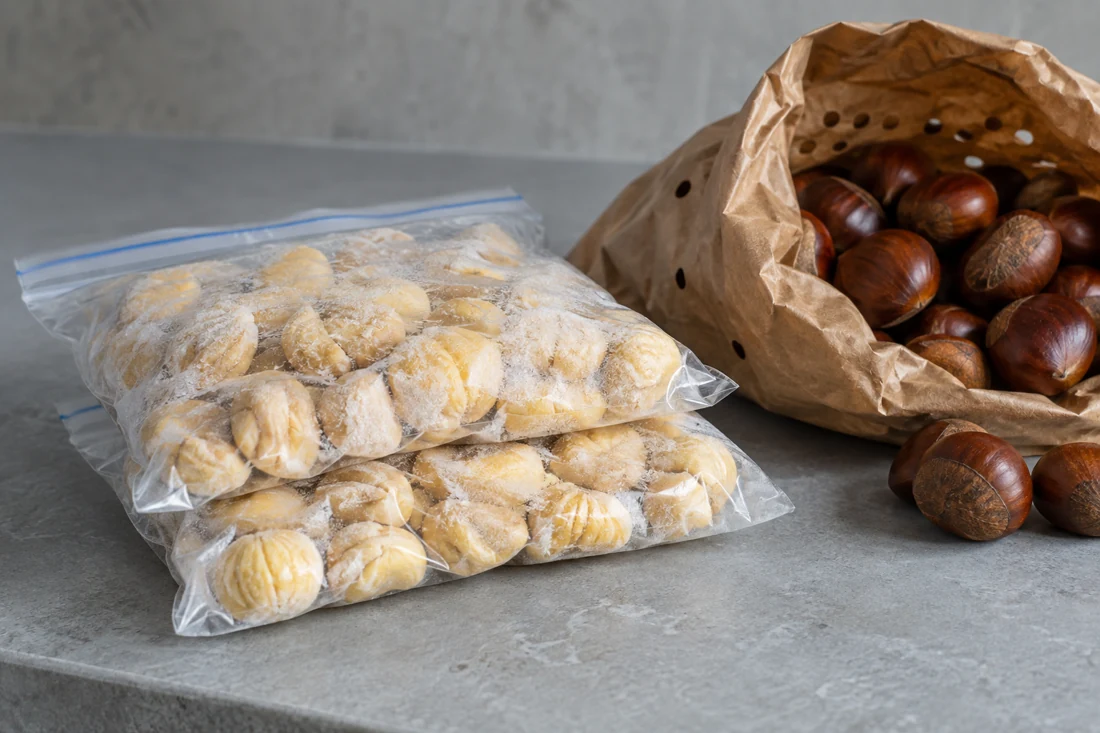
Commercial peeled frozen chestnuts offer another route, with storage and cooking instructions specific to the supplied product. Dried, canned and vacuum-packed chestnuts need different handling, so check the label before choosing where to store them.
Chestnuts are moist, perishable food. Their brown shells do not give them the pantry life of many drier nuts. The preservation choice should begin with the state of the chestnuts you have and the way you plan to use them, whether that means a small bowl of stuffing or a recurring bakery order.
Choose preservation by product state and intended use
Begin by separating fresh in-shell chestnuts from peeled raw kernels, cooked kernels and processed products. These states may look similar once the shells are removed, but they do not share one storage instruction. A sealed bag can contain a frozen ingredient for further cooking, a chilled cooked product or a shelf-stable product made by a suitable commercial process. The packaging format alone cannot identify which one you have.
Fresh chestnuts can be refrigerated when you intend to prepare them soon. Freezing is more useful when the purchase exceeds what you can use while the fresh quality remains good. Cooked chestnuts belong on a cooked-food schedule, with prompt cooling and a defined use date. Dried chestnuts and flour require the storage conditions specified for those products. An opened package may need a different condition from an unopened one.

Whole and peeled chestnuts enter different storage decisions. Illustration.
| Format | Storage starting point | What to confirm |
|---|---|---|
| Fresh chestnuts | Refrigerated short-term holding | Initial condition, moisture and pack directions. |
| Home-prepared frozen portions | Sound material and suitable preparation | Portion size, labeling and continuous frozen storage. |
| Processed commercial pack | The product's validated conditions | Unopened shelf life and after-opening instructions. |
The University of California guide to harvesting and storing nut crops treats chestnuts separately from the drier nuts covered in the same publication. That distinction is useful at home: a bowl of chestnuts left in a warm room is not being preserved simply because the shells are intact. Good starting quality and the correct storage environment matter before a recipe enters the discussion.
Your intended use can simplify the choice. If the chestnuts will be chopped into stuffing, freezing cooked peeled pieces avoids repeating the shelling task later. If a plated dish needs attractive whole kernels, preserve and handle them with that appearance in mind. If a production line requires an exact cooked texture, an identified commercial frozen form may be easier to evaluate than an assortment of home-prepared portions with uncertain histories.
Do not wait until a bag is visibly deteriorating before deciding to freeze it. Freezing holds food in its current condition; it does not reverse mold, drying or poor handling. Inspect the stock while there is still time to prepare sound nuts. Remove damaged or spoiled chestnuts, and do not mix questionable kernels into a puree where their appearance will be hidden. Preservation begins with selection.
For a kitchen managing several formats, use clear names in storage records. "Raw in-shell chestnuts," "cooked peeled chestnuts" and "frozen peeled chestnuts for cooking" tell the next person more than "chestnuts." Include the preparation or opening date where appropriate. That simple distinction helps staff choose the right treatment when a container moves from receiving to cold storage and then to the production bench.
Keep fresh chestnuts cold without trapping water
Refrigerate fresh chestnuts promptly after purchase, following any instructions on the pack. A refrigerator at 40°F, about 4°C, or below is the normal household cold-storage environment. Keep the nuts in suitable produce packaging that reduces drying while allowing some ventilation. A loose or perforated produce bag can provide that balance. Avoid leaving wet chestnuts tightly sealed in a bag with visible pooled water.
The chestnut shelf life guide helps decide when a stored lot should be used, frozen or rejected.
Chestnuts need protection from moisture loss, yet free water on the surface is not helpful. These are compatible requirements: moist air around a product is different from a wet product sitting in liquid. If you have rinsed the nuts, let the surfaces dry before storing them. For an unopened retail pack, follow its instructions rather than replacing its packaging automatically with a homemade storage arrangement.

Cold storage must protect fresh chestnuts without leaving them in trapped free water.
The UC Davis chestnut postharvest factsheet explains why commercial operators control both temperature and humidity. It describes conditions designed for storage facilities and includes specialized atmosphere management. Those commercial holding periods cannot be transferred directly to a domestic refrigerator. A household appliance, an unknown-age shop purchase and a professionally managed postharvest store are different starting situations.
Use the retailer's date and instructions, and plan to inspect the chestnuts during storage. There is no single remaining-life promise for a bag whose harvest date and earlier handling are unknown. A pack purchased late in its life will not gain a fresh full storage period when moved into your refrigerator. Buying an amount you can use reasonably soon is more dependable than planning around the longest duration mentioned in a commercial storage reference.
Look for changes in weight, firmness, shell condition and odor as you handle the stock. Keep the bag accessible enough to inspect, rather than burying it behind other produce until a holiday meal. If you discover one visibly moldy nut, inspect the rest carefully and discard affected material. When the overall condition is questionable, choosing a fresh supply is preferable to trying to recover a large portion during cooking.
For a food business, record the receipt date, supplier lot and intended use date according to the operation's procedures. A fresh chestnut purchase should also have a plan for preparation capacity: cold storage can become overloaded with stock that nobody has time to score and peel. If the planned use moves further away, review whether sound stock should be prepared and frozen under the kitchen's approved method or replaced by a suitable commercial format.
Freeze chestnuts in portions you can use
For many home cooks, cooked and peeled chestnuts are the easiest form to freeze. Prepare sound edible chestnuts by a suitable method, remove the shell and inner skin, then cool the kernels promptly. Divide them into the quantities used in a normal recipe and pack them in freezer-suitable bags or containers. Remove excess air without crushing delicate kernels, close the package securely and label the contents and date.
A small portion is easier to manage than a large solid block. If you need separate kernels, arrange the prepared cooled chestnuts in a single layer for an initial freeze, then transfer them promptly to their final freezer packaging. The tray stage should not become uncovered long-term storage. The final package provides protection against drying and freezer odors, and its label preserves the information that becomes difficult to judge from appearance later.

Peeled frozen chestnut kernels on a white plate. Follow the freezing and storage instructions for the supplied format.
- Start with sound chestnuts and choose a reliable preparation method for the intended frozen format.
- Divide the prepared product into useful portions and pack according to the chosen method.
- Label the contents and preparation date, then maintain the required frozen conditions.
Keep the freezer at 0°F, equivalent to about −18°C, or below. Use the package guidance for purchased frozen chestnuts. For home-prepared cooked leftovers, plan around the applicable home food-storage guidance rather than the longer unopened shelf life printed on a commercial frozen product. The two have different preparation, packaging and validation histories. A commercial date cannot be copied onto a home-filled bag merely because the ingredients look alike.
Whole in-shell chestnuts can also be frozen, but the shelling and cooking work remains for later. If you choose that route, use an established chestnut preservation method and appropriate freezer packaging. The frozen shell is still a shell: it must be opened before any in-shell oven cooking. Do not put unscored chestnuts into the oven on the assumption that freezing has removed the pressure problem during heating.
For a purchased peeled frozen ingredient, identify whether the kernels are raw, blanched or cooked before deciding how to use them. Some products are intended to enter the recipe from frozen; others carry specific thawing directions. Keep those directions with the product information. The label "IQF" describes individual quick freezing and does not by itself establish that the chestnuts are ready to eat or that every cooking method is appropriate.
Plan the portion around the dish. A soup batch may accept pieces, while a garnish may need intact whole kernels. Keeping those forms in separate labeled packs avoids thawing a large whole-kernel supply only to chop a small fraction. It also helps with quality evaluation: if a dish needs a smooth puree, assess that result after the intended cooking process, rather than choosing a freezer format solely for an attractive raw appearance.
Cool and store cooked chestnuts promptly
Once chestnuts have been cooked, handle them as cooked perishable food. Divide a large amount into smaller shallow containers so that heat can leave more readily. Refrigerate promptly; there is no need to leave a deep bowl on the counter until every kernel reaches room temperature. A large quantity should follow the kitchen's approved cooling procedure, especially when it will be used in a later production run.
Illinois Extension's leftover guidance recommends refrigerating or freezing leftovers within two hours and using refrigerated leftovers within three to four days. It also recommends dividing large quantities and labeling them. For a home batch, use that guidance alongside any shorter recipe or product instruction. If the chestnuts are mixed into another food, the storage decision applies to the completed dish rather than the chestnuts in isolation.

A shallow container helps organize cooked chestnuts for prompt chilling. Illustration.
Hot surroundings shorten the room-temperature window. USDA food-safety guidance uses one hour when the ambient temperature exceeds 90°F, about 32°C. This is relevant to outdoor service or a warm kitchen. Refrigeration after excessive unrefrigerated holding does not erase the earlier exposure, and a pleasant smell does not prove that a mishandled cooked food is safe.
Store the cooled chestnuts in a covered container, separated from raw foods that could drip onto them. Use clean utensils when taking a portion. Return the remaining container to refrigeration promptly rather than leaving it beside the stove throughout repeated cooking tasks. For a kitchen preparing several dishes, taking out only the amount needed helps keep the rest of the batch under the intended conditions.
If you will not use the cooked chestnuts within the refrigerator period, freeze suitable portions while they are still sound and within the safe handling schedule. Label the cooking date as well as the freezing date if that helps track the batch. Freezing near the end of an uncertain storage history is not a reliable way to restart the clock. The freezer label should represent what actually happened to the food.
When reheating cooked leftovers, follow the appropriate instructions for the complete dish. A thermometer can be useful for a soup, stuffing or assembled meal, where the center may heat more slowly than the surface. A foodservice operation should follow its own validated procedures and local requirements. A household storage article cannot establish the cooling, holding or reheating process for every commercial chestnut-containing product.
Understand dried, vacuum-packed and canned formats
Drying changes chestnuts into a different ingredient with its own uses and storage needs. Dried pieces may need rehydration and further cooking. Chestnut flour contributes flavor and solids to a recipe but cannot replace whole kernels where visible pieces are required. Keep dried products protected from moisture according to their packaging. Their suitability for a dry store comes from the product's preparation and instructions, not from the word chestnut.
Vacuum packing removes air from a package, but the food inside may still require refrigeration or freezing. A commercially processed pack labeled for ambient storage has a different preservation history from cooked chestnuts placed in a home vacuum bag. Read the storage statement and whether it applies before or after opening. A tight seal and a long-looking date are not enough to infer that any vacuum-packed chestnut belongs on a pantry shelf.

Dried, vacuum-packed and canned chestnuts have format-specific storage instructions. Illustration.
Canned and commercially retorted products are supplied under processing conditions designed for that format. Follow their instructions and reject damaged, leaking, swollen or otherwise suspect packs. Once opened, the original unopened storage condition no longer describes the food. Transfer or cover it as directed, refrigerate where required and use it within the stated opened-pack period. The package provides the controlling instruction for that specific product.
Historical FAO chestnut processing information covers a broad range of preserved forms, including frozen kernels, puree, dried products and confectionery. That range is useful for choosing an ingredient. Older treatment recipes and industrial preservation conditions should not be treated as home instructions. A modern commercial product needs current documentation for its actual process and intended market.
Sweetened puree, candied chestnuts and chestnuts packed in syrup introduce additional recipe considerations. Their sugar and moisture change the balance of a filling or sauce. A chef expecting unsweetened cooked chestnuts may need substantial recipe changes if a sweetened product is substituted. Read the complete ingredient declaration and compare the form with the recipe before buying a large pack. Preservation and formulation are connected at this point.
Home canning requires a tested process for the exact food and pack, not an improvised hot-fill method. Do not create shelf-stable chestnuts by filling a jar with cooked kernels and waiting for the lid to pull down. A vacuum seal is not proof of an adequate preservation process. If you do not have an appropriate tested method, refrigeration or freezing is the more straightforward route for home-prepared chestnuts.
Check quality after storage and thawing
Inspect the package before judging the kernels. A torn freezer bag, failed seal or damaged carton can explain why one portion has dried more than another. Check the date and the recorded storage condition. For commercial stock, connect the pack to its lot information before reporting an issue. That allows a supplier to review the right product and distinguishes a packaging problem from a broader ingredient-quality concern.
A little surface frost can occur on frozen food, while heavy ice accumulation or a solid clump may deserve closer investigation. Appearance alone does not prove a particular temperature history. Review the handling records and the condition of neighboring packs rather than making a definite thawing claim from one photograph. If the cold chain may have failed, follow the operation's product-disposition procedure and the supplier's guidance instead of relying on a visual guess.

Peeled chestnut kernels with pale surfaces. Assess the condition of a representative sample against the agreed product requirements.
For a product that requires thawing, use its specified method, normally controlled refrigeration where appropriate. Keep it protected from contamination and capture any released liquid as directed. Do not leave a bulk bag in a sink or on a counter until the center becomes convenient to handle. A large frozen mass can have warm outer pieces while its middle remains frozen, making uncontrolled thawing especially difficult to judge.
Assess the chestnuts in the form in which they will be eaten. A kernel that looks firm while frozen may soften during the recipe. A puree may appear acceptable immediately after blending but become too thick after standing or too loose after a later heating stage. Compare the finished food with the target, using the same recipe and portion. Storage quality is meaningful when it connects to the actual application.
Discard chestnuts with visible mold, slime, fermentation-like odor or other evidence of spoilage. Do not taste suspect food to decide whether to keep it. Surface drying and freezer burn can affect quality without being the same issue as microbial spoilage, but that distinction does not establish safety after unknown handling. When the storage history is uncertain, follow a conservative disposition decision rather than inventing certainty from color or smell.
For a recurring purchase, record intact-kernel percentage, skin remnants, color, odor and cooked texture using the agreed assessment method. Keep photographs and results tied to the sample or lot. If the intended use changes from puree to whole-kernel garnish, review whether the original acceptance limits still fit. A perfectly serviceable ingredient for one application may need a different grade or form for another, even after correct storage.
Buy preserved chestnuts against a written shelf-life specification
A commercial shelf-life statement belongs to a particular product, process, package and storage condition. It should specify whether it applies unopened, when the period begins and what happens after opening or thawing. A buyer should not compare a frozen kernel's date with a chilled cooked product's date as though the figures describe the same service. Ask for the conditions attached to the number before evaluating its commercial usefulness.
We supply frozen chestnuts in forms intended for different food applications. For an inquiry, identify whether you need whole peeled kernels, pieces or another available format, and state the required preparation. Raw, blanched and roasted options should be confirmed against the offer. We will review the specification and packing with your team rather than assuming that all frozen chestnuts have the same cooking status.

The pack and specification should agree on storage conditions and shelf life. Illustration.
Request a representative sample and the current product information together. The sample should carry enough identification to connect it with the specification being discussed. If it is a development sample, distinguish it from an existing stock lot. Ask for the relevant production, packing and storage details needed by your quality team, and confirm which documents can be supplied for the proposed order and destination.
Set the acceptance criteria around use. A stuffing manufacturer may prioritize sound pieces of an agreed size, while a plated side may require a tighter whole-kernel tolerance. A bakery using chestnuts in a filling may need to examine moisture and the texture after baking. These are different reasons to approve a sample. A broad description such as premium quality does not define the result that receiving and production should accept.
Match the pack size and delivery schedule to the operation's freezer capacity and consumption. Smaller packs can simplify portioning; larger packs may fit a continuous production run. State the order quantity, destination, planned use period and any private-label requirements. If a mixed load is useful, ask for the available arrangement. Confirmed supply and storage planning are more useful than buying the largest volume that appears economical on paper.
Preserving chestnuts successfully means keeping the product state clear throughout its life. Refrigerate fresh nuts for near-term preparation, freeze sound portions for longer use, cool cooked food promptly and follow the instructions for processed packs. For commercial supply, carry those same distinctions into the written specification. That gives the kitchen a usable ingredient and the purchasing team a shelf-life claim with conditions they can actually manage.
Discuss frozen chestnut supply with GreenLand-food
GreenLand-food is a professional frozen chestnut supplier and manufacturer in China, providing factory-direct wholesale supply for importers, food manufacturers, foodservice distributors and private-label programs.
Share the chestnut format, storage and remaining shelf-life requirements, pack, quantity and destination.