


How to Stir-Fry Eggplant Without Excess Oil
Sep 24, 2026
Leave a message


The method changes with the ingredient. Fresh slender eggplant can be cut and cooked promptly. A large globe eggplant may need smaller pieces or a short salt-and-dry step. Frozen eggplant has usually been prepared before freezing and may release water during heating; check its pretreatment and cut before choosing a pan load. At GreenLand-food, we help buyers test a frozen cut in the actual wok, sauce, and holding conditions that will determine whether it works in a foodservice dish or prepared meal. A controlled kitchen trial can then become a repeatable commercial specification.
Choose the eggplant and cut for the pan
Start with a firm eggplant that has smooth, glossy skin and sound flesh. The University of Minnesota Extension describes a shiny, firm fruit as a useful harvest-quality cue. Soft spots, heavily browned flesh, or hard mature seeds complicate any quick pan method. Cooking cannot restore a damaged raw ingredient. For a stir-fry, long Chinese-style or Japanese-style eggplants are convenient because their smaller diameter makes it easier to cut comparable wedges. A sound globe eggplant also works; its broad cross-section simply asks for more attention to piece size and pan capacity.
Cut long eggplants into short lengths, then split thick pieces lengthwise so that each portion has a similar thickness of flesh. Keep some purple skin on the pieces when the skin is tender. It helps the wedge hold together and gives the dish a recognizable color. A 2–3 cm cross-section is a starting point for a household pan, not a universal specification: the desired bite depends on the cultivar, the pan, and how much the flesh has been cooked before it reaches you. For a large globe eggplant, uniform cubes can be easier to turn and portion than long, heavy wedges.
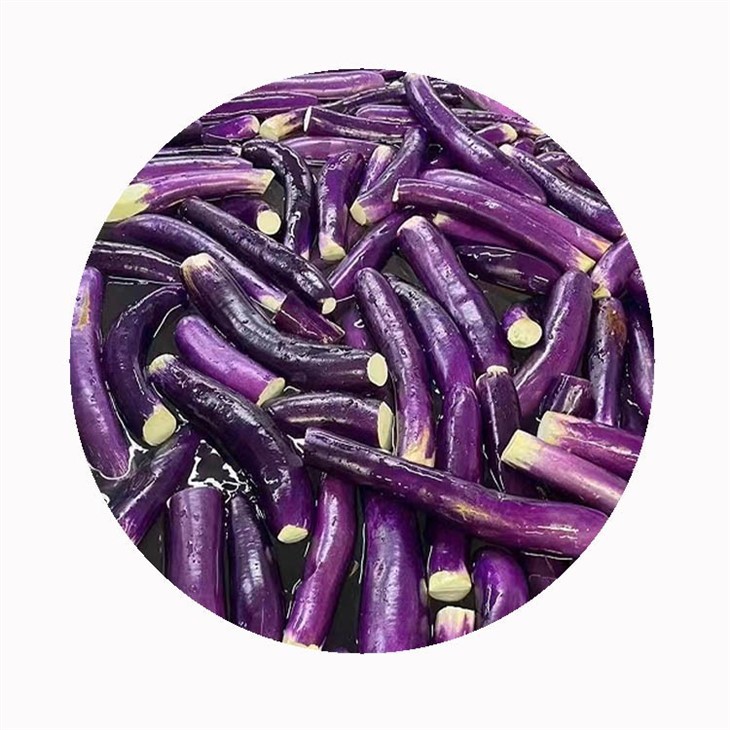
GreenLand photo of slender purple eggplants with stems trimmed.
The cut changes both the heat path and the way sauce clings. Thin strips soften quickly but lose their outline if they are moved roughly or held in a hot sauce. Large wedges keep a visible purple edge, yet their thick centers need time to become tender. Tiny dice expose more cut surface and can absorb liquid rapidly. Keep the cut consistent within a batch so that the first pieces do not collapse while the last pieces are still firm. Place the prepared eggplant near the stove and cook it soon after cutting; a long delay encourages exposed flesh to darken.
For a restaurant or ready-meal line, the name "diced eggplant" leaves too much to interpretation. Ask for a representative sample and compare the distribution of piece sizes, skin-on share, seed maturity, and fines after normal handling. A photo of the raw or frozen cut helps purchasing, but the finished pan is the deciding evidence. A cut that looks attractive in a carton may soften too far during a second heat step. The GreenLand frozen eggplant range is a useful starting point for discussing forms; the sample test must still use the proposed lot and recipe.
Choose the shape to suit the dish rather than copying a restaurant cut mechanically. A sauce-coated rice bowl can welcome soft cubes, while a visible vegetable side needs pieces that survive turning and holding. When comparing shapes, keep the oil dose and sauce constant. Otherwise the cut may appear to be the cause of an oily or wet result when the difference came from seasoning or pan load.
Prepare fresh eggplant before it meets the oil
Wash the eggplant, remove the stem, and dry the skin before cutting. Surface water cools the pan and can turn the first part of a stir-fry into steaming. Once cut, lay the pieces on a clean towel and blot the exposed flesh. This simple step matters whether or not you salt the eggplant. It helps the first cut faces meet hot metal, and it makes a measured oil dose easier to distribute. Put the sauce, aromatics, and serving dishes within reach before the pan heats; the eggplant will not benefit from waiting in a warm, crowded wok while the cook mixes a sauce.
Salting is an optional preparation tool. It can draw out some water and alter bitterness in a mature or large eggplant, but a tender young eggplant may need no such pause. Purdue Extension FoodLink describes salting and then rinsing, gently squeezing, and drying slices. That sequence matters: wet salted pieces do not make a dry stir-fry merely because salt was applied. Salting also changes the sodium in the finished food, so consider the full sauce recipe and its label before making the step standard in a prepared product.

Cut eggplant wedges being blotted dry before cooking.
If you salt, use a controlled amount and time, then decide whether the recipe calls for a rinse. Dry the pieces thoroughly after either approach. Taste a test batch before reducing or adding salt in the sauce. An aggressive salt treatment can produce a limp piece that browns unevenly and no longer has the texture the buyer expected. A short, documented trial on the actual cultivar is more useful than stating that every eggplant requires exactly the same preparation. Keep the trial's cut, salt dose, hold time, and drained weight with its cooking observations.
Brief steam or a covered pan stage offers another route for thick pieces when the oil allowance is tight. Heat softens the flesh before the surface has taken up a large amount of oil. Drain a pre-steamed batch well before it goes into the wok, and do not steam it until it collapses. A cook can also sear the cut sides first, cover the pan briefly with a spoonful of water, then uncover to let moisture leave. These are different methods with different color and texture outcomes. Compare them with the same oil allowance instead of treating one as a guaranteed cure for grease.
Fresh preparation and frozen preparation are separate questions. A purchased frozen product may already be blanched, grilled, fried, or otherwise cooked. Salting it again rarely answers the real issue, which is usually how much surface ice or released water enters the pan. Read the product description first. If the supplier offers a frozen pre-fried cut, ask about oil content as part of the ingredient specification; a low-oil final wok stage cannot remove oil that was used before freezing.
Stir-fry with a measured amount of oil
Measure the oil before heating the pan. For a household trial, a tablespoon for a modest pan of eggplant is a reasonable test dose, and a recipe may need more or less as the load changes. The purpose of measuring is to make the result reproducible. Purdue Extension notes that eggplant absorbs oil and recommends care when adding it. The U.S. Department of Veterans Affairs stir-fried eggplant recipe shows a different valid approach using two teaspoons of oil for a medium eggplant, followed by sauce after the vegetable has cooked. These examples are starting points, not a universal ratio for every pan.
For a first controlled trial, follow this order:
- Preheat a broad pan and spread the measured oil across its surface.
- Add one shallow batch of dry, evenly cut eggplant.
- Let the cut faces color, then turn the pieces without crushing them.
- Check a thick center; if needed, add a little water and cover briefly, then uncover.
- Add aromatics and the prepared sauce once the eggplant is nearly tender.
Heat a broad wok or skillet to a steady medium-high cooking temperature. Add the measured oil and move it across the surface. When it shimmers, spread in a single workable layer of dry eggplant, leaving room to turn. A deeply piled pan traps steam, cools the metal, and makes browning uneven. If the recipe is large, cook the eggplant in batches and combine it when the sauce is ready. Keep the batch size, pan type, and oil dose together in your kitchen notes; changing one without the others changes the finished food.

A small measured spoon of oil entering a hot wok beside eggplant wedges.
Let the cut sides sit briefly against the metal before turning. Constantly stirring from the first second prevents a surface from developing color and can tear a soft piece. Then turn enough to expose the other cut faces. The pan may seem dry as the flesh takes up oil. Check the actual piece before adding more: if the surface is coloring and the center is beginning to soften, continue with the measured dose. If pieces are sticking hard or charring while the center is raw, lower the heat slightly and add a small amount of water, cover briefly, then uncover so the added moisture can leave.
The cooking endpoint is tender flesh that yields to a fork or spatula while most pieces still keep their shape. Time varies with thickness, variety, pan material, heat output, and pan load. In its household method, the VA cooks cubed eggplant for about ten minutes before adding the sauce, then another three to five minutes to finish. A thin wedge in a hotter, less crowded wok may reach tenderness sooner. Use those times to set the first inspection, then judge the center of several pieces instead of relying on a clock alone.
Keep garlic, ginger, and other small aromatics from burning. They can be cooked briefly after the eggplant is partly tender, or in the cleared part of the pan before the sauce goes in. Raw garlic scattered into a very hot dry wok at the beginning can scorch while the eggplant is still firm. If meat or another ingredient needs a different cooking time, prepare it separately and return it when the eggplant is ready for the final toss. This protects both texture and food-safety control in a mixed dish.
Add sauce when the eggplant is nearly tender
Mix the sauce before the eggplant enters the wok. A small amount of soy sauce, water or stock, ginger, and any sweet or acidic ingredients should be ready as one measured addition. If the recipe uses a thickener, disperse it fully and stir it again just before pouring. Sauce added too early makes it hard to see whether the eggplant has browned and can leave sugar or starch scorching against a hot surface. A late addition coats already tender pieces more evenly and reduces the time that soft flesh must be stirred.
Lower or moderate the heat for the finishing toss if the sauce contains sugar or a concentrated paste. Pour around the edge or over the eggplant in a controlled stream, then turn the pieces gently until the liquid is a thin glaze. The Just One Cookbook miso eggplant method sears eggplant before adding its sauce and removes the pan when the glaze has thickened. That recipe is one example of the timing principle. A watery sauce or an overloaded pan can undo a carefully browned surface, so keep the sauce volume in proportion to the eggplant and reduce excess liquid before plating.

Sauce poured over nearly tender browned eggplant wedges.
Oil and sauce play different roles. Oil transfers heat and helps surface contact; sauce supplies seasoning and moisture. Pouring oil into a wet pan to make the dish look glossy usually makes an oily serving because the new oil cannot correct excess water. If the pan has accumulated liquid, uncover it and let the liquid reduce while the eggplant remains intact. If the vegetable is already soft, remove it, reduce the sauce separately, and fold the pieces back in for a short final coat. That protects their outline better than a long simmer.
Taste several pieces rather than judging the liquid alone. A small cube may be strongly seasoned through its cut faces while a large wedge has a mild center. If the sauce is salty, change the sauce ratio or the cut before adding more oil. For service, record how the dish looks after a short hold and after reheating. A plate that leaves the wok with separate, glossy pieces can become a soft, wet mixture under a covered warmer. Choose a finish that survives the actual time between cooking and serving.
Use the finished dish to calibrate the next batch: note the cut, the measured oil dose, sauce volume, first tenderness check, total pan load, and visible free liquid on the plate. That short record is more valuable than a fixed minute count detached from the kitchen. It also gives a buyer and supplier a common language when a frozen cut is tested against a fresh benchmark.
Adjust the method for frozen eggplant
Frozen eggplant is useful when supply consistency and preparation time matter, but it does not behave exactly like a newly cut fresh piece. Ask whether the product is raw, blanched, grilled, roasted, fried, or otherwise cooked, and whether it is diced, sliced, or cut into strips. The GreenLand IQF frozen eggplant page shows the product range; the written lot specification and sample establish the form actually offered for an order. A pre-fried product may carry more oil into the recipe than a plain blanched ingredient. A blanched piece can release water as it heats.
The National Center for Home Food Preservation instructs home freezers to blanch one-third-inch slices, cool and drain them before packing. That is preparation for freezing, not a stir-fry cooking time. The GreenLand guide to freezing eggplant describes the softer texture and possible water release after thawing. Use those facts to plan the wok stage. A frozen sample may work very well in a sauced rice bowl yet be unsuited to a side dish that depends on firm, browned edges.
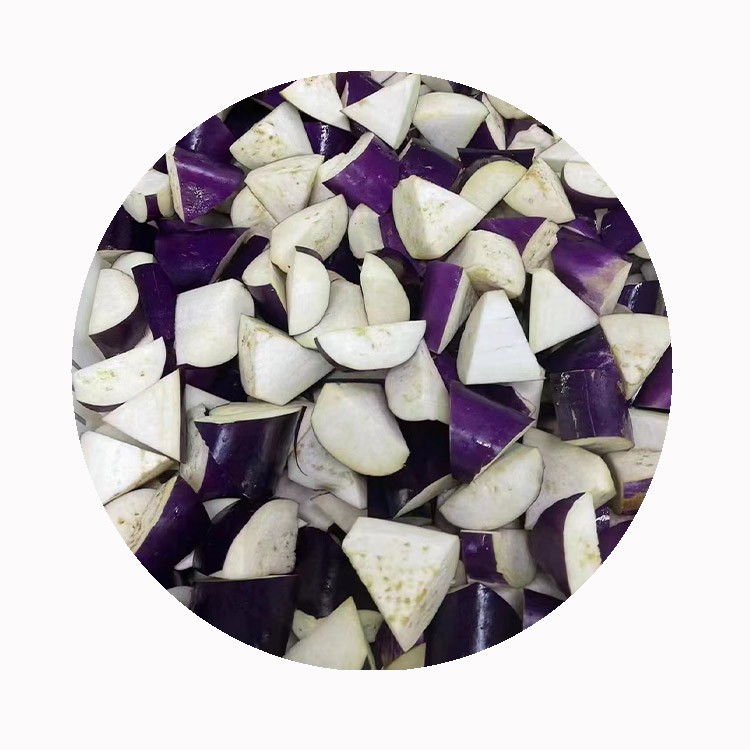
GreenLand skin-on diced eggplant pieces.
There are two practical pan routes. For a small amount of free-flowing IQF dice, test adding it from frozen to a sufficiently hot, broad pan in a shallow layer. Let surface frost evaporate before the sauce enters. Watch for the pan temperature dropping and liquid collecting. For thicker pieces or a product with visible surface ice, a controlled thaw and thorough drain can give more predictable browning. Do not leave thawed eggplant sitting warm on a bench. Follow the supplier's handling instructions and the food business's safety plan for thawing, holding, and reheating.
Avoid a full pan of frozen pieces. The frozen load takes heat from the metal and can create a shallow boil in released liquid. Use smaller batches, or preheat a suitable piece of equipment with enough capacity. Cook until the eggplant reaches the desired center texture, then add a measured sauce. A pre-cooked or grilled product may need only heating and glazing, while a plain blanched cut needs enough time for the interior to become pleasant to eat. The label and process description should settle that question before line cooks receive the carton.
The choice between fresh and frozen belongs to the final dish and operation. Fresh can offer better shape and seared edges in a short pan cook. Frozen can simplify trim work, portioning, and supply planning, provided its moisture and cut match the recipe. A prepared meal that will be frozen again and reheated needs a more demanding test than a dish served immediately. Compare the ingredient after every heating stage, not only when it first leaves the wok.
Correct an oily, wet or uneven batch
If oil gathers on the plate, check the measured dose, any oil already present in a pre-fried ingredient, and whether the sauce contains added fat. An eggplant piece can take up oil early and release some during cooking; the apparent dryness of the wok at the start does not prove that more oil is needed. Begin a new trial with a recorded dose and a clean pan. For a currently oily batch, draining excess free oil and serving a smaller portion may improve appearance, but it cannot reverse oil absorbed into the flesh. Prevention depends on the next batch's cut, preparation, and dose.
A wet batch points toward a different cause. Pieces may have entered the wok dripping after washing, salting, thawing, or blanching. The pan may also have been too full to evaporate the liquid. Dry the next batch more thoroughly and spread it across a larger hot surface. For the current pan, remove the eggplant once tender, reduce the liquid separately, and then give the pieces a brief coat. Long cooking to drive away water can turn the ingredient to puree before the sauce becomes glossy.
Uneven texture usually starts before the pan heats. A mix of tiny dice and thick wedges will not finish together. Separate the cut sizes or standardize the input. If a fresh globe eggplant has thick skin or hard seeds, choose a younger lot or a different form. If a frozen carton contains clumps and many broken fragments, inspect whether handling, packaging, or cold-chain fluctuation affected the pieces. The answer may require a product specification change rather than a longer cooking time.

Oily collapsed eggplant beside lightly glazed intact pieces.
| What you see | Likely issue to check | Next controlled adjustment |
|---|---|---|
| Oil pools below soft pieces | Extra oil added when the wok first looked dry, or pre-fried input | Measure the full recipe oil, confirm the ingredient's processing status, and repeat at the same pan load. |
| Little browning and much free liquid | Wet pieces or crowded pan | Drain or blot the input and cook a smaller, shallower batch. |
| Brown exterior, firm center | Thick cut or heat too high for the piece | Reduce the cross-section or briefly cover with a small measured splash of water before the final uncovered stage. |
| Pieces collapse during saucing | Overcooking or prolonged wet holding | Add sauce later, shorten the toss, and test the expected hold time. |
| Bitter or tough pieces | Mature raw material, dense skin, or an unsuitable form | Compare another lot or cut before changing the sauce. |
Change one variable at a time when running a kitchen trial. A smaller cut, a hotter pan, more oil, and less sauce introduced together may produce a better plate, but nobody will know which decision mattered. Retain a photograph and basic notes for the acceptable result so the next cook can repeat it.
Specify and test frozen eggplant for repeatable stir-fries
Commercial purchasing should begin with the finished application: visible eggplant side, sauced bowl, vegetable mix, prepared meal, or filling. State the desired piece outline and texture after the last planned heat step. Then request the cut dimensions and tolerance, peel-on share, pretreatment, cooking status, added oil or seasoning, frozen separation, allowable fragments, packing format, and storage conditions. These are discussion points for a specification, not claims that one standard suits every product. GreenLand-food can help buyers align the offered frozen form with their own pan method and target serving.
Run a small, controlled comparison with a representative sample. Prepare the same total weight, keep pan and sauce constant, and record the oil added during cooking. If the trial compares frozen and fresh inputs, account for any drain loss before judging portion yield. Photograph the ingredient from the carton, after the first heat stage, on plating, and after the intended service hold or reheat. Taste the center of several pieces. The cooked sample reveals water release, shape retention, skin toughness, flavor, and sauce uptake more reliably than a frozen product photo alone.

Cooked eggplant cubes and longer wedges in separate test dishes.
Ask the supplier for the relevant lot documents and handling details: ingredient declaration, processing or blanching status, packing, net weight, shelf-life statement, storage temperature, traceability, and any destination-market documents needed for the order. The buyer should also confirm quantity, inner pack size, delivery schedule, and whether a private-label format is required. A 10 kg foodservice carton and a retail pouch can contain the same cut while behaving differently after repeated opening or partial use. Match the pack to the kitchen's actual withdrawal pattern.
For a prepared-meal manufacturer, test after assembly, freezing, distribution simulation where appropriate, and final reheating. Sauce viscosity and the other vegetables in the recipe influence whether eggplant remains distinct. A cut that passes a direct wok trial can lose structure when it spends more time in a moist tray. For foodservice, test the longest realistic hold on the hot line and the method staff will use to replenish the pan. Write the accepted endpoint in sensory terms a cook can apply, then support it with measurable cut and defect criteria where practical.
Treat an attractive low-oil trial as a starting point for repeatability. Repeat it with another sample or lot when the order is significant, using the same oil dose and pan load. Record unacceptable free oil, excess water, fragments, or harsh skin as specific observations rather than "poor quality." That information lets the supplier propose a different cut or preparation and lets the buyer compare offers fairly. The best frozen eggplant for this dish is the one that reaches the required texture with the intended cooking process and a controlled amount of oil.
Source frozen eggplant with GreenLand-food
GreenLand-food is a professional frozen eggplant supplier and manufacturer in China, providing factory-direct wholesale supply for importers, food manufacturers, foodservice distributors and private-label programs.
Send the target cut, specification, packing, quantity, application, destination, private-label needs and requested documents so we can confirm a relevant sample and current supply.