


When Do Blackberries Go Bad? Separating Decay from Frozen-Quality Defects
Sep 27, 2026
Leave a message


Recognize a sound fresh blackberry
A blackberry consists of many small drupelets joined into one fruit. A useful fresh-fruit baseline includes the overall shape, the condition of those individual drupelets, the surface and the aroma. Look for intact tissue and the expected color for the lot. Handle the sample gently: pressure from inspection can damage a delicate berry and introduce leakage that was absent when the pack was opened.
Firmness needs context. A sound ripe blackberry does not have the same texture as an underripe fruit, and cultivars differ in their handling characteristics. A receiving specification should describe the intended market and accepted condition. A berry selected for immediate processing may have a different presentation requirement from a fresh retail pack, even though both must satisfy the applicable safety and quality controls.
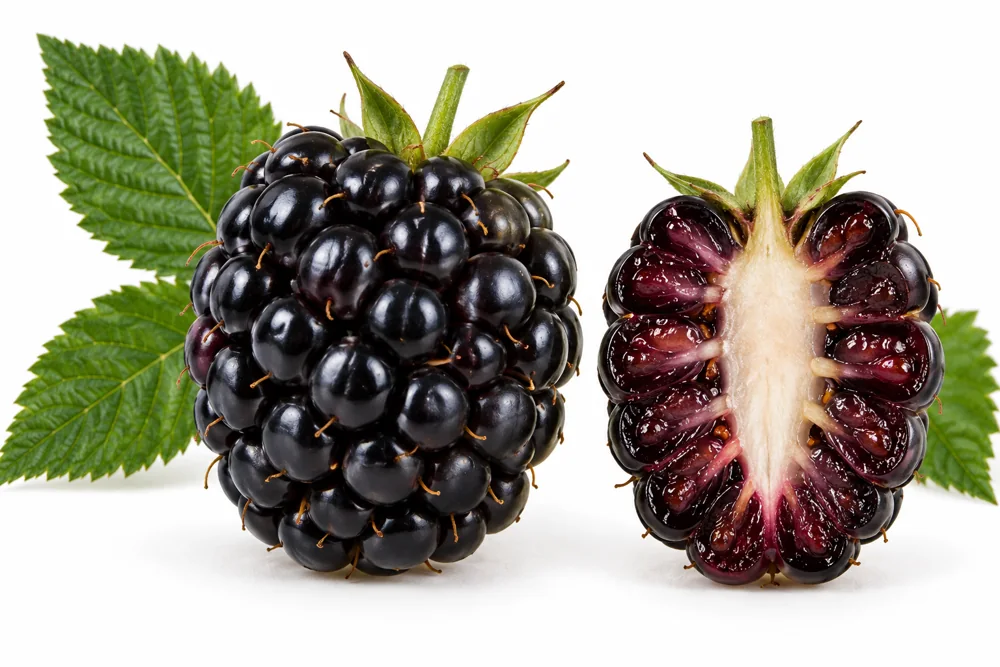
The individual drupelets form one fruit around a retained central receptacle.
Inspect more than the top layer. Transparent fresh packs make the most visible fruit easy to judge, but liquid or damaged berries may sit below. Turn or open samples according to the operation's procedure and document the location of the observation. A photo of one attractive surface cannot establish the condition of every berry in the container, and a photo of one damaged berry does not describe the frequency of the defect across the lot.
Use a neutral background and consistent lighting when assessing color. Strong colored light, automatic camera processing and reflections can make dark berries look redder or paler. Keep the original photograph with the sample reference rather than adjusting saturation to make the defect more obvious. Close detail can show the affected drupelets, while a wider image shows the condition of the whole sample.
An ordinary berry aroma provides another observation, but avoid making smell the sole test. If a sample has visible mold or otherwise suspect condition, follow the operation's handling procedure without tasting it. A desirable aroma does not clear a product with an unsuitable history, and the absence of an off odor does not prove that relevant hazards are absent.
The USDA fresh dewberry and blackberry grade page is a useful reference for the scope of fresh-fruit grading. Its existence does not turn a brief visual inspection into a complete safety assessment. For commercial work, identify which standard or buyer specification applies before deciding what the observations mean for acceptance.
Keep a reference photograph or agreed sample that shows the intended fresh condition. That gives the inspection team a consistent baseline and makes later discussions more precise than descriptions such as berries look old or berries look wrong.
Recognize decay and handle suspect fruit
Visible fungal growth is a reason to treat a blackberry as suspect. It may appear as a fuzzy coating or growth around damaged tissue. Collapsing, leaking or slimy fruit and an abnormal fermented odor also require attention. These observations can occur together, but they do not identify a microorganism or explain the complete history of the product on their own.
For home handling, discard moldy soft berries rather than trimming them as if they were a hard vegetable. The USDA guidance on molds on food explains why soft, high-moisture produce requires different treatment from some firm foods. In a commercial lot, follow the established hold, sampling and disposition procedure so the affected product can be assessed at the appropriate scope.
Leakage deserves careful description. Fresh berries may leak after crushing, excessive handling or deterioration. The liquid alone does not establish which mechanism occurred. Record whether berries are physically flattened, whether the packaging shows pressure damage, whether there is visible mold and whether the condition is localized. Those details help quality personnel decide what evidence to review next.
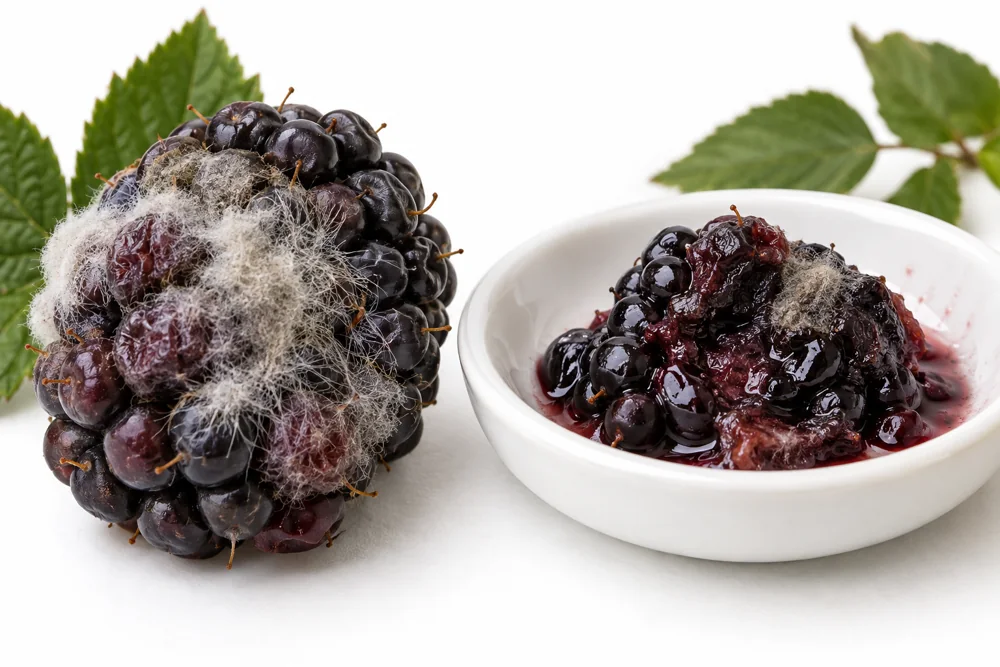
Fuzzy growth and collapsing tissue require the established suspect-product procedure.
A visual assessment should never become a tasting challenge. Do not taste suspect fruit to see whether it is still acceptable, and do not use a normal taste as a safety clearance. The operation's controls may require review of traceability, handling records and relevant testing in addition to appearance. The person making the disposition should have the authority and information needed for that decision.
Keep suspect samples identified and separate from product released for use. If the problem is discovered during production, retain the link between the ingredient lot and any affected work in progress according to the site's procedure. Mixing a questionable bag into an otherwise acceptable batch makes the history harder to reconstruct and can enlarge the scope of the issue.
For a supplier report, describe what is visible before assigning a cause. A statement such as fuzzy gray growth on several berries in a sampled bag is more useful than asserting that the shipment was warm throughout transport without records. Include original photographs, lot identifiers and the sample location. A sound investigation begins with observations that both parties can verify.
Cooking or blending should not be proposed as an automatic rescue for spoiled fruit. An intended processing application can accept certain agreed quality characteristics, but it does not erase decay or override the product's safety requirements. Keep the decisions about usable form, quality downgrade and safety disposition clearly documented.
Understand red drupelet reversion
Some blackberries develop red drupelets after harvest even when those drupelets were dark at picking. This is commonly described as red drupelet reversion. NC State's diagnostic guidance distinguishes this postharvest reddening from other discoloration patterns. A smooth red portion of fruit tissue is visually different from fuzzy fungal growth.
The handling context matters. The University of Georgia postharvest circular discusses reversion alongside bruising, compression and cooling conditions. That does not mean a photograph can identify one exact cause. The receiving team should connect the visible pattern to the available lot and handling records instead of treating every red drupelet as evidence of a single temperature event.
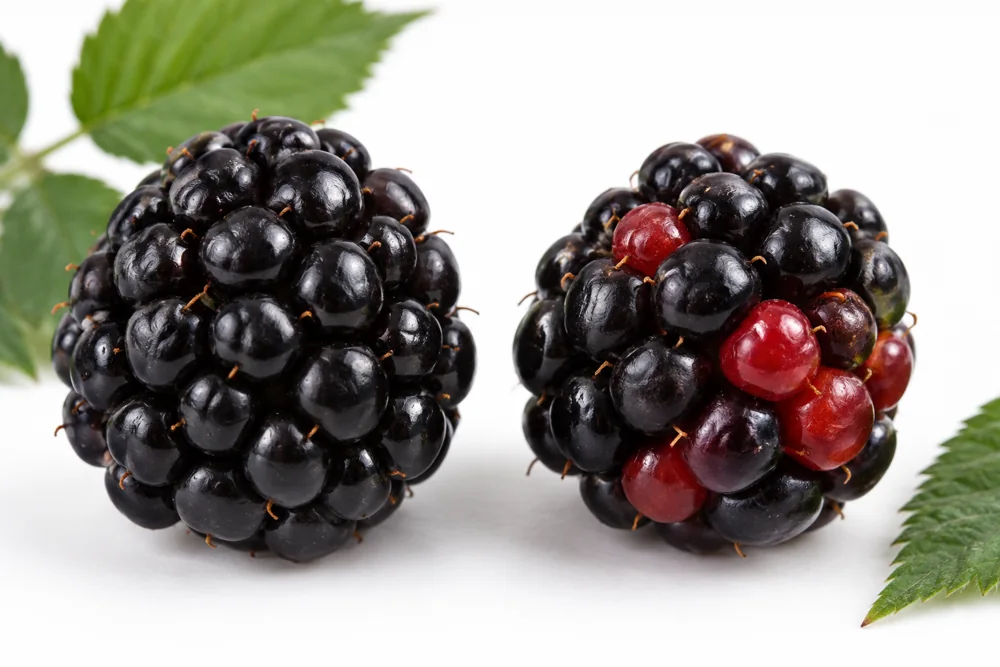
Smooth red drupelets can reflect a color change; assess the rest of the condition separately.
A blackberry that was red before harvest presents another possibility. Color can reflect maturity as well as postharvest change. The distinction may matter to flavor and appearance, but it cannot always be resolved from one receiving image. If the contract limits red areas, define the visual defect itself and the method for measuring it. An uncertain cause need not prevent a clear description of the observed condition.
White or tan drupelets also have several possible explanations. The University of Arkansas disorder guide describes conditions including white drupelet disorder and sunscald. These are useful diagnostic comparisons, but pale fruit tissue, frost and fungal growth should not be merged into one category simply because all can look light in a photograph. Examine texture and pattern, and obtain further assessment when the appearance remains uncertain.
For a commercial specification, the denominator is essential. The proportion of berries with any red drupelets differs from the proportion of total drupelets that are red. A mass-based count of fruit classified as discolored is different again. A report that says ten percent red without defining the measurement cannot be compared reliably to an agreed limit.
Use example photographs to define the boundary if appearance drives acceptance. State whether a berry with one red drupelet enters the same category as a berry with a large red area, and how berries with more than one defect are counted. Those are contract choices to agree before receiving, not universal thresholds to infer from an online picture.
Reversion is an appearance observation with potential commercial consequences. It can make a garnish unsuitable for a particular presentation even when decay is not established. Conversely, identifying a reversion-like pattern does not clear the rest of the sample for safety. The lot still needs the normal ingredient, handling and quality checks required for its intended use.
Read frozen and thawed appearance separately
An IQF blackberry should be examined first in its delivered frozen state according to the agreed method. Record whether fruit is loose, whether ice is present, whether there are clumps and how the package looks. Opening and leaving the sample on a warm bench changes the surface quickly. Photographs taken at different stages can therefore show different appearances without any change in the underlying lot.
Frost can obscure the color of frozen fruit. Ice crystals have a different structure from fuzzy fungal growth, but an unclear photograph may not reveal that distinction. Do not brush or wash the sample into a more attractive condition before documenting it. If a further prepared-sample assessment is needed, record that treatment and keep the original frozen-state observation alongside it.
Dry, pale or leathery areas may indicate dehydration and reduced eating quality. Breakage can come from the fruit form, processing or handling, and may matter greatly for a whole-berry garnish. These observations are useful quality signals, but neither establishes a complete safety diagnosis. Review the specification and history before assigning a disposition.
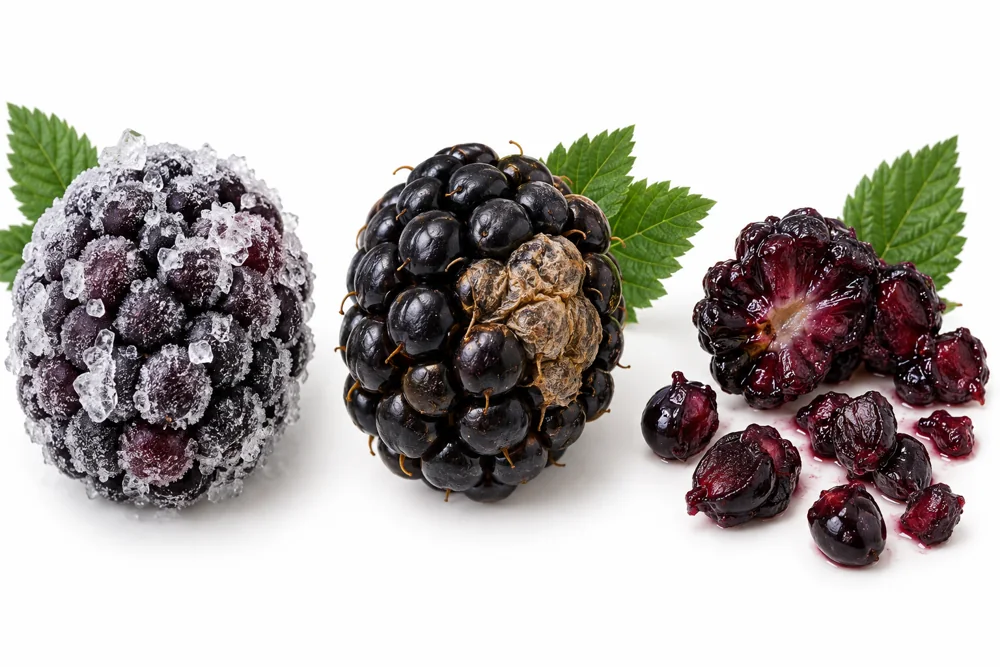
Record the visible condition and assessment state before deciding on its meaning.
Clumping also needs context. It may be inconsistent with an agreed free-flowing product, but a single clump cannot quantify the extent or duration of a temperature deviation. Packaging, pressure and the product's intended form can affect what the inspector sees. Record the condition and review the available cold-chain information. Avoid converting appearance into a precise temperature history that was never measured.
Thawed fruit is a separate observation state. Softer tissue and released juice can occur after freezing and thawing, so comparing a thawed sample directly with a fresh berry's firmness can create an unfair acceptance rule. Prepare the sample with a documented method and measure the characteristics relevant to the application. A sauce ingredient may be evaluated differently from fruit intended to remain visibly whole.
| Observation | Possible interpretation | What to verify before disposition |
|---|---|---|
| Smooth red drupelets | Maturity variation or color reversion | Defined color limit, assessment state and lot history |
| Fuzzy growth or slimy collapsing tissue | Suspected deterioration | Hold procedure, sample scope and responsible quality review |
| Surface frost or loose ice | Frozen-state surface condition | Packaging, storage records and agreed ice criteria |
| Dry pale areas | Dehydration or other surface change | Detailed appearance, prepared quality and contract definition |
| Broken berries or pieces | Product form or physical damage | Whole-versus-pieces specification and measurement method |
Our frozen blackberry storage guide addresses the broader storage question. Here, the useful distinction is the state in which each observation was made and the decision it can support.
Record representative receiving evidence
A receiving record should let another person understand the sampled product without having stood at the loading bay. Begin with the lot identifier, product description, delivery reference and package identity. Record the time and location of sampling and the product state when the observations were made. If several lots arrive together, keep their samples and records separate.
Use the sampling plan agreed for the product and operation. Selecting a single convenient bag cannot establish that the entire shipment has the same defect level. Equally, selecting only visibly damaged cartons biases the sample toward a particular problem. A targeted damage investigation can be useful, but identify it as such and keep it distinct from a representative acceptance sample.
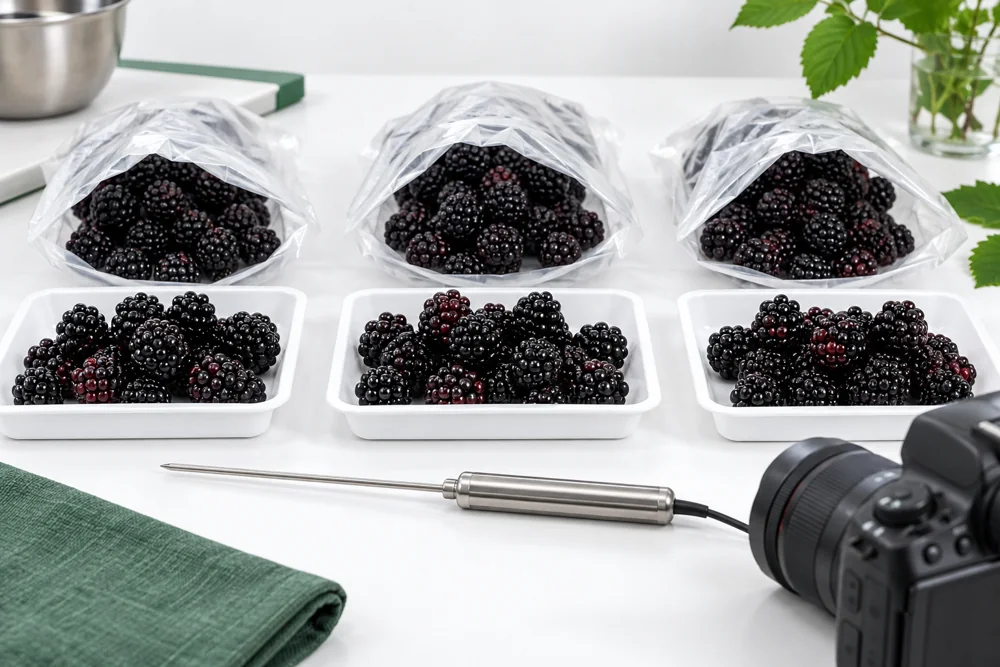
Representative samples and identified records support a receiving decision.
Photographs should include both context and detail. A wide view shows the package and sample arrangement, while a close view shows the drupelet surface or defect. Include a suitable scale where size matters and avoid editing the image in a way that alters color or texture. Keep the lot reference in the record rather than relying on an informal filename that can become detached from the image.
Temperature readings need a described method. Record the instrument, measurement location and time, and follow the operation's procedure for interpreting the result. A surface reading and a product-core reading do not answer the same question. Transport logger records provide a different form of evidence again. Keep these observations identifiable instead of combining them into one unexplained temperature value.
Define the defect before counting it. For broken fruit, state whether separated drupelets, large fragments and partially intact berries enter the same category. For color, state whether the method counts affected berries, affected surface or another agreed measure. Record the sample size and the result together. A count without its denominator cannot support a meaningful comparison between receiving teams.
If a sample requires controlled thawing or cooking for an application test, retain the connection to the original frozen sample. Record the starting mass, preparation method, liquid handling and finished observation. That allows the supplier and buyer to distinguish a frozen-state complaint from a performance issue arising in the recipe.
A practical record sequence is:
- Identify and sample the lot using the applicable plan.
- Document packaging and the delivered frozen or fresh state before changing the sample.
- Measure and photograph defined defects with their sample denominators.
- Add relevant temperature, transport and preparation records.
- Refer the complete evidence to the authorized person for disposition.
This approach also improves communication. A concise report with clear definitions usually supports a faster decision than a large set of unlabelled photographs and a general claim that the fruit looks bad.
Choose a disposition with the agreed specification
Disposition should follow the evidence and the site's authority structure. Suspected decay, contamination or an unsuitable history belongs in the established hold and safety-review process. A quality defect with no established safety implication can be assessed against the contract and intended use. These paths may involve the same quality team, but they ask different questions and should have separate reasons recorded.
A whole-berry dessert application illustrates the quality decision. Excessive breakage may make an otherwise acceptable ingredient unsuitable for the planned appearance. A processing application might accept a separately agreed piece form, provided the ingredient meets all relevant safety, identity and quality requirements. That change needs an authorized specification or disposition decision; it should not happen silently because blending hides the broken shape.
Color can be handled similarly. A garnish may require a narrow visual range, while a blended purple sauce may be less sensitive to individual red drupelets. The sauce application still needs a suitable ingredient. An appearance downgrade does not create permission to use moldy fruit, and an acceptable color result does not override an unresolved temperature or traceability concern.
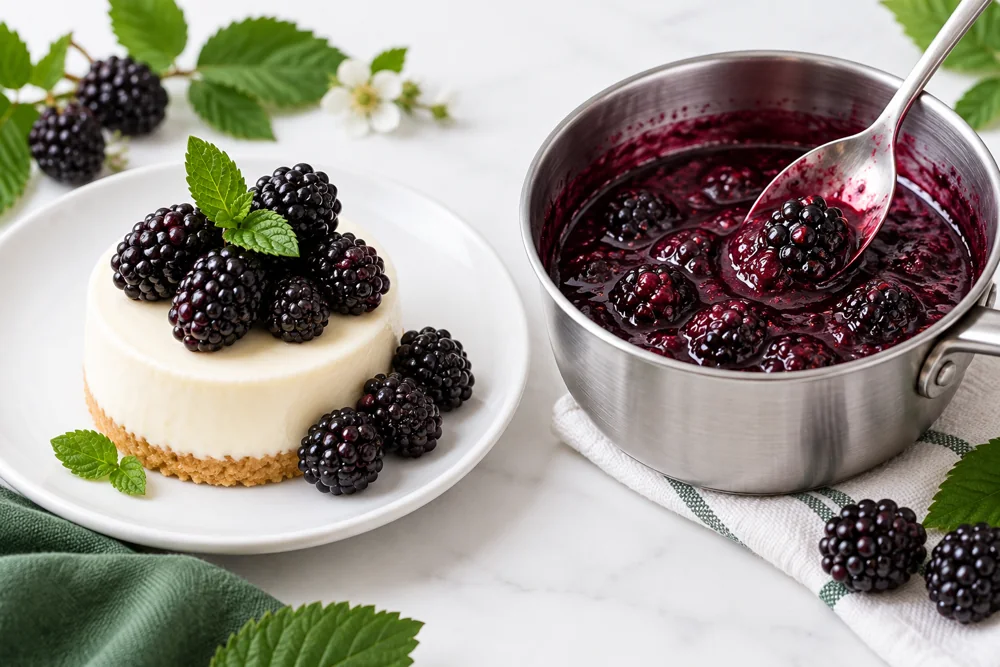
Whole fruit and pieces serve different presentation requirements.
Avoid inserting a universal defect percentage into a receiving instruction when no applicable limit has been agreed. The current IQF contract, relevant market requirements and the operation's quality system determine the acceptance basis. A fresh USDA grade can be a useful reference for discussing terms, but applying its numerical limits to frozen fruit requires an explicit, appropriate agreement.
If evidence is incomplete, place the lot on hold under the required storage conditions while the responsible team resolves the question. Record what is missing: a temperature record, a clearer sample assessment, a relevant document or an agreed definition. A hold should have an owner and a next action so the product does not drift into normal use while the review remains open.
When the parties agree on rejection, return or another disposition, preserve the reason and scope. State which lot and quantity the decision covers. If only part of a shipment is affected, the supporting evidence should explain the boundary. This is more defensible than applying the condition of one bag to every delivery without further assessment.
After the immediate decision, review whether the purchasing specification or handling procedure needs improvement. A recurring disagreement about red fruit may reflect an undefined color criterion. A repeated clumping complaint may call for clearer frozen-state inspection and cold-chain records. Correcting the source of ambiguity makes the next delivery easier to assess.
Specify the blackberry form for its intended use
The most effective receiving specification begins with the product the buyer actually needs. Whole IQF blackberries, crumble and pieces support different presentation goals. Confirm the offered form and describe the acceptance method before comparing prices. A low price for a piece form cannot be compared directly with a whole-berry presentation requirement without considering the intended application and usable yield.
For intact fruit, define the relevant size range, visual color expectation and broken-fruit tolerance using the agreed method. For processing fruit, describe the downstream operation and whether seed content, screening, yield or flavor is important. A product name that contains seedless should be checked against its current specification; the name alone does not establish whether the delivered form is whole fruit, puree or a screened preparation.

Separate frosted whole blackberries in a product sample.
The GreenLand-food frozen blackberry range provides a starting point for discussing the available forms. We confirm the product, specification, packing and order requirements with the purchasing team. Use an accepted sample and a clear preparation method where appearance or performance is central to the project.
Packing should fit the receiving and production process. Specify the bag or carton format, planned quantity and any private-label needs. Keep lot identification usable after an outer carton has been opened. If ingredients are decanted into internal containers, the operation needs a way to preserve that identification through storage and use.
Ask for the documents relevant to the actual destination and intended process. The product specification, traceability information and agreed quality records should refer to the material supplied. If the final application requires cooking or another treatment, make that intended use clear in the purchasing discussion and follow the confirmed instructions during development and production.
An approved sample should show the form the customer will receive, including the normal range of appearance allowed by the specification. A photograph of a hand-selected perfect berry can support product identification, but it cannot define the whole lot's acceptance by itself. Keep the written tolerances, measurement method and application trial together.
When a future delivery looks different, the team can then ask a precise question: does this representative sample meet the agreed condition in its defined assessment state? That question supports a clear receiving decision while keeping true deterioration, physiological color change and frozen-quality defects in their proper context.
Source frozen blackberries with GreenLand-food
GreenLand-food is a professional frozen blackberries supplier and manufacturer in China, providing factory-direct wholesale supply for importers, food manufacturers, foodservice distributors and private-label programs.
Send your product form, specification, packing, quantity, application, destination, private-label needs and requested documents. We will review the requirements with your purchasing team and confirm the proposed supply plan.