


Strawberry Curd from Frozen Fruit: Puree Concentration, Egg Set and Chilled Texture
Sep 27, 2026
Leave a message

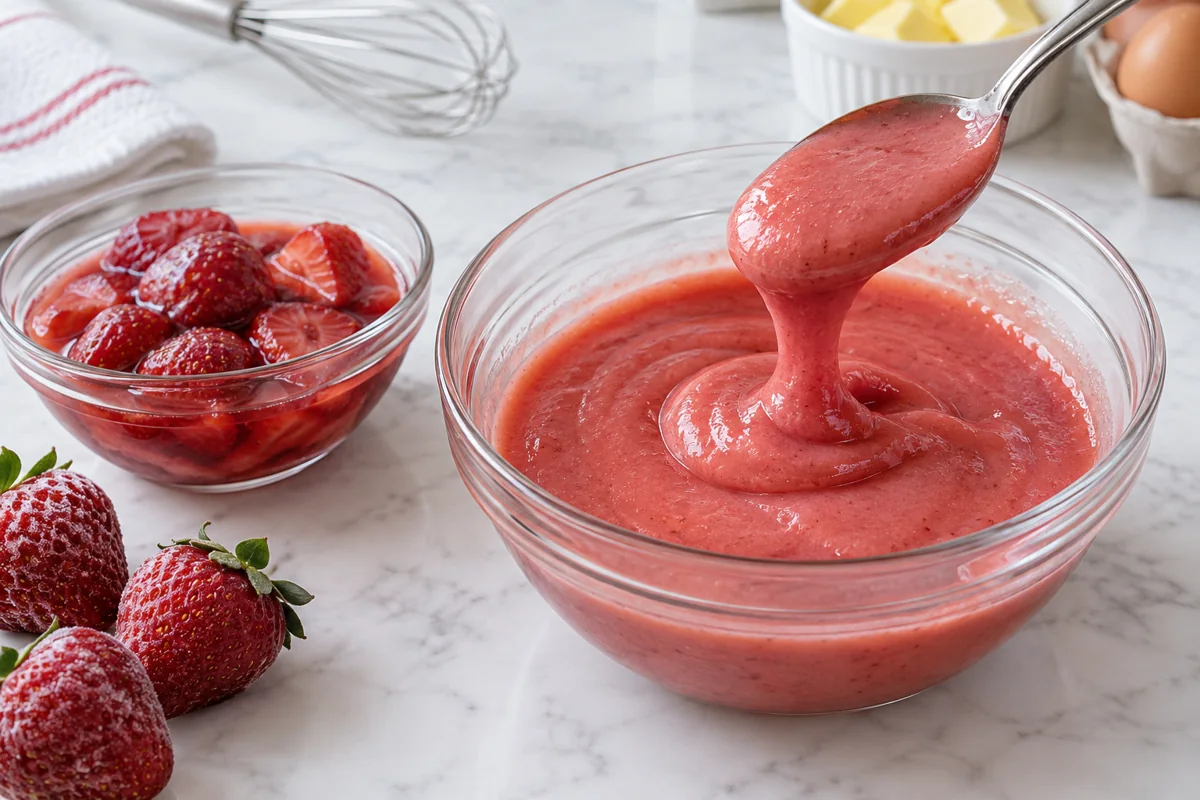
What makes strawberry curd different from jam or starch filling
A curd thickens primarily through a controlled egg network and gains richness from fat. The fruit brings water, acid, soluble solids, pigment and aroma. A jam develops its body through fruit solids, sugar and pectin under its own process. A starch pie filling relies on starch hydration and gelatinization. These can all be red strawberry fillings, but their texture changes under heat, chilling and pastry contact are different. A recipe developer should identify which system the finished product needs before selecting a method.
In a curd, the egg phase is sensitive to heating rate and mixing. Too little set can leave a glossy sauce that runs from a cut tart. Excess or uneven heat can form grainy egg lumps. A strained curd may look smoother immediately, but straining cannot undo every flavor or texture error. The butter is commonly blended into a warm base to complete mouthfeel and emulsification. Its amount must be tested with the fruit solids rather than copied from a lemon formula by volume.
A strawberry's acidity can vary by cultivar and ripeness, and many curd recipes add lemon juice. Lemon can sharpen flavor and influence the formula, yet the amount should be treated as a controlled ingredient in a trial, not a casual correction applied to every batch. If one lot has a softer aroma or lower acidity, a formulator may need a different balance. Record the fruit lot, Brix, acid measure where available and the amount of added acid. Taste the finished chilled curd, where fat and serving temperature can mute the perception of fruit.

Egg and fat set a curd differently from a starch-thickened fruit filling.
The desired endpoint also differs by use. A jarred spread may be intentionally soft. A tart layer needs to remain in place when sliced. A cake filling must resist squeezing under the weight of the next layer, and a pastry cream blend may need a particular mixing behavior. Set a service temperature and a defined time after chilling before deciding whether the curd is firm enough. Comparing warm samples can produce the wrong conclusion because both egg set and butter texture continue to change during cooling.
Our frozen strawberry pie filling guide addresses a starch-thickened system. Link to it when a customer needs a filling built around starch and bake stability. The present curd decision concerns how much measured strawberry fruit phase can be carried by an egg-fat structure without losing the desired chilled texture. Treating those systems as equivalent would hide the development work the buyer actually needs.
Prepare the frozen strawberry fruit phase
Record the mass of frozen input and any thawed liquid before blending. The liquid belongs to the fruit lot unless the developer deliberately drains it; discarding it changes both yield and flavor balance. A sealed, controlled thaw gives a known starting point. Blend the fruit and pass it through the chosen screen if seed residue is unacceptable. Weigh the screened puree and the retained solids. The difference between whole fruit weight and usable puree is a real commercial cost, especially when the formula is priced per kilogram of finished curd.

Real frozen whole strawberry close view for thawed puree-input discussion
A whole frozen berry, a smaller piece and a prepared puree can reach the saucepan with different particle size and liquid distribution. Whole IQF fruit may require thawing and blending; pieces can reduce preparation time; a supplied puree may remove one operation but must be confirmed as available, with its own pack, ingredient statement and concentration. The fruit form should not be changed mid-trial without recording the effect on screened yield and solids. An equal input weight of two forms does not guarantee an equal usable puree mass.
Fruit concentration is a deliberate option when a thin puree would dilute the egg set or weaken strawberry flavor. Reduce a measured screened puree under a controlled time, vessel and stirring method, then weigh it again. Record the reduction loss as water removed, not as an assumed universal percentage. Heat can intensify some cooked notes and diminish fresh aroma, so the strongest reduction is not automatically the best flavor. Compare two concentrations that still fit the intended strawberry character.
The developer can run a paired test with the same base curd formula and equal final fruit-phase mass. One route uses screened puree at its original concentration. The other uses a controlled reduction and adds a measured amount of that concentrated puree. Holding the egg, sugar and butter system constant isolates the main fruit-phase difference. Measure Brix and, where relevant, titratable acidity and pH under a consistent method. Record color and aroma in the chilled result; a darker puree is not proof of a better curd.
Seeds deserve a separate decision. Fine screening can improve a silky tart filling but may lower yield and reduce some body. For a rustic spread, a small visible seed fraction could be acceptable. Use the finished pastry to decide, since a seed barely noticed on a spoon may become prominent in a smooth cake layer. Specify mesh or screen condition and measure retained mass. A phrase such as "seedless" needs a testable tolerance, not only the observation that the puree was strained once.
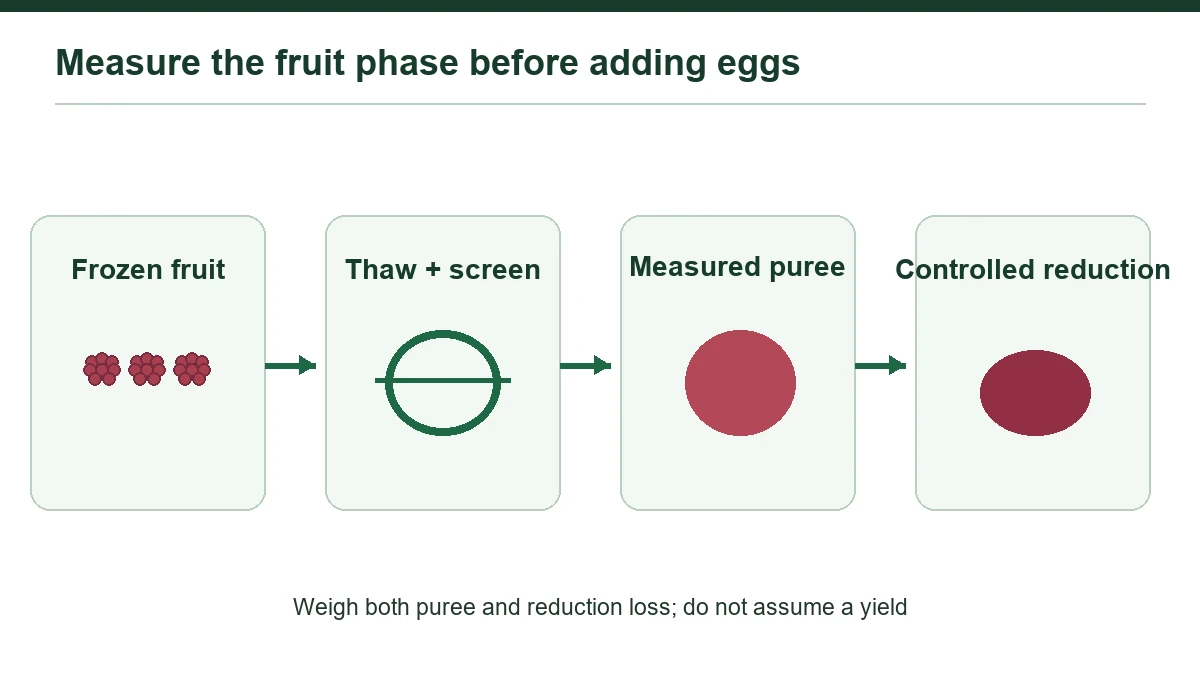
Weigh frozen input, screened puree and controlled reduction loss.
Do not treat freezing as a concentration process. Ice and thaw drip redistribute water, but the ingredient remains the fruit's mass until the developer actually removes liquid or evaporates water. A clumped bag or heavy ice accumulation may suggest a handling concern, yet it does not provide a corrected Brix value. Check the lot, package and cold-chain record, then measure the thawed fruit phase directly. That is a better foundation for a repeatable formula than relying on appearance alone.
Control egg set and a smooth emulsion
Begin with a written formula by mass. Identify whether the egg ingredient is whole egg, yolk or a defined mixture, and record the supplier's handling instructions. Different egg ratios change texture, color and flavor. Mix sugar with the egg phase according to the chosen route and bring fruit and egg together in a way that avoids localized overheating. A double boiler, gentle direct heat or controlled jacketed vessel can all be workable when the operation has validated its process and mixing coverage.
The visual aim is a smooth, continuously moving mixture. Stir along the base and corners where hot spots form, and use a vessel appropriate for the batch size. In a development trial, record the observed thickening point, heating profile and texture. An infrared reading of the surface or a single warm spoon test should not be treated as the center temperature of a large batch. The food operation must establish and verify its own egg-safety controls, including instruments, records, transfer and chilling. Recipe-site times and temperatures are not a commercial process validation.
Excess heat or a pause in mixing can coagulate egg into discrete particles. A fine sieve after heating may remove a small amount of graininess, but it also costs yield and cannot rescue a badly scrambled batch. Note the mass retained by the sieve, since a curd that appears smooth only after high loss may be uneconomic at scale. If repeated graininess occurs, test vessel geometry, heat input, batch load and stirring access before simply adding more fat or diluting with puree.
Butter is generally incorporated so that it disperses evenly into the warm fruit-egg base. Its temperature, piece size and mixing method can change how quickly it melts and whether the finished curd feels greasy. Hold the formula and method constant during a fruit-concentration comparison. Otherwise, a change in butter incorporation may be mistaken for a fruit-lot effect. Assess the chilled emulsion for a smooth cut edge, clean spoon spread and absence of visible separation.
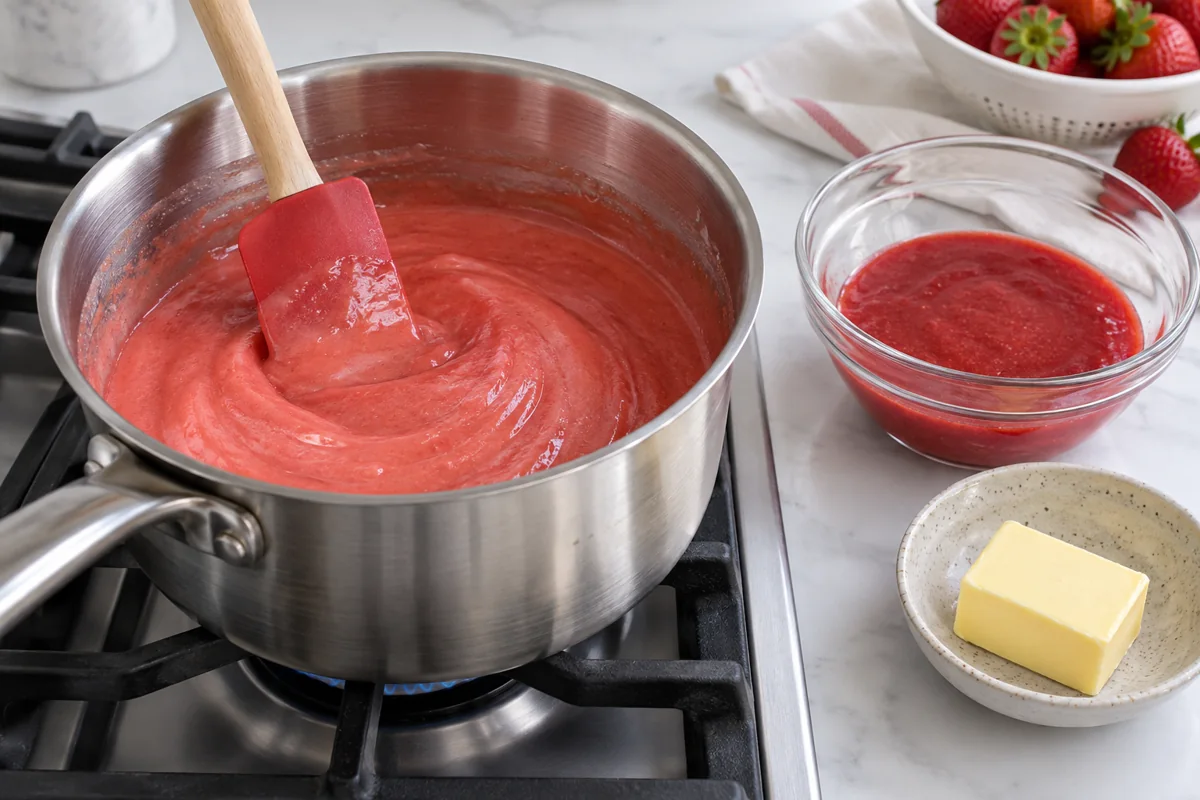
Conceptual gentle mixing of strawberry fruit and egg before butter incorporation.
A thicker hot mixture does not always yield a better cold filling. It may be overcooked, overly acidic, or too heavy for the intended pastry. Conversely, a warm mixture that seems fluid can set more firmly when chilled. Take samples at specified times and temperatures. Evaluate texture after the actual cooling and service route, including the period a filled pastry sits before sale. A formula should be approved against its cold endpoint, not just the operator's impression at the stove.
Make the safety boundary explicit in the development record. Egg treatment, any heat step, chilling rate, packaging, distribution temperature and finished shelf life are the responsibility of the producing food business. If the finished product will be sold beyond an immediate chilled service, require appropriate microbiological and shelf-life validation. The National Center for Home Food Preservation's lemon-curd material cannot be transferred to strawberry curd as a canning approval because fruit acidity, composition and process differ.
Evaluate the curd after chilling and in pastry
Give every trial the same chill method, sample depth, container and assessment time. A shallow cup cools differently from a deep pastry shell; a warm layer beneath the curd can alter its structure. Once cold, test spread with a consistent spoon or spatula, then cut through a defined thickness. Record whether the edge holds, slumps slowly or flows. A photograph beside a fixed reference can make comparisons useful to the next developer, but should not replace the actual measurements and sensory notes.
Weeping is liquid visible on the curd surface, at the bottom of a cup or along the pastry contact. It can reflect fruit water, egg network behavior, freezing history or formula balance. Record where and when it appears rather than writing "too wet." A curd may look stable in a sealed cup yet soften a tart shell after several hours. The application trial should include the exact crust, barrier, fill depth and service hold. A successful spoon sample is not a finished pastry qualification.
Flavor must be judged at serving temperature. Strawberry aroma can fade beneath egg and butter, while added lemon can dominate if the fruit phase is weak. Use an agreed sensory panel or a repeatable internal method, noting strawberry intensity, acidity, egg notes and aftertaste. Compare concentration routes blind if possible. A vivid red hue might make the filling appear fruitier without actually increasing strawberry flavor, so keep appearance and taste as separate observations.
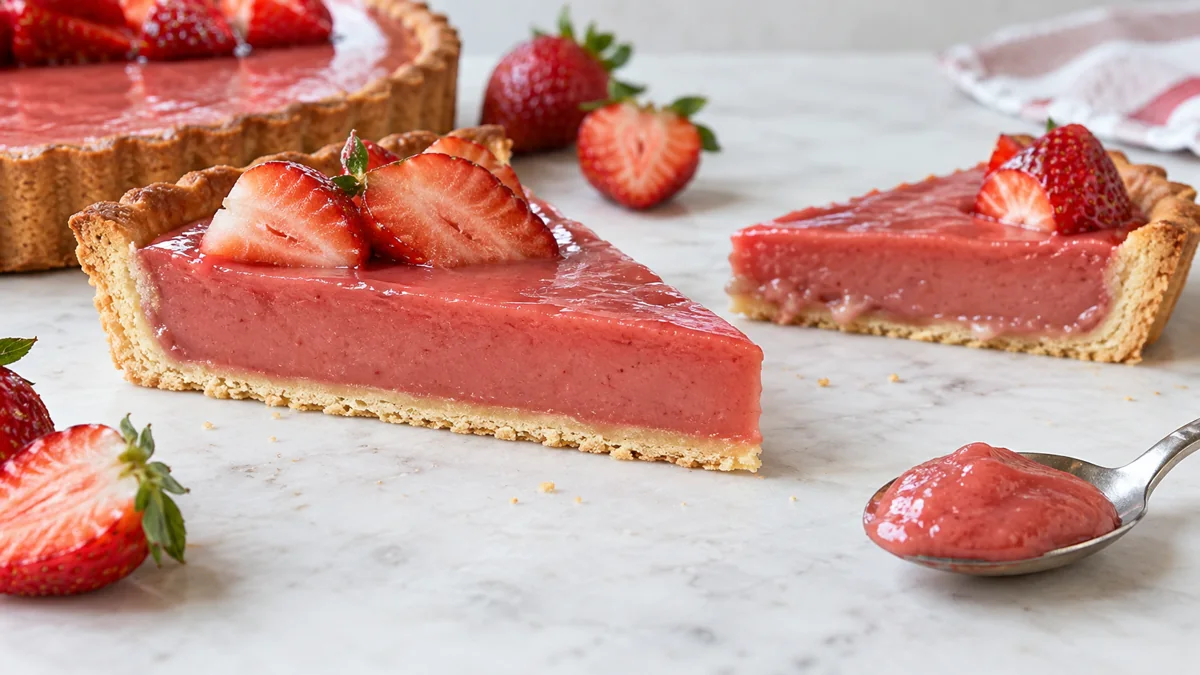
Conceptual chilled pastry cross-section for set and wetting assessment.
The pastry's structure defines the needed firmness. A thin tart layer may tolerate a softer curd than a tall cake layer that must support another sponge. A macaron filling faces moisture migration into delicate shells; a cold plated dessert may be served immediately. Set the approval rule for the intended product rather than using one generic "curd is thick" judgment. When a formula misses, change one variable at a time: fruit concentration, egg ratio, acid, butter or fill thickness. Otherwise, the next trial cannot explain which adjustment helped.
Take photographs of the intact filled pastry and its cut face after the service hold. Note a clean edge, seepage line, seed residue, surface skin and wet pastry. Keep the actual time and temperature with every image. The generated editorial pastry image in this article illustrates what to look for; it is not evidence of a GreenLand customer trial. Only measured results from the buyer's own formula can support a shelf-life or commercial performance statement.
Compare whole IQF, pieces and puree inputs
Whole IQF strawberries give the developer visible fruit identity and an opportunity to control blending and screening. They also require preparation labor and yield measurement. Smaller cut pieces can thaw and break down more quickly, but the cut may change drip behavior and the amount of retained solids. A prepared puree can simplify dosing if its concentration, seed state and composition match the formula; its current availability must be confirmed before an RFQ names it as a GreenLand supply promise.

Real frozen whole strawberries in blue liner for input-form inspection
Our frozen strawberry category page lists whole and chopped forms and quality fields such as size, Brix, color, defects, packing and cold-chain handling. The current offer should still identify the exact form, lot and pack. A photograph of whole frozen fruit cannot establish the properties of a derivative puree. Ask for the ingredient statement, any sugar or other addition, screen specification, soluble solids, acid, microbiological criteria and applicable destination documents for the exact product being quoted.
Compare forms on usable output, not merely purchase price per carton. For each kilogram received, weigh any package ice or drained liquid according to the trial method, screened puree, retained seeds/solids and final curd made. Include labor, equipment time and reduction energy if material. The relevant cost may be per kilogram of acceptable chilled filling or per finished tart, not per kilogram of frozen berries. A lower-cost fruit grade can become expensive if screening loss or weak flavor requires more input.
The frozen strawberry inspection and sampling guide gives a useful broader framework for inbound controls. In a curd program, add the attributes that directly affect formulation: thawed puree yield, seed residue, soluble solids, acidity and color after the chosen heat and chill route. Keep food-safety acceptance separate from flavor optimization; an appealing fruit lot still needs the required supplier and process documents.
A sample-request form should identify the actual product photo separately from the formulation result. GreenLand's whole and chopped fruit photos help a buyer verify visible form, but they cannot show the screened puree yield or the set of a finished curd. Ask for a representative shipment sample and run the same thaw and screening method used for the pilot. That evidence is especially useful when a buyer shifts from whole fruit to pieces to save preparation time.

Real frozen hulled whole berries and irregular pieces from chunks product page
A buyer can approve more than one form if each has a named formula route. Whole IQF may be preferred for small pastry batches, while a confirmed puree may be easier for a high-throughput line. The label and specification must reflect the actual supplied ingredient. Do not assume that a strawberry chunk and a strained puree are interchangeable by equal weight, or that a puree made from a different crop lot will taste the same. Maintain a retained sample and a replacement-lot check for the attributes that matter most to the pastry.
Write a repeatable purchase and trial specification
Write down the pass criteria before tasting the first trial. If the target is a tart filling, define a chilled cut test, maximum acceptable surface liquid under the actual hold, and the sensory panel's strawberry-flavor target. A recipe adjusted after each tasting without a fixed endpoint can appear to improve while becoming less repeatable. The same criteria should be applied to the replacement fruit lot as to the original approval sample.
A useful trial sheet begins with the fruit: supplier, origin, crop and production lot, frozen form, net pack, thaw method, screened yield, Brix, acid measure and seed condition. It then names the curd formula by mass, egg ingredient, fat, added acid, batch size, vessel, heating and mixing route, and chill plan. The final assessment records serving temperature, set, spread, cut support, weeping, flavor and pastry wetting at the agreed service time. Those fields make a seasonal replacement lot comparable to the approved one.
For a paired concentration trial, hold the egg-fat system and finished fruit-phase dose constant while comparing two measured puree concentrations. Record starting puree mass, ending mass after reduction, soluble solids and any sensory effect of cooking. Make the table blank until the actual pilot produces results. The trial can then determine whether concentration improves cold set enough to justify yield loss and processing time. It can also reveal that the less concentrated route gives a fresher strawberry profile and adequate pastry performance.
The purchase specification should cover fruit form, approved quality range, defects, packing, quantity, destination, private-label needs and requested documents. Add acceptance of a current-lot sample and define when a crop or process change triggers requalification. If a prepared puree is requested, confirm that GreenLand-food can supply that particular form and state its composition. If only whole or pieces are confirmed, the buyer can plan its own puree preparation and include the measured yield in its cost calculation.
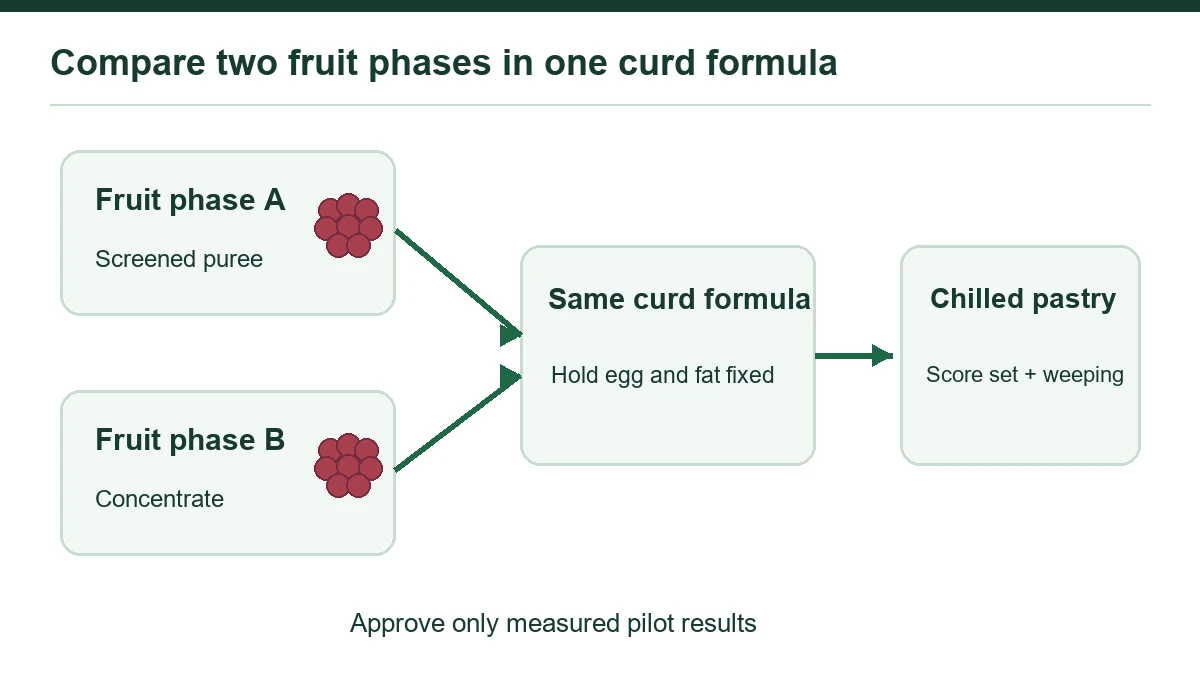
A paired trial holds the egg-fat formula constant while fruit concentration changes.
Food-safety validation travels alongside, not inside, a sensory recipe table. The responsible operation must establish egg handling and validated heating/chilling controls and determine the finished curd's safe storage and shelf life for its market. Do not publish a refrigerator period copied from a recipe, and do not can strawberry curd using a lemon-curd recipe. A curd designed for chilled pastry service may require a different process, package and testing program from a shelf-stable spread.
When these records are complete, the buying decision becomes specific. We can quote a confirmed frozen strawberry input and help your team compare its lot attributes against the trial. The bakery can approve a fruit concentration and egg setting route on measured results, then verify the chilled filling in the actual pastry. That sequence preserves strawberry flavor while making texture and procurement decisions repeatable across the next frozen-fruit lot.
Source Frozen Strawberry with GreenLand-food
GreenLand-food is a professional frozen strawberry supplier and manufacturer in China, providing factory-direct wholesale supply for importers, food manufacturers, distributors and private-label programs.
Send the product form, specification, packing, quantity, application, destination, private-label needs and requested documents. We will confirm the current offer and representative sample route.