


Strawberry Shrub from Frozen Berries: Extraction, Vinegar and Drink Dilution
Sep 27, 2026
Leave a message


What a strawberry shrub contributes to a drink
A shrub brings three connected elements to a beverage: strawberry aroma, sweetness and vinegar acidity. The concentrate is only one stage of the product. Water, ice and any other ingredients change its intensity during service, so a tasting of undiluted shrub cannot settle whether the finished drink is balanced. A concentrate that feels sharp by itself may work at its intended dosage; a pleasant spoonful may become faint after dilution.
The ingredient list also determines what customers should expect. A vinegar shrub is different from a strawberry puree, which retains much more of the fruit's suspended material. It differs from a simple strawberry syrup because vinegar makes an explicit contribution to the flavor. These distinctions matter when selecting equipment: a narrow dispensing spout may handle filtered liquid well but struggle with seeds and pulp, while an opaque drink may tolerate more suspended material.
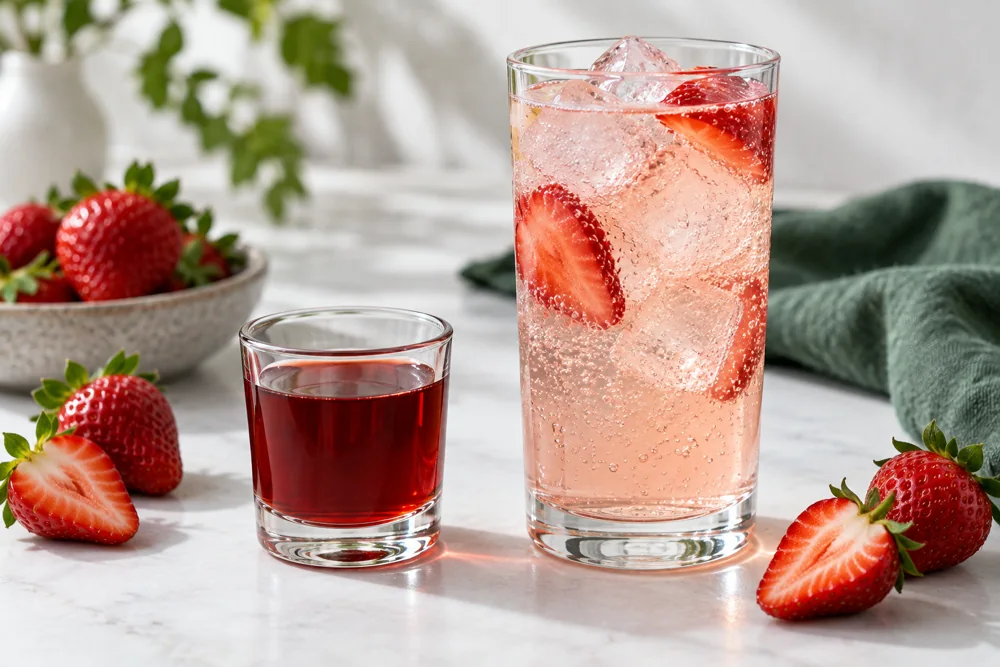
The concentrate and the served drink have different flavor intensities.
Vinegar already exists as an ingredient when this style of shrub is mixed. A refrigerated fruit extraction does not require the operator to produce vinegar by fermenting strawberries. Avoid interpreting bubbles, increasing pressure or an unexpected changing aroma as evidence that a desirable fermentation is progressing. A commercial fermented beverage would need its own controlled process, ingredient identity and appropriate review. This article concerns a refrigerated mixer made with purchased vinegar.
The distinction also keeps marketing grounded. Describe the taste, ingredients and suggested use. Claims about detoxification, probiotics or superior hydration do not follow from combining strawberries, sugar and vinegar. A café can explain that its drink has a sweet, tangy strawberry profile without attaching a health function to the recipe. If a nutrition declaration is needed, calculate it for the actual serving recipe, including concentrate dosage and other sweetened ingredients.
For an initial development brief, describe the target drink in concrete terms. Specify whether it is still or sparkling, whether the glass contains ice, whether the strawberry appearance should be clear or cloudy, and how much concentrate the intended serving uses. Keep the first recipe simple enough that the fruit and vinegar can be assessed separately. Introducing herbs, citrus juice and flavored soda at the same time makes a weak strawberry input harder to identify.
The commercial question is then straightforward: can the approved process deliver the target drink consistently from the selected strawberry lot? That question connects raw-material selection to a measurable serving result, rather than making the darkest concentrate or the strongest vinegar taste the automatic winner.
Select frozen strawberries for the intended preparation
Read the pack instructions and supplier documentation before choosing a cold extraction. An ingredient intended to be cooked needs the specified cooking step or another validated treatment appropriate to the product. A washed appearance, an IQF description or a clean bag does not establish ready-to-eat status. Our guide to whether frozen strawberries are washed and ready to eat explains why washing and intended use should be considered separately.
If the lot requires cooking, develop the shrub around the approved preparation of that fruit. Heating can change aroma, pulp behavior and subsequent yield, so the resulting concentrate needs its own sensory trial. Do not take the flavor expectation of a raw maceration and attach it to a cooked base without testing. Where a business has no suitable approved cold-use ingredient, changing the process comes before optimizing the extraction.
Fruit form influences the trial. Whole berries can be portioned and then prepared to the chosen size. Halves or pieces expose more cut surface, while puree begins with far more disrupted tissue. Compare forms using the same fruit mass and a clearly defined treatment. A bag of pieces should not be judged against whole berries after one has been drained heavily and the other has retained all its juice. Those preparations contain different amounts of fruit liquid.

Whole red strawberries arranged closely in bulk.
Review added ingredients as well. Unsweetened strawberries allow the developer to specify the sweetener contribution directly. Fruit supplied with sugar or syrup brings an additional ingredient balance into the recipe. Record that contribution before increasing the recipe sugar. A supplier description such as sweet strawberries describes a product only in context; the ingredient declaration establishes whether sugar has actually been added.
A useful sample request identifies the intended beverage, the proposed treatment and the fruit form. Ask for the lot reference and the relevant product specification so a successful trial can be connected to later orders. When soluble solids or acidity measurements are part of the agreed buying specification, compare them alongside aroma and yield. A high reading alone cannot establish the preferred strawberry flavor in a diluted vinegar drink.
GreenLand-food's frozen strawberry supply range is the appropriate place to begin a form and packing discussion. We confirm the proposed product against the order requirements. A raw-material quotation does not establish that GreenLand has produced the customer's finished shrub or validated its storage period; the beverage process remains a separate development responsibility.
Keep the thaw juice in the ingredient balance
Released juice is part of the strawberry input. When a frozen sample thaws, liquid can collect around the fruit before sugar is added. Discarding it changes the amount of water, dissolved solids and fruit material entering the recipe. That change may make the remaining berries appear more concentrated while reducing the total usable yield. The development record should show exactly what happened to the liquid.
Use a covered food-grade container under the controlled conditions required by the ingredient and the operation. Identify the lot and starting mass before thawing. When the preparation is complete, record the combined fruit-and-juice mass and any measured loss. If the recipe intentionally separates liquid from fruit, weigh both streams and state which stream goes into the shrub. The aim is an accountable recipe balance, not a rule that every method must use every drop.
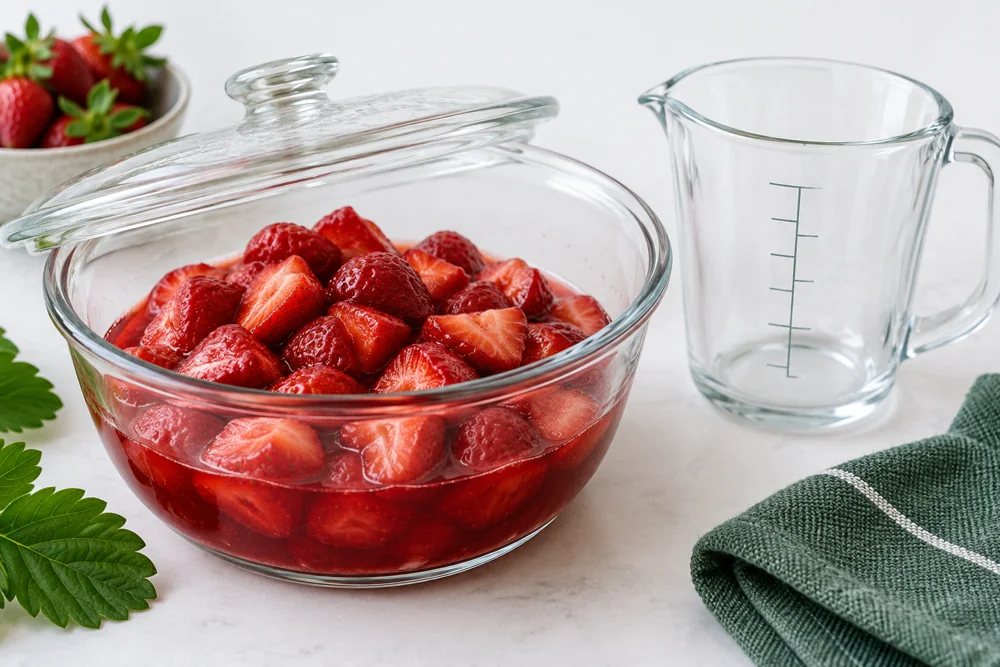
Keep the fruit and released liquid identifiable in the ingredient balance.
For a straightforward retained-juice trial, put the full prepared fruit portion and its released juice into the approved recipe. Mix consistently before taking a sample. Otherwise, the first container filled may contain more concentrated juice and the final container more fruit solids. This is especially relevant when a larger bag is divided into several development batches. Small differences in portioning can be mistaken for differences between strawberry lots.
The container itself can affect the apparent yield. Juice remaining on a bag liner, a sieve or a transfer bowl has left the measured product stream even if it looks trivial. At small scale, those losses may represent a noticeable share of a sample. Use the same transfer procedure when comparing lots and record whether the equipment was scraped or allowed to drain. Do not rinse equipment into a recipe unless that water is an intentional, measured ingredient.
Keep extraction yield and serving yield distinct. Extraction yield describes how much acceptable concentrate emerges from a known input. Serving yield describes how many drinks can be prepared at the approved dose. A less concentrated liquid may give more bottles of shrub while requiring more liquid in each drink. Comparing bottles alone can therefore conceal a poor ingredient return.
This is where a simple batch record is more helpful than a complicated formula. It should allow another operator to reconstruct the starting fruit, retained juice, sweetener, vinegar, rejected solids and final concentrate. Unexplained mass differences prompt a process check before anyone concludes that the new fruit is weaker. For an adjacent use that intentionally retains pulp, our frozen strawberry puree guide covers a different texture target.
Choose a documented refrigerated extraction route
Select one documented method and keep its ingredient preparation, sequence and refrigeration instructions together. An extension newsletter hosted by Iowa State University describes a fruit-and-sugar preparation held under refrigeration before vinegar is added and the mixture is refrigerated again, then strained. It provides a useful example of a defined chilled sequence. Its directions concern that recipe; changing the fruit preparation or commercial scale requires review.
The newsletter's small fresh-fruit batch uses a quarter pound of chopped fruit, half a cup of granulated sugar and half a cup of vinegar. Its sequence includes a short initial fruit-and-sugar rest, one to two days of refrigerated extraction, then another refrigerated day after adding vinegar before straining. Read its complete preparation instructions at the source. A frozen-strawberry substitution must first meet the ingredient's intended-use requirements and be reviewed for this preparation; retaining thaw juice also needs to be explicit in the adapted formula. These source quantities are a starting reference for that review, not an established commercial frozen-fruit process.
Use the original source as the recipe reference when following it. Do not borrow an ingredient ratio from one page, an ambient infusion from another and a storage period from a third. The UC Master Food Preserver strawberry handout describes a different strawberry-vinegar method. The existence of both publications does not make their methods and storage statements interchangeable. This distinction matters more than selecting the longest period mentioned online.
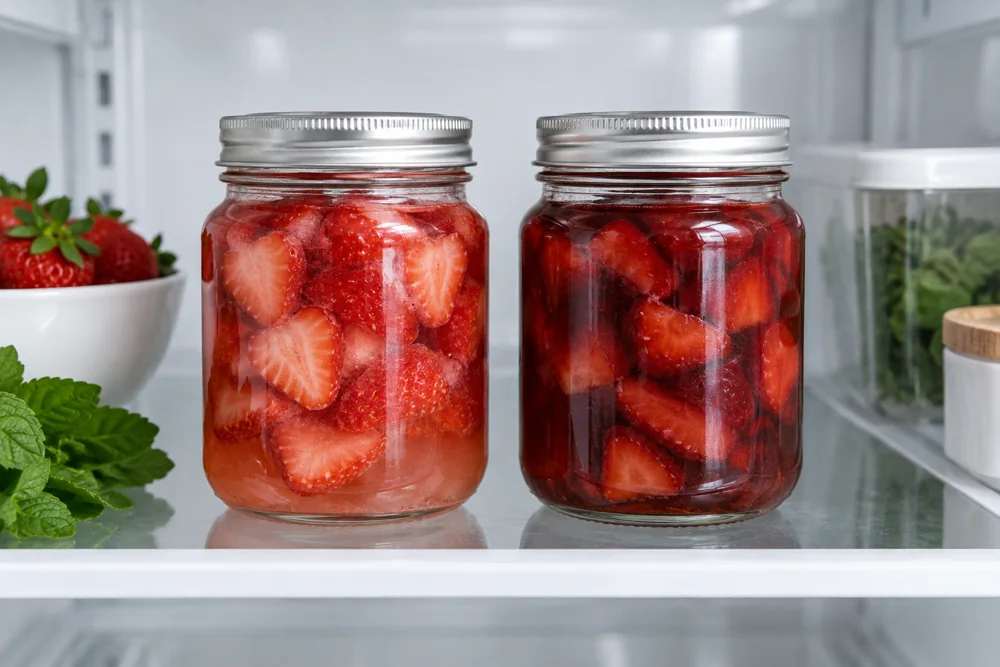
Follow the selected recipe's refrigerated extraction sequence.
For a development team, a controlled working sequence can be recorded as follows:
- Confirm ingredient identity, intended use and the applicable preparation instruction before opening the trial lot.
- Prepare the measured fruit and retained juice according to the approved recipe, recording the actual inputs.
- Add the specified sweetener and carry out the documented extraction under its required conditions.
- Add the specified vinegar at the defined stage, then complete the recipe's remaining controlled hold.
- Strain by the chosen method, measure the finished concentrate and identify the container for its approved refrigerated use.
These steps organize the work; they do not replace the source method's quantities, conditions or the operation's safety approval. A commercial processor should have a responsible person approve the exact recipe and any relevant critical controls. If cooking is required for the input, include the validated treatment and the subsequent cooling and handling requirements in that same record.
During extraction, observations such as syrup recovery, undissolved sugar and strawberry aroma help explain quality. Write them at defined points in the process. A darker mixture after a longer hold does not automatically establish a better endpoint. More fine particles may create a richer appearance while making filtration slower. Choose an endpoint that meets the intended drink and fits the approved process.
Scaling introduces physical differences. A deeper vessel may mix and cool differently from a small jar, and a larger amount of fruit may compress under its own weight. Prepare an intermediate trial before moving directly from a kitchen sample to production. Record actual mixing, container fill and filtration handling so a later operator can identify the source of a different yield.
Compare straining and fine filtration
Straining separates larger fruit solids from liquid. Finer filtration can remove additional suspended material and improve visual clarity, but it can also change yield, handling time and the mouthfeel of the concentrate. The appropriate endpoint depends on the drink. A clear sparkling serve may benefit from a different filtration choice than a mixed cocktail in which cloudiness is acceptable.
Treat pressing pressure as part of the method. Gentle draining and firm pressing can produce noticeably different streams because pressing pushes more liquid and fine material through the sieve. If one operator squeezes the fruit and another waits for gravity, the results should not be attributed only to the strawberry lot. State whether pressing is allowed and use a repeatable technique appropriate to the equipment.
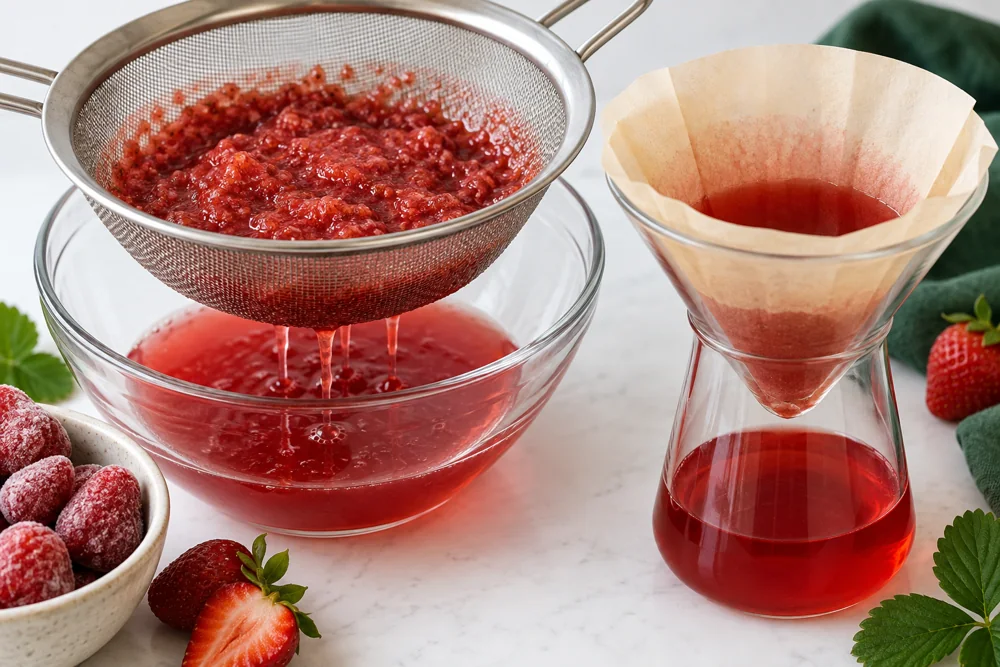
The sieve retains larger solids; finer filtration changes clarity and recovery.
For a useful comparison, divide one approved preparation into measured portions and apply two filtration endpoints. Keep the other inputs and serving conditions the same. Record the quantity recovered, visible sediment after the defined refrigerated hold, and how the drink pours through the intended dispenser. The point is to understand a processing choice; the sample does not become a safety validation merely because the liquid looks clearer.
| Filtration endpoint | Observation in concentrate | Observation in the served drink | Operational question |
|---|---|---|---|
| Defined sieve and gentle draining | Recovery, seed carryover and suspended pulp | Fruit body, visible sediment and pourability | Does the dispenser handle the remaining particles? |
| The same sieve followed by a finer filter | Additional retained solids and filtration loss | Clarity, aroma and mouthfeel at equal dosage | Is the clarity improvement worth the added handling and loss? |
Let the filter do its intended job. Changing filter material during a comparison adds another variable, as do different draining times and different temperatures. Record the equipment and endpoint in language the next operator can follow. A photograph of the sieve or filter arrangement can supplement the description, but the accepted procedure should remain available as text.
Sediment can be a formulation and presentation issue even when it comes from ordinary fruit particles. Decide whether the serving bottle is mixed before dispensing and test that action. If mixing is required, the first drink after a long undisturbed hold and the last drink from the bottle should both meet the intended appearance. A recipe that only looks uniform immediately after stirring may need a different service instruction or filtration endpoint.
Keep the retained fruit solids outside the approved concentrate balance. Any separate use of those solids needs its own handling and recipe decision. A desire to reduce waste does not justify carrying ingredients into another product without considering their time, temperature and treatment history.
Balance vinegar and sugar at serving dilution
Choose vinegar for both its declared composition and its sensory contribution. Apple cider, wine and other culinary vinegars have different aromas that can become prominent in a delicate strawberry drink. Record the product name and declared acidity instead of treating all bottles as interchangeable. A new vinegar purchase can change the recipe even when the measured volume stays the same.
Assess sweetness after the concentrate is fully mixed and prepared as intended. Undissolved sugar can make early samples misleading, while a heavy concentration of suspended fruit may change perceived body. Use consistent glassware, drink temperature and mixing. When testing a change, alter one variable at a time so the team can identify whether the result came from vinegar, sweetener, fruit input or dilution.
Begin with the serving dilution specified by the chosen recipe or the approved development brief. If a comparison uses two candidate dilutions, label them in the private trial record and keep final drink volume constant. The operator should record concentrate dosage, added water and ice condition separately. Water added as a liquid and water entering through melting ice affect the drink at different times during service.
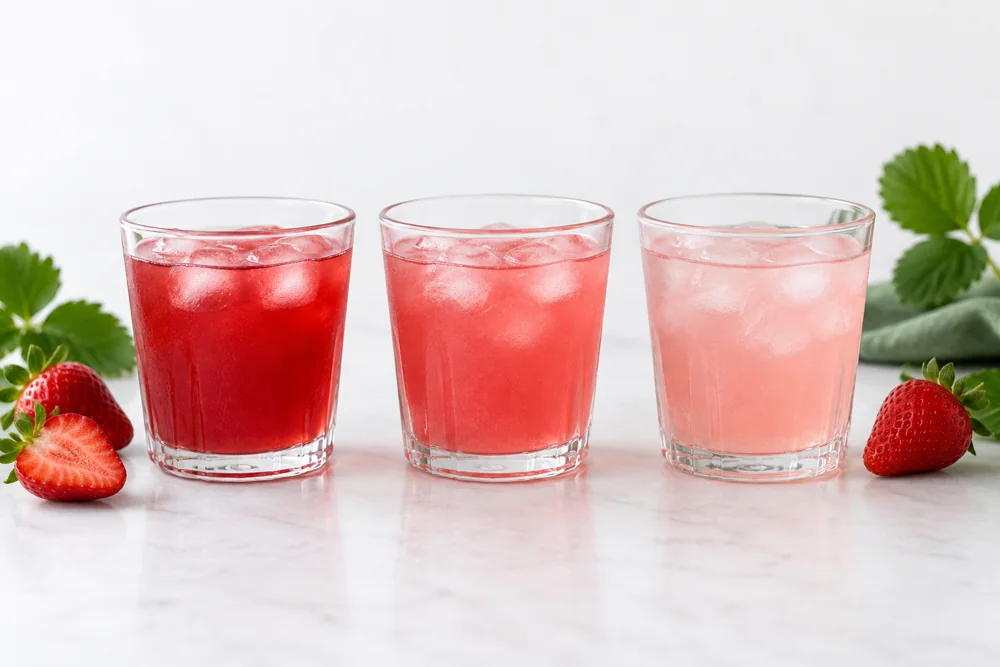
Compare serving dilutions under the same glass, temperature and ice conditions.
Evaluate the first sip and the drink after a realistic service interval under the operation's approved handling conditions. Carbonation, warming and ice melt can change the sensory impression. Use the same interval for each sample and avoid assigning a numerical score to safety. Sensory acceptance and process approval are separate results; a pleasant drink cannot compensate for an unsuitable ingredient or uncontrolled preparation.
For a comparative tasting, ask the panel to describe strawberry aroma, vinegar sharpness, sweetness, lingering flavor and the overall suitability for the intended menu. A short descriptive note often explains more than an overall liking number. If one sample tastes thin, identify whether strawberry aroma is low, the drink is too diluted or the vinegar dominates. Those observations lead to different recipe changes.
Once the preferred serving is selected, calculate concentrate use per drink from the actual dose. Use the measured acceptable concentrate yield when estimating the ingredient requirement for a service period. Allow for the operation's recorded dispensing and transfer losses. Avoid promising a fixed number of drinks from every kilogram of fruit before repeat trials demonstrate that the assumption holds for the chosen specification and preparation.
Control storage and prepare a repeatable purchase brief
Refrigerated storage belongs to the exact approved recipe and handling plan. A clean, closed bottle is useful packaging, but its lid does not establish an ambient shelf life. Likewise, a sharp vinegar taste does not demonstrate that the finished product has received an adequate preservation process. A commercial bottled product, a changed container or an altered recipe needs its own assessment.
Define how the operation identifies the prepared batch, records its preparation date, separates opened service containers and follows the approved discard instruction. Staff need a usable instruction for each bottle they handle. Avoid topping up an old service bottle with a new batch, because that makes the product history harder to reconstruct. Use containers and dispensing equipment that can be cleaned according to the operation's procedure.
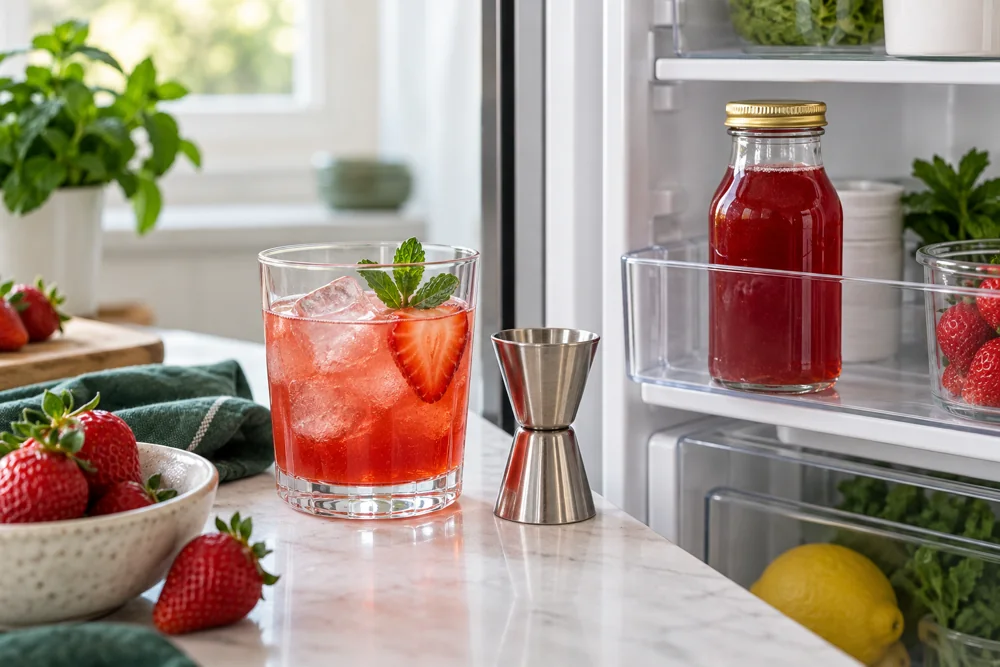
Connect refrigerated storage with a measured serving instruction.
Unexpected mold, slime, pressure, leakage or an abnormal odor calls for the established discard or hold procedure. Do not taste a suspect batch to decide whether it is safe. The absence of visible deterioration also cannot replace the approved time and temperature controls. Keep sensory checks within the scope of suitable product that has already met its process requirements.
For purchasing, connect the approved trial to a precise frozen-strawberry request. Include the fruit form, any added ingredients, relevant size or piece requirements, packing size, planned quantity, destination and intended treatment. If the drink depends strongly on color or flavor, describe the accepted sample and the comparison procedure. That gives the supplier a more useful target than a request for the sweetest or reddest fruit available.
Request the documents your market and process need, and identify who reviews them before use. Product specification, ingredient information, lot traceability and the agreed quality records should connect to the material actually delivered. Changes in crop, form, packing or supply plan can then be assessed against the same serving trial. The finished drink provides the final quality test: the approved dose should deliver the strawberry character, acidity and appearance the menu requires.
We help purchasing teams discuss frozen strawberry forms and order requirements before supply is confirmed. Share the process context so the discussion covers the ingredient's actual role. A shrub project is easiest to repeat when the fruit specification, preparation record and serving instruction describe one connected product.
Source frozen strawberries with GreenLand-food
GreenLand-food is a professional frozen strawberries supplier and manufacturer in China, providing factory-direct wholesale supply for importers, food manufacturers, foodservice distributors and private-label programs.
Send your product form, specification, packing, quantity, application, destination, private-label needs and requested documents. We will review the requirements with your purchasing team and confirm the proposed supply plan.