


Taiwan Import Guide for Frozen Water Chestnut Dice from Mainland China
Oct 19, 2026
Leave a message
Reviewed: 19 October 2026. Recheck the official rules, classification and shipment conditions for the exact SKU before ordering.
The 19 October 2026 official Taiwan query lists frozen water chestnuts under CCC 0714.90.12.00-4 with F01 for Mainland goods. For peeled Eleocharis dice, confirm the exact SKU classification before an order, then plan TFDA inspection, specifications and cold-chain release.
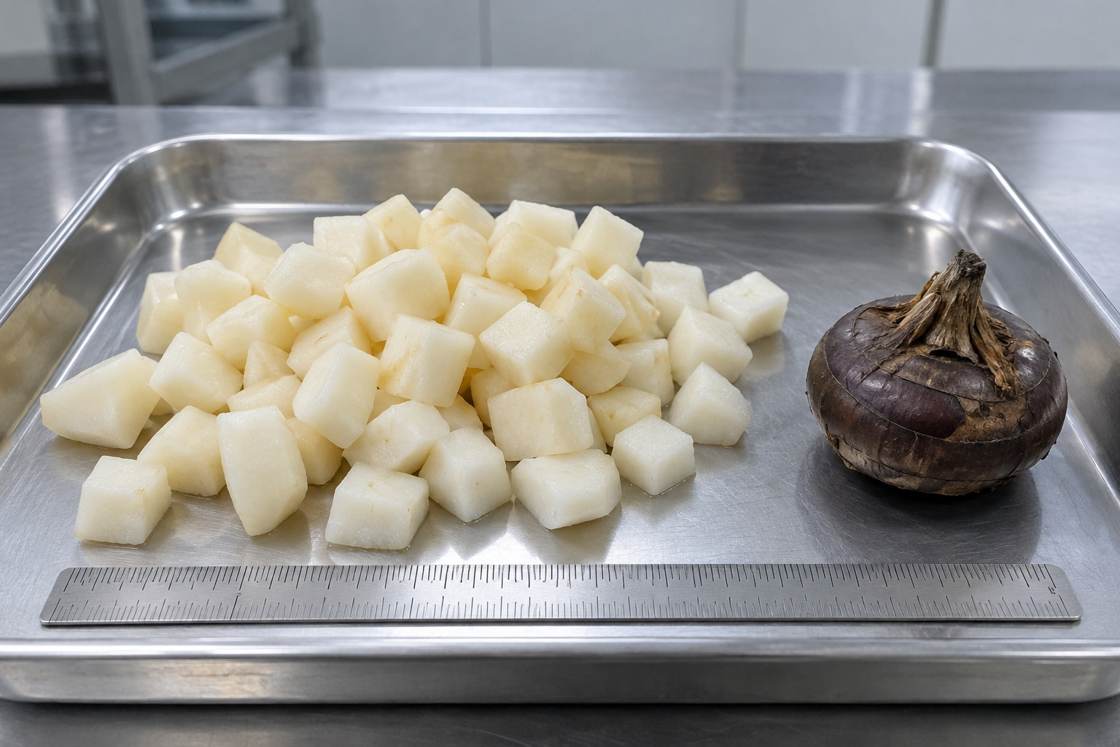
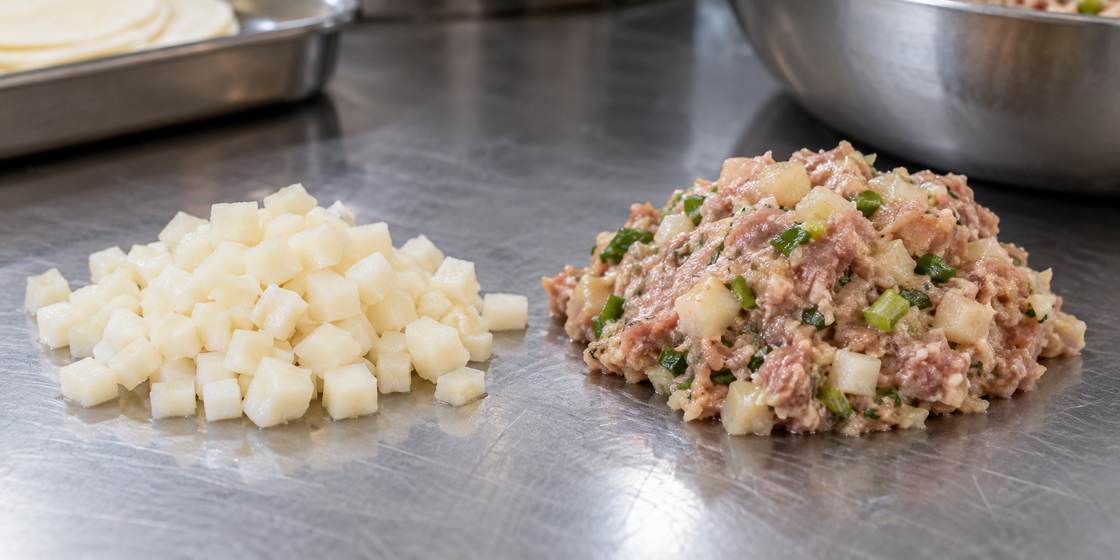
Product case: peeled IQF water chestnut dice (Eleocharis dulcis), Mainland China origin, industrial pack. Intended use: cook before consumption; no validated ready-to-eat or blanching claim.
Begin with the exact corm and an import-permission decision
The proposed consignment is one ingredient: peeled, diced and individually frozen Eleocharis dulcis corms grown and processed in Mainland China. It is an industrial ingredient intended for cooking in a filling, prepared meal or foodservice dish. Peeling and cutting do not prove blanching. Freezing does not make the dice ready to eat. Before quotation becomes a shipping commitment, the Taiwan importer should agree the botanical identity, edible part, diced dimensions, actual pretreatment, pack weight and intended use with us. A generic description such as frozen vegetable cannot resolve the legal entry line. Taiwan Customs directs traders to the GC411 tariff query, then to the import regulations attached to the exact CCC number. The International Trade Administration commodity system separately shows whether Mainland goods are allowed, conditionally allowed or prohibited.
Its EX, MXX and other codes can narrow a general line to a precise item. A code that looks plausible from another market or from sliced water chestnut is insufficient. The importer or customs broker should save the current query result for the exact proposed product and obtain written classification advice if the line is ambiguous. The official 19 October 2026 query lists frozen water chestnuts under CCC 0714.90.12.00-4 with F01 for Mainland goods. The importer still confirms the peeled-dice SKU against that line and rechecks the result at purchase order. A fresh 19 October 2026 query in the International Trade Administration official system returns CCC 0714.90.12.00-4, 'Water chestnuts, frozen', for the frozen water chestnut term.
Its Mainland-origin query for the same number currently lists F01 and shows no MP1, MW0, EX or additional special-condition entry; the import-controls query likewise lists F01. The official result is a dated public-query result, so the importer should repeat it for its transaction. This is much more useful than the older rejection record, yet the importer should still confirm that its peeled, diced, single-ingredient and unblanched or actual-process SKU fits the listed term and that no later notice changes the rule before purchase order. The item is in 0714, not the 0710 frozen-vegetable basket, which also matters for market sizing and trade-data analysis. The entry decision also needs to survive a change in presentation. A peeled whole corm, a slice, a dice, a mixture with other vegetables and a seasoned ready meal may map differently in a tariff system.

The importer should submit one product identity sheet per proposed line and retain the screen print or official response with query date, description, origin and code. Ask the broker to record whether the result is an 11-digit CCC, an EX sub-description or an authority interpretation. If a trader quotes a historical TFDA rejection to demonstrate a code, ask whether that shipment had the same composition and state. An inspected noncompliant consignment shows the authority received and classified that entry, yet it does not authorize a later exporter or bind a 2026 code schedule. This distinction protects the buyer from ordering product that cannot be declared as described. It also stops the supplier from manufacturing a Taiwan-specific label and carton before the route is settled.
To reproduce the current public check, open the International Trade Administration goods-name query, close its introductory notice, enter 0714901200 as the commodity number, submit and read the single 0714.90.12.00-4 result. Then open the Mainland-goods query, enter the same digits and read its current effective row; finally check the import-regulations query. On 19 October 2026 both latter public queries displayed F01 as the only listed rule. Clicking F01 in the official page explains that the importer applies to TFDA for inspection under the imported-food inspection regulations. Those result screens are session queries, so sharing the form URL alone does not reproduce the result. Record the result wording and query date in the shipment classification file. A Taiwan broker still decides whether this exact processed SKU fits the line and whether a new notice changes the answer.
The commercial next step is to send the broker the species, peeled dice, frozen state, ingredient list and actual heat branch for sign-off.
Allocate importer responsibilities before shipment
Taiwan Customs says a business regularly importing goods generally registers as an importer with the trade authority. The buyer's customs broker should check the current trader qualification, declarant authority and any special licence tied to the final CCC line. If the line carries MP1 or another conditional Mainland import code, the importer must check the applicable special rule and whether a trade-agency import permit is needed. Customs specifically identifies MXX, 121 and MW0 outcomes; MW0 means the Mainland item is not importable under that line. We cannot infer permission from an unrelated processed-vegetable shipment. If the exact line is blocked, the buyer should stop that sourcing route and select a lawful alternative instead of altering the description.
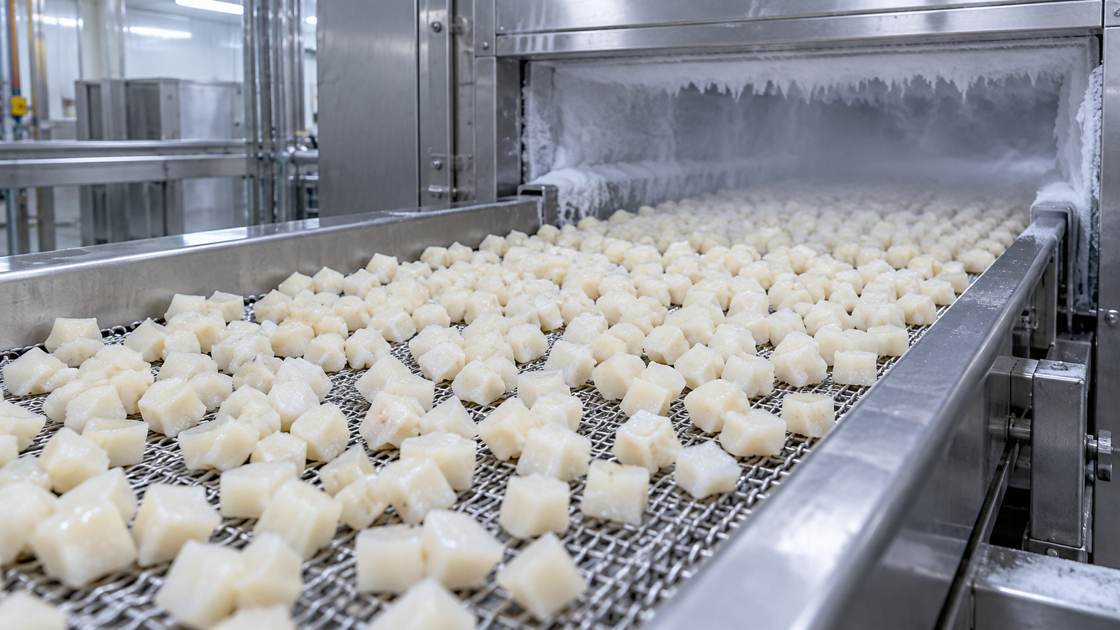
Once the line is cleared, the buyer and broker can confirm customs tariff, tax, origin statement, port and bonded-storage plan. We provide a proposed product data sheet, plant identity, processing flow, case and pallet details and lot-linked commercial documents so the importer can run the official checks. Use a written responsibility matrix with named people, not only company names. The Taiwan importer owns legal entry classification and broker instructions; its regulatory lead signs the origin-permission and food-inspection decision. Our account owner collects the buyer's intended use, destination port, pack and target delivery date; our quality lead approves the actual site, treatment and evidence. The forwarder controls vessel booking, container availability and shipment document deadlines. This allocation matters when one issue appears late.
If TFDA asks for a production-flow diagram, the supplier can provide it quickly; if Customs questions the code, the importer must answer through its broker. A purchase order should state that manufacturing and shipping milestones depend on these documented outcomes, and say who carries cost if a late change requires label reprint, storage or rebooking. The legal outcome should drive the schedule, rather than be treated as a check after the container sails.
Apply for the food inspection that belongs to the CCC line
TFDA explains that food lines carrying F01, F02 or 508 require an import inspection application under the Food Safety and Sanitation Act. The obligatory applicant or representative submits the inspection application, product information sheet, import declaration copy and any TFDA-designated information to the office at the entry port. Article 3 of the current imported-food inspection regulation allows the obligated importer to apply within the 15 days before arrival or after arrival. Planning the filing before arrival is usually more practical for frozen cargo, but the law does not close the application route on arrival; neither timing guarantees an inspection turnaround. The importer should check the current local port office and electronic route before loading and retain the submission receipt. TFDA may perform document review, on-site package and label verification, and sampling for physical, chemical or biological analysis. A hold while laboratory work is pending is distinct from final permission to sell.
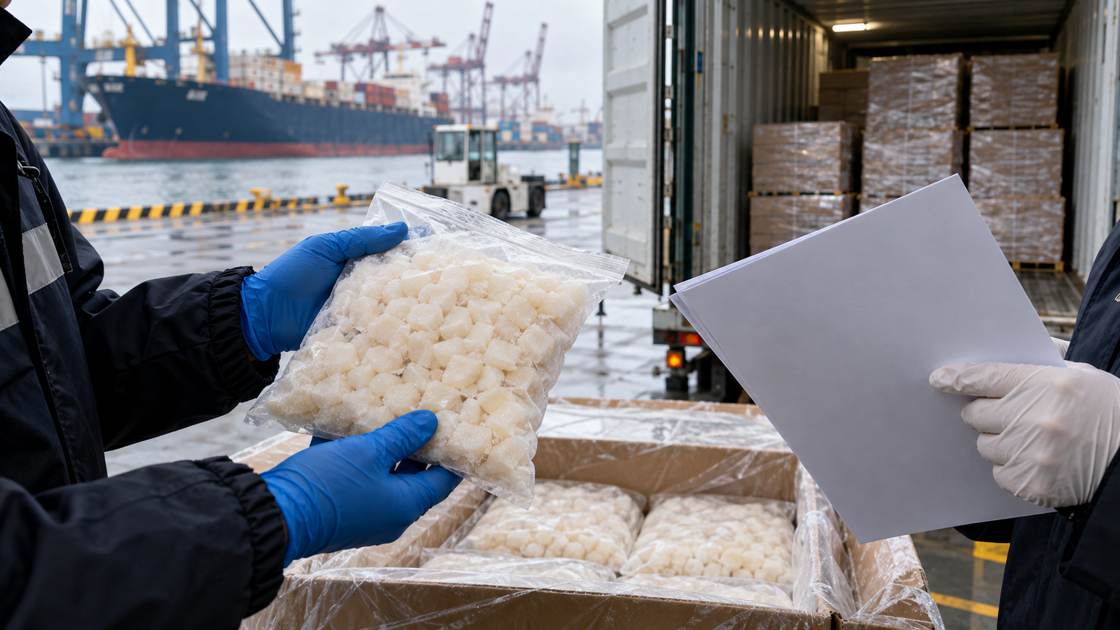
Under Articles 19–21, any conditional advance release is an inspection-authority decision under stated conditions, with a custody undertaking and a deposit in specified cases. It is not automatic permission to move or sell a held frozen lot; follow the notice and preserve control until final disposition. For a normal sale, use TFDA's compliant import notification and Customs clearance outcome as separate evidence, then obtain carrier or terminal delivery release. Each document has a different owner and trigger; a bill of lading or a paid duty line alone cannot prove food release. If TFDA finds correctable application documents incomplete, Article 6 gives 30 days from service of its notice to supplement them, with one extension of at most 30 days on application. If inspection fails, Article 23 permits one re-examination request within 15 days of the non-compliance notice, using the original retained sample at the original laboratory. A practical document sequence begins before the first production run. Send the draft invoice description, exact botanical/product description, ingredient declaration, facility address, process flow, carton label artwork and representative photos to the importer. Ask it to return the CCC and Mainland-rule record and TFDA filing requirements. Once manufacturing begins, keep the actual lot, production date, net weight, carton count and seal allocation consistent across invoice, packing list and bill of lading.
The declaration copy may not exist at first application planning, so the importer should confirm its port-specific submission timing and how it will complete the file. When TFDA selects sampling, keep the consignment frozen at the approved location; do not deliver to the buyer's line solely because Customs duty was paid. Record the result date and exact notice. Only after legal food and Customs requirements are satisfied should the logistics team request carrier or terminal delivery release and record final handover. This sequence is especially important for an industrial buyer who might otherwise move pallets directly into production.
Build a dice specification that can be measured
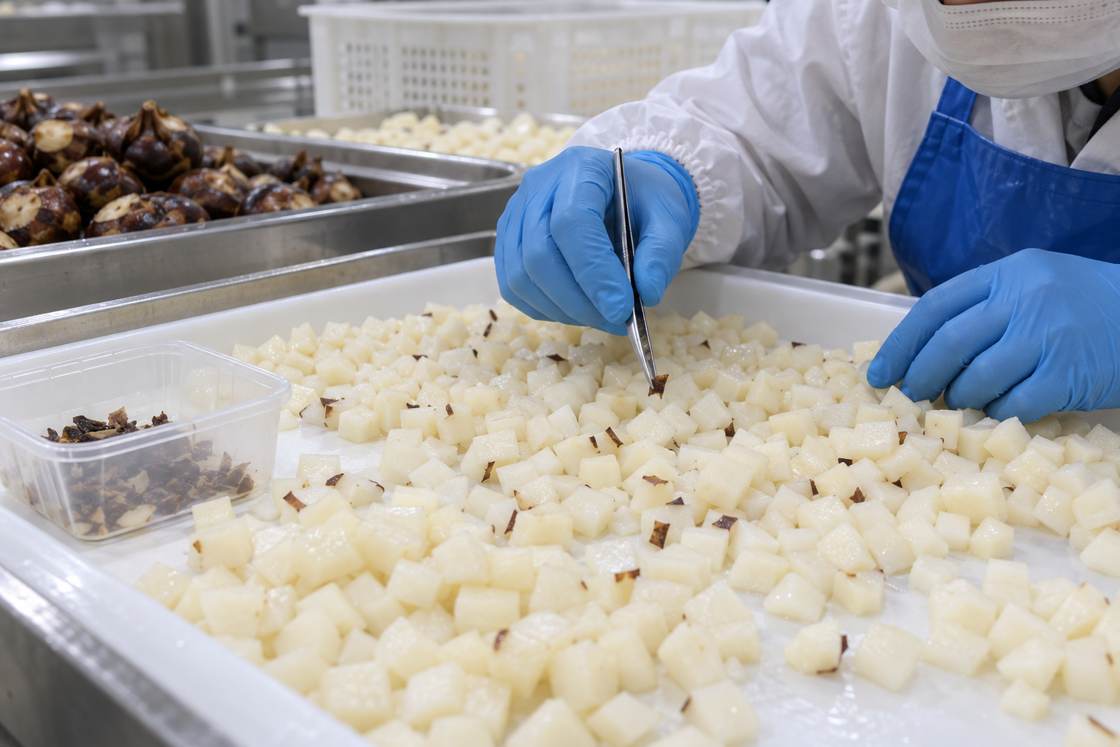
For a cooked filling or ready meal, the buyer should choose a nominal dice dimension, sample size and method for counting off-size pieces after thawing. Product photos and a ruler alongside a representative sample make cut-size discussion more useful than adjectives such as uniform. We can agree peel-remnant, black spot, fibrous core, root, mud, broken-dice and foreign-material definitions with visual references. A Taiwan customer previously proposed a 1.5 percent residual-peel acceptance example; it is neither law nor an industry AQL. The parties should choose piece count or defect mass as the numerator, specify whether the denominator is inspected pieces or thawed sample mass, then agree cartons, sample mass, lighting, repeat sampling and the decision at the contractual boundary.
Black peel on the outer surface also differs from internal black heart; the two defects deserve separate sampling and action. The specification should define frozen free-flowing condition, glaze or added-water policy, nominal net weight, case integrity, storage condition and cooking instruction. Each number requires a signed buyer agreement and a measurement method rather than a copied web-page figure. For the peel concern, a defensible method can use a fixed mass of still-frozen dice selected across cartons, thawed under controlled conditions and spread in a single layer under consistent light. The inspector separates adherent dark outer peel from normal cut-surface discolouration and internal defects, photographs borderline pieces and reports both the number of affected pieces and the mass or percentage using a pre-agreed denominator.
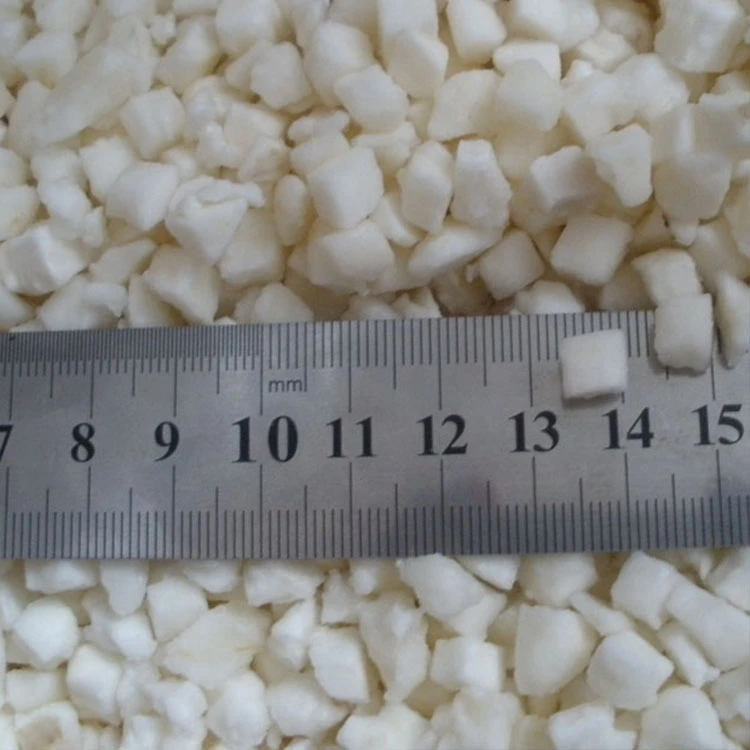
If a retained image standard shows the defect, both parties can train to the same decision. Repeat the check on more than one pallet location because a sample from the top bag can miss a cutting-line change. For crunch and cooked yield, run the buyer's actual heating program and drain protocol, then compare mass and bite after a defined hold time. This converts a vague appearance complaint into a repeatable acceptance decision without confusing a buyer-agreed tolerance with a government rule. A commercial product listing may state a nominal 8 mm or 10 mm dice, but that number alone cannot resolve a claim about brown peel fragments. The signed method should say whether the inspector counts defects by pieces or by mass, how many cartons and positions are opened, whether the pieces are measured frozen or after controlled thawing, and whether a tiny speck counts the same as a large retained peel patch.
Record the signed percentage and method as a contract acceptance rule, separate from statutory food safety. Treat it as a proposed starting point for paired buyer–supplier samples and a written acceptance decision.
Select testing from the crop history and the legal food category
TFDA's pesticide standard was amended on 21 April 2026. It assesses residues on the market-form basis and uses a table of pesticide and food commodity pairs; substances outside the table have their own rule. This guide cannot responsibly publish a numerical Eleocharis MRL without resolving the exact crop grouping, active ingredient, residue definition and treatment of the processed frozen form. Our supplier QA should obtain the grower's use history, select the named screens most relevant to that history and have the Taiwan importer map each result to the current appendix. The laboratory report should name the analyte and metabolites included, method, limit of quantification, matrix, sample identity and uncertainty where relevant. A generic statement that a multi-residue panel passed offers poor assurance when its analyte list omits a used substance.
Microbiological testing should be tied to the cook-required product and buyer risk assessment. Negative finished-product samples do not validate an absent heat step or convert the product into a ready-to-eat ingredient. If the exact crop mapping or numeric standard remains unresolved, we hold the shipment specification open and ask TFDA or a qualified importer adviser for the applicable entry. Two TFDA border records provide a concrete named screen. A 30 June 2026 Mainland IQF diced-water-chestnut case and a 11 November 2025 case list CCC 0714.90.12.00-4 for those declarations. TFDA describes chlormequat chloride (克美素) in root and rhizome vegetables as non-detect; for the 2026 case the reported method TFDAP0007.05 had a quantification limit of 0.01 ppm, while the consignment result was 0.02 ppm.
The 2025 batch was reported at 0.07 ppm and rejected under the then-cited method. The 0.01 ppm figure describes that method's LOQ for this case; it is not a universal MRL for every pesticide. The historical CCC alone does not settle current eligibility or the intended SKU's final classification; the current official query provides the dated starting point. We would ask the lab to include chlormequat with an appropriate method and reporting limit, then have the Taiwan importer reconfirm the current crop-category rule on the order date. The selected chlormequat case should shape supplier questions. Ask the farm or contracted grower whether any plant-growth regulator or relevant treatment was applied to the corm crop, to adjacent crops with possible drift or to inputs that could contact the crop.
The absence of a recorded application does not replace an analytical result when the destination has a known rejection history. Sample from the raw-material lot early enough to change sourcing before expensive cutting and freezing, then sample the finished lot if the buyer or regulatory plan requires it. If a lab reports 'not detected', read the actual reporting limit and matrix instead of treating the phrase as a mathematical zero. A result at or above a decision threshold goes to hold and investigation, with no dilution by mixing lots. The importer confirms how the current legal residue definition applies to peeled dice and whether sampling on raw or market form controls its acceptance decision.
Connect farm, factory and shipment records
Before processing, our sourcing and QA teams can agree the approved growing area, supplier, crop identity and field lot. At reception, production records should reconcile intake weight, sorting loss and assigned processing lot. The line records wash-water control, peeling and trim checks, dice-size setup, foreign-material inspection, actual pretreatment and temperature history. If no blanch occurs, the process record must say so; if a heat treatment is specified, time and temperature records and validation for the intended purpose must exist. Packing records connect inner-bag and master-carton labels to net weight, date, lot, pallet and metal-detection verification. Reefer booking, set point, pre-cool evidence, seal number and departure temperature belong to the logistics file. The importer receives a consistent document pack: commercial invoice, packing list, transport document, origin information, agreed specification, lot COA and any authority-requested evidence.
We do not present any optional certificate as held by a specific plant until its current scope and legal entity are checked. A real trace exercise should start with an arbitrary finished carton code and move backward to field lot, incoming weigh ticket and processing shift, then forward to every pallet and commercial document. Run it before routine shipments, including an outsourced processing branch if one exists. The production reviewer should reconcile units at each conversion: received corm mass, peel and trim, accepted dice, rejected defect mass, packed product and samples. Unexplained gains or missing cases indicate that the batch file is not ready for release. A buyer may ask for certificates such as HACCP or BRCGS; the document must match the actual processing site's legal name, activity, validity period and product scope.
Do not append a corporate PDF that cannot be tied to the batch. This source-to-carton discipline supports a targeted hold when a grower or laboratory result changes.
Plan arrival, deviation and buyer acceptance
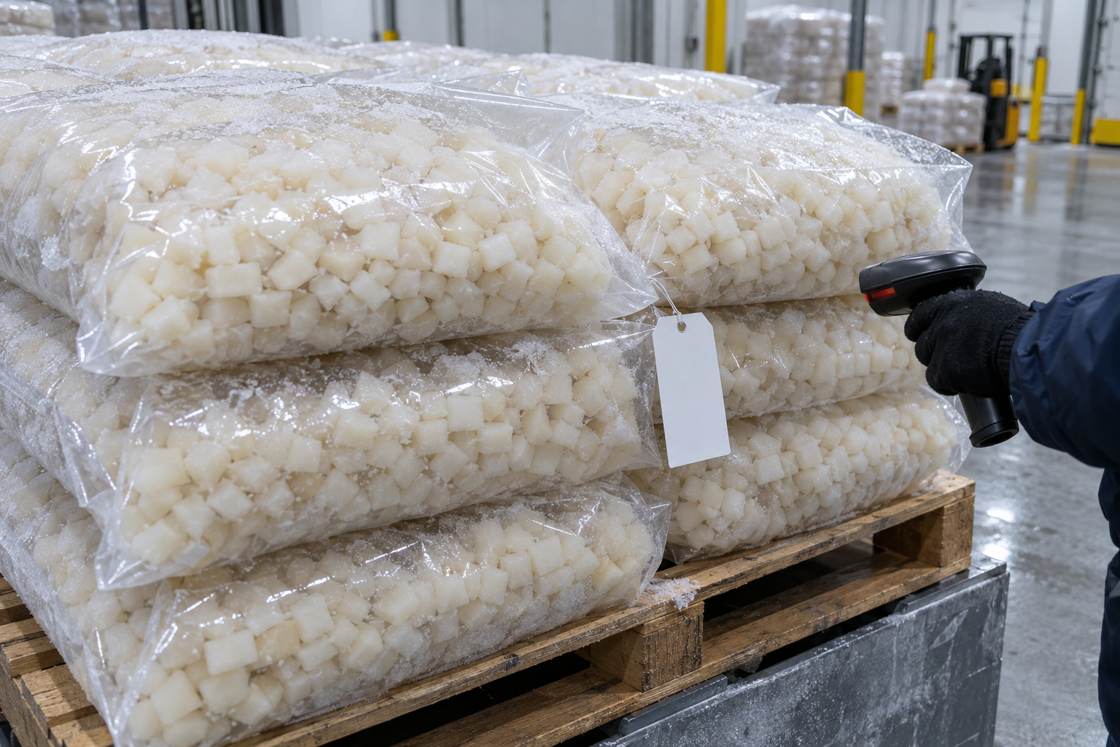
The importer should arrange a frozen holding location able to preserve product condition while Customs and TFDA decisions are pending. After both regulatory outcomes and carrier release, the warehouse should inspect seal, cartons, label and recorder data before accepting the lot. A warm reefer, damaged carton, missing lot code or inconsistent origin document needs a hold decision with photographs, temperature evidence and container chronology. QA then decides targeted sampling, segregation, rework where lawful, rejection or authority notification with the importer. The buyer's cooking trial should test dice bite, recovered weight and colour under the actual formulation; acceptance of a bench sample does not override the signed shipment specification. For repeat orders, keep change control for raw-material source, cut size, pretreatment, label, plant and laboratory method.
Source-to-delivery action sequence
- Agree the Eleocharis dice, actual heat branch, cut and defects in a signed specification.
- Recheck CCC 0714.90.12.00-4, the current Mainland-origin F01 entry and TFDA application with the Taiwan importer.
- Approve source, processing and lot-linked analytical records before frozen dispatch.
- Plan the TFDA application in the 15 days before arrival when practical, or apply after arrival as Article 3 permits; lodge the customs declaration with consistent SKU details.
- Hold the frozen lot pending TFDA and Customs outcomes, then obtain carrier release and receive it by lot.
- Record temperature, seal, cartons and any deviation before the buyer accepts or rejects the shipment.
A new line or product-use claim calls for rechecking CCC and TFDA applicability. The route only becomes executable when the entry classification, Mainland eligibility and product acceptance criteria are all written down. The receiving protocol should distinguish quality damage from possible food safety issues. An opened inner bag, visible dirt or unexplained thaw-refreeze evidence can require broader sampling and a different disposition than a crushed but still sealed outer case. The warehouse should record container set point and actual return-air or logger data, then interpret excursions alongside door-open times and product-core checks where warranted. A single momentary ambient reading at the dock does not establish product temperature. Hold only the affected traceable pallets while the QA and importer teams investigate, unless the seal or lot records show a wider exposure.
If testing or reinspection is needed, agree the method and who can release the material back to production. Preserve the sampled cases, chain of custody and authority correspondence; they are as important as the initial COA when a claim is reviewed later. The first-shipment pilot should include a small pre-shipment document rehearsal. Ask the importer to review mock invoice, packing list, label, COA and lot map before the reefer is loaded. Correct a mismatch while cases are still at the plant. At arrival, photograph the seal before breaking it, count cartons against packing list, and select receiving samples from multiple positions. Run both visual peel classification and the actual cooking trial. When QA closes the pilot, record any changed dice size, defect definition, lab panel or label instruction as a controlled specification version.
The next purchase order then cites that version. This prevents an acceptable first sample from becoming an open-ended claim that every future crop or processor will behave identically.
Official services
Use the current official service and exact product description for a shipment decision. Record the result date, commodity and any applicable conditions with the importer.
- Taiwan Customs: import regulations
- International Trade Administration commodity classification inquiry
- TFDA import-inspection FAQ
- Taiwan imported-food inspection regulation, current consolidated text
- TFDA pesticide standard
- GreenLand product reference
- ITA current frozen-water-chestnut CCC result
- ITA current Mainland-origin result
- ITA current import-control result
- TFDA diced-water-chestnut border case, 2026-06-30
- TFDA diced-water-chestnut border case, 2025-11-11
Related reading
Are Water Chestnuts Nuts? Allergy and Ingredient Identity
Clarify the Eleocharis ingredient name and cut form before buyer artwork approval.
How to Import Frozen Vegetables from China
Use the general shipment-document workflow while checking this product under Taiwan's distinct 0714 line.
Common Import Risks When Sourcing Frozen Vegetables
Check lot documents, cold-chain evidence and claims before frozen cargo departs.
Discuss a shipment-ready specification
GreenLand-food is a China-based supplier and manufacturer coordinating factory-direct wholesale supply of peeled IQF water chestnut dice. Send the product form, intended cooking use, pack, quantity, destination, required documents and planned delivery window so we can review the lot and regulatory questions with your importer.