


US Frozen Food Import Roles: IOR, Form 5106, Bond, POA and FSVP
Oct 20, 2026
Leave a message


For the first order, collect four separate confirmations: usable CBP importer identity, direct broker authority and suitable bond coverage, the defined FSVP importer, and the actual foreign facility/US-agent information. Assign an owner to each unresolved item before booking.
Reviewed 20 October 2026. Shipment requirements are checked for the actual product, route and filing date.
Map the importer roles before fixing the purchase terms
Begin with the commercial transaction. Who owns the goods at US entry, who has purchased them, and who has agreed in writing to purchase them? Who instructs the broker, pays duties and answers CBP questions? Who will maintain supplier-verification records and respond to FDA? Where was the food manufactured, processed, packed or held before import? An Incoterm helps allocate costs and transport tasks, but it cannot by itself answer every customs and FDA definition. Put names, addresses, contacts and evidence beside each role rather than filling one "importer" box everywhere.
The customs importer of record, or IOR, is associated with CBP entry, reasonable care in classification and valuation, duty and fee obligations, records and the broker instruction. The FDA FSVP importer is associated with hazard evaluation, foreign supplier evaluation, appropriate verification activities, corrective action and identification on applicable entry lines. FDA's FAQ says the FSVP importer may be the same as the CBP importer of record but need not be. A freight forwarder who books the reefer does not silently become either. A third-party service provider's marketing page is also not a signed acceptance of a regulatory role for this food.
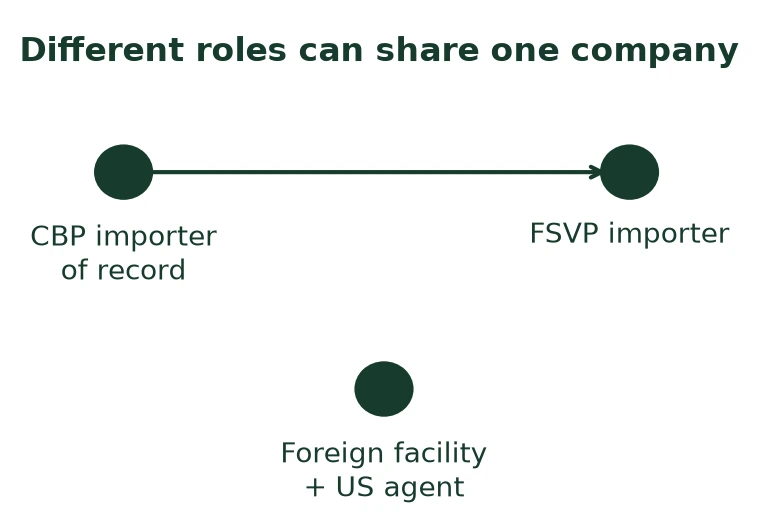
These are different statutory roles. An agreed importer role cannot be inferred from the factory US agent.
The foreign food facility is a different entity again. It may be a processing plant or packing/holding operation meeting FDA's facility registration definition, subject to regulatory exemptions and the actual chain of handling. A foreign facility required to register identifies a US agent for FDA communication. That agent may also perform another service under a separate appointment, but registration alone does not make it the FSVP importer or customs IOR. FDA describes the agent as a US-located communication link, including in emergencies, in its foreign facility FAQ.
We would make a four-column role matrix for an IQF cut-green-bean purchase: CBP importer of record; licensed customs broker acting under authority; FDA FSVP importer; actual foreign food facility and its US agent. Add the ISF importer and Prior Notice filer for ocean cargo as separate tasks. For each row, write the legal party, evidence of appointment or identity, shipment scope, effective date and owner who will receive official notices. If the importer says a broker "handles everything," ask which tasks are in the broker's signed scope and which food-safety obligations remain with the buyer.
The matrix should be approved before price, shipping term and booking are final. A foreign seller may in some circumstances structure itself as customs IOR, but a customs role does not automatically satisfy FSVP's US-party definition. If there is no US owner or consignee at entry, the proposed US representative must expressly consent in writing to be the FSVP importer. That decision affects service contracts, information access and FDA response capacity. Do not use a warehouse, marketplace or carrier's US address as the designated party without its acceptance.
Keep a decision log when the sale structure changes. If a distributor replaces the original buyer, re-evaluate ownership at entry, IOR, FSVP importer, ship-to party, bond and broker authority. The product can be physically identical while the responsible parties change. GreenLand can revise the origin invoice and shipment information after agreed instructions, but the US parties must confirm that their new roles and electronic identities are in place before the cargo approaches filing cutoffs.
Establish the customs IOR, Form 5106 and broker authority
The IOR needs an importer number that CBP can identify. An IRS employer identification number, Social Security number where appropriate, or CBP-assigned number may be used under the applicable rules. CBP's importer-number guidance points to Form 5106 when a CBP-assigned number is requested. The current Form 5106 is a create/update importer identity form. It is not a license that proves a food is admissible, and a number on an old invoice does not prove the associated legal name and address remain current.
Ask the nominated importer and broker to determine whether a 5106 creation, update or no new submission is needed. Reconcile the exact legal name, tax or assigned number, business address and authorized contact against the purchase contract and planned customs entry. If a group has multiple subsidiaries, do not substitute the parent's number for the entity that will act as IOR. A change of company name or address may require an update. The person who supplies the data is responsible for its validity; CBP's form itself warns that a broker or other submitting party only conveys information on the importer's behalf.
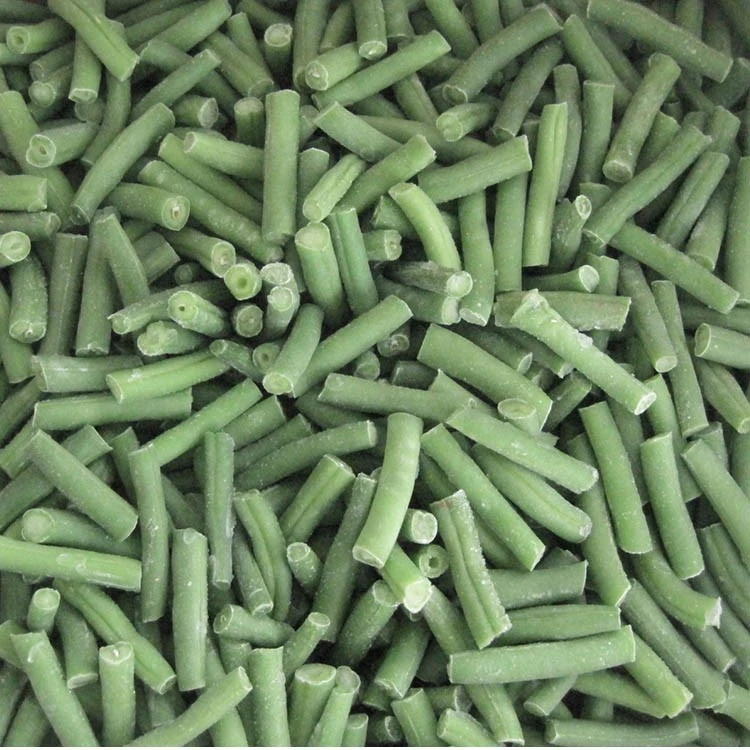
Frozen cut green beans: identify the actual form, packing and intended use in the shipment file. Product photograph; not evidence of a filing result.
Frozen cut green beans for your import programme
Tell us your destination, intended use, cut or grade, packing, quantity and preferred shipment window. We can coordinate the proposed source, sample specification and origin documents with your importer and appointed filing team. The actual lot, factory and required documents are agreed before dispatch.
View product and supply details
Request Specifications & QuoteFor the actual identity filing, use CBP's current Form 5106 landing page and its June 2026 form. CBP's 19 August 2026 notice specifies submission by the importer or its licensed broker through ABI or email to the appropriate Center of Excellence and Expertise. For an unassigned importer, use the Center associated with its highest-value commodity classification. Confirm the Center through CBP's directory. Do not rely on an old paper-processing instruction as the current channel. Retain the submitted version and the actual identity result; creating an ACE user account is a separate access task.
Enhanced Form 5106 accuracy enforcement began on 18 September 2026. The importer must provide its own actual physical business or individual location, valid email, phone and identification details. A broker, forwarder, registered-agent address or unrelated contact must not replace the importer's required identity. Inaccurate or incomplete data can cause CBP to void the IOR number, preventing entry. If that happens, preserve the written notice and follow its reestablishment instructions; the notice's IORProgram contact is for questions or reinstatement, not a generic filing address. Before booking, the importer and directly authorised broker should check that the number remains usable and the supporting data are current.
The broker's authority is another document. A licensed customs broker ordinarily acts for the IOR under a power of attorney. The importer should sign directly with the broker in the scope and form required for the customs business being performed and retain the executed agreement. A commercial sales agreement between GreenLand and a buyer is not a broker POA. A freight forwarder may coordinate a broker referral, yet the buyer must know which licensed broker is making entry, which importer is principal and how the broker will deliver acknowledgments and exception notices.
19 CFR 111.36(c)(3) requires the broker to execute the customs POA directly with the importer of record or drawback claimant, rather than through a forwarder or other third party. Ask the broker which corporate signatory and supporting identity evidence it needs. Its onboarding checklist and secure delivery channel can differ by customer. Resolve an incomplete signature or legal-entity mismatch before the broker undertakes the relevant customs business.
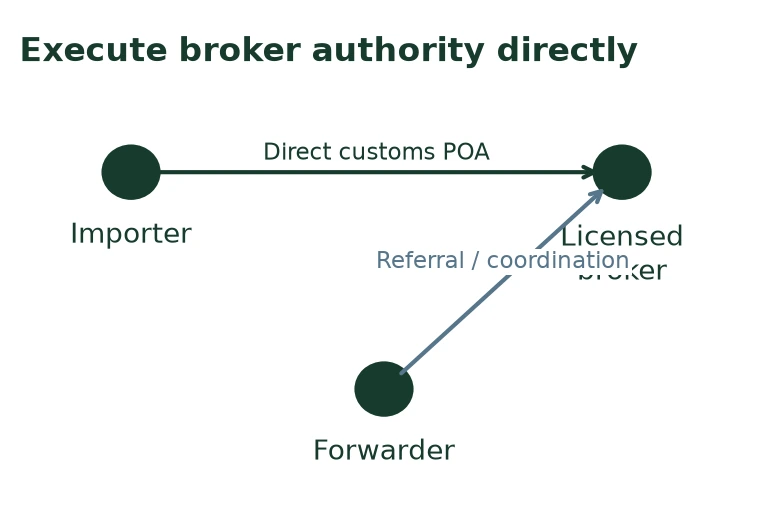
The broker executes the customs POA directly with the importer of record; a forwarder referral is a separate relationship.
Separate a POA that authorizes a bond issuer or surety agent from the customs broker POA. They can involve different parties and purposes. Do not send an unsigned generic POA and describe it as settled authorization. The importer and broker should verify signatory authority, legal entity, effective date, service scope and revocation route before transmitting sensitive identity information. GreenLand needs enough confirmation to schedule the shipment and align invoice names; it does not need unrestricted copies of private tax records in the marketing file.
For a new US buying entity, make importer identity a pre-booking checkpoint. A useful receipt is the broker's written confirmation of the IOR legal name and importer number, whether 5106 was transmitted and accepted where required, and that an effective broker POA covers the planned entry. If the broker cannot match the IOR number, the buyer should resolve that before the container is tendered. Repeatedly retyping the same number into ISF, invoice and entry systems does not fix a CBP identity mismatch.
Where the importer of record is foreign, its broker must evaluate the permitted structure, identification, bond and documentation for that particular transaction. Do not assume a nonresident IOR is impossible, and do not assume a DDP price automatically makes GreenLand the IOR. The commercial term and actual customs appointment have to be consistent. If a trading company is seller but a different registered foreign entity is the production site, keep those names in their correct places rather than reusing one company name across forms.
Arrange a suitable bond and retain the evidence
CBP commonly requires a customs bond for formal entry. The importer and broker or surety decide whether a single-transaction or continuous bond suits the import programme, and determine the applicable amount and conditions. CBP's bond guidance describes both choices and the application through a licensed surety or broker acting for one. A continuous bond can cover repeated entries over a period; a single-transaction bond addresses a particular entry. This is a financial security obligation to CBP, not a quality guarantee for the frozen goods.
Budget the bond before sailing. An IQF buyer expecting monthly reefers may discuss a continuous bond; a first isolated purchase may ask its broker about a single entry. The choice depends on expected duties, fees, entry frequency and CBP requirements, not a fixed recommendation from a supplier article. Bond amount and underwriting can change with product or duty exposure. A generic cost quote from a forwarding platform is not evidence that the bond has been accepted for the named importer. Ask for the effective bond identifier and confirmation that it covers the planned activity and entry.
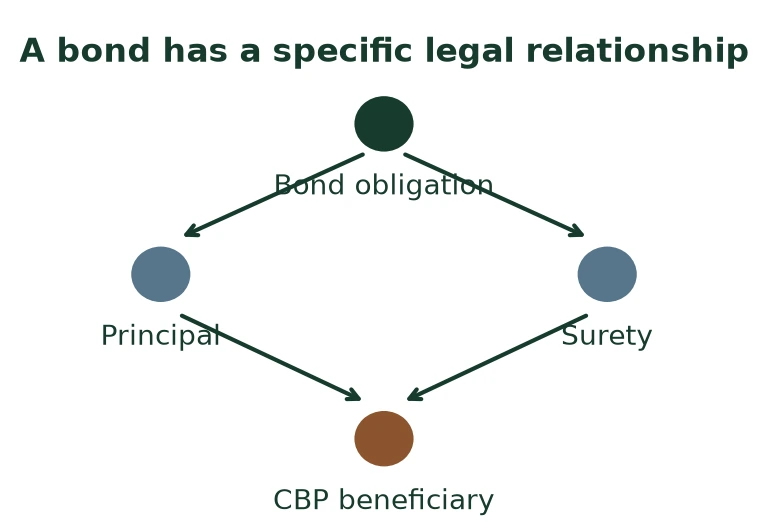
Choose the correct obligation and effective coverage; paying a premium alone does not prove the relevant filing is covered.
Apply through a licensed surety company or a broker acting for one. The US Treasury surety programme provides the Circular 570 certified-company route for checking the provider. The application commonly includes the principal's name and importer number, the nature of the goods, expected and historical duties/taxes/fees, authorised signatures, and underwriting information. CBP's Form 301 instructions explain the bond and application details. The bond amount is the security exposure; the provider's premium or collateral is a separate commercial cost.
CBP's published Activity Code 1 continuous-bond guidance uses a US$50,000 minimum and the relevant 10% duty/tax/fee calculation, with the authority able to require more. A new importer needs a reasonable forecast. A single-entry bond has different calculations, and food subject to another agency can bring additional exposure. Use the CBP monetary guidance with the broker and surety for the actual entry. A US$50,000 bond therefore does not mean paying US$50,000 to buy a food-import licence, nor does that minimum establish adequacy for every China-origin product.
The bond must align with the IOR identity. If a broker or surety entered the parent's company number while the purchase contract names a subsidiary, resolve the mismatch before entry. An inactive, terminated or insufficient bond can delay release even when the supplier documents and FDA notice are complete. Keep the surety or broker contact able to answer a time-sensitive deficiency. Do not show the bond number publicly in a case study; maintain it in the controlled buyer file.
ISF may involve its own bond requirement or an agent's bond arrangement, so the importer should ask the broker specifically how the ocean security filing will be covered. CBP's ISF rule discussion addresses the possibility of a bonded agent in defined circumstances. A customs entry bond status should not be inferred from an ISF acceptance, nor the reverse. Place both in the pre-loading checklist if they apply and require the filer to identify any open bond question.
The bond receipt is not simply a PDF application. The importer should retain the issued bond details, surety and effective period, the principal identity, any CBP acknowledgment and the broker's confirmation of usable coverage. If underwriting is pending, show the target approval date and an owner rather than marking the task complete. A reefer booking can be made commercially while these records are pending, but the shipment plan must account for the risk of missing filing and entry deadlines.
When the importer expands from green beans to frozen strawberries, revisit the duty and fee forecast and any bond adequacy review. The exact customs classification and current tariff measures belong to the customs specialist. GreenLand can provide product composition, processing state and value support for the buyer's determination; we should not state a duty rate or bond amount from an old product page. Record the classification version and date that the broker used for the bond estimate and customs entry plan.
Name the FDA FSVP importer and verification owner
Under the FSVP rule, the importer is the US owner or consignee of the food at entry: one who owns it, has purchased it or has agreed in writing to purchase it. If there is no US owner or consignee then, a US agent or representative of the foreign owner or consignee may serve with a signed statement of consent. This is a defined food-safety responsibility, not simply an address where FDA can send mail. FDA's FSVP At-A-Glance lays out the definition and principal verification activities.
The FSVP importer should evaluate the food and supplier before the first entry, applying the rule and any relevant exemption or modified requirements to the actual food and transaction. An IQF cut-green-bean line and a frozen-strawberry line may present different hazards, processes, intended uses and verification needs. A copied generic "FSVP certificate" does not perform a hazard analysis or demonstrate adequate supplier verification. The importer may rely on qualified work by another entity in allowed circumstances, but must review and assess the corresponding documentation. FDA may request the FSVP records; a supplier promise to send a COA later is not an organized verification programme.
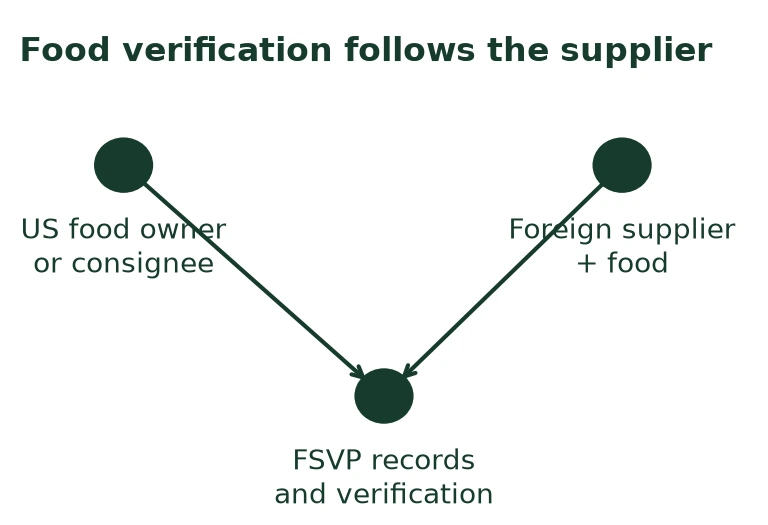
The FSVP owner evaluates the specific food and foreign supplier; a customs power of attorney does not complete that evaluation.
For each applicable food line at entry, the FSVP importer provides its name, electronic mailing address and FDA-recognized unique facility identifier. FDA currently recognizes DUNS as an acceptable UFI and withdrew the temporary use of an "unknown" code. The FDA key requirements explain this entry identification. The FSVP importer should check that the name and UFI in its records are the same legal entity being declared; a facility's FDA registration number or the CBP IOR number is a different identifier.
We can send the buyer an order-specific product specification, ingredient and process summary, relevant source and traceability information, available quality-system documents, sampling and laboratory reports within agreed scope, corrective-action records when applicable and shipment lot bridge. The FSVP importer decides which hazards require controls, how the foreign supplier is evaluated and which verification activities are appropriate. A test report alone cannot cover missing process evidence or an untested hazard. Conversely, an audit certificate cannot automatically establish the status of every finished lot. Keep the evidence purpose and period explicit.
If no US buyer owns or has agreed to purchase the food at entry, the parties must resolve the signed US-representative route before filing. Identify who will accept the FSVP importer obligations, maintain the programme, communicate with FDA and provide the entry UFI. A service company may offer this role, but its quote or its separate appointment as facility US agent is insufficient. The signed consent should name the foreign owner or consignee relationship and the actual role. GreenLand should not be listed as a US FSVP importer simply because it supplied the food from China.
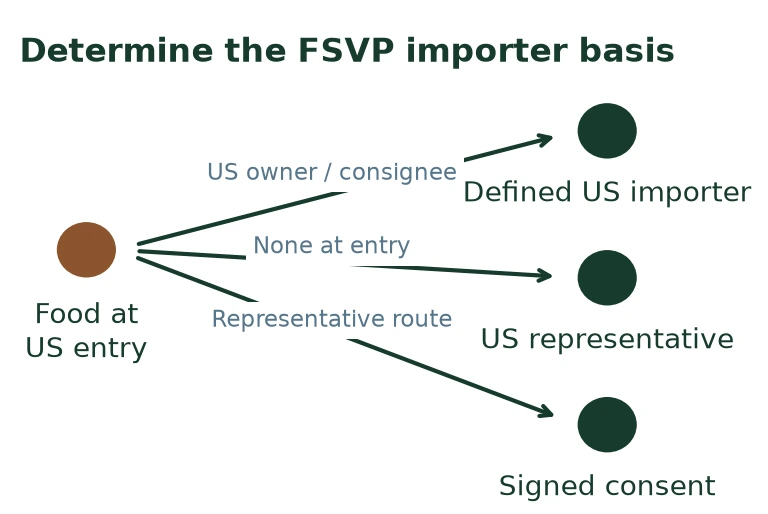
Assess the ownership or purchase facts at entry. The fallback US representative requires the stated written consent and role basis.
The buyer's receipt is a confirmed FSVP owner for each food line, entry identity data, a dated verification plan and a record of what the supplier has provided or still owes. The detailed plan is the importer's controlled file, not public copy. If a buyer changes the intended use from further cooking to no further heat, or changes a supplier, the FSVP importer reassesses whether the hazard and verification work still fits. We can update origin-side facts promptly; the importer makes the regulatory determination.
Connect foreign facility registration to its US agent
Food facilities that manufacture, process, pack or hold food for US consumption may need FDA registration unless an exemption applies. The actual facilities and handling path matter: the processor, a separate packer and a cold store cannot be collapsed into a single marketing brand without checking each entity's activity. FDA's food-business guidance describes the scope and exemptions. Registration is an entity/facility obligation; it is not a product approval certificate and does not guarantee that a shipment will be admitted.
A foreign facility that must register identifies a US agent. FDA's foreign-facility FAQ describes a US-resident or US-business presence that communicates with FDA in routine and emergency circumstances. The facility should confirm that its registration and agent details are current for the actual processing or holding site. An agent used by another factory in the group is not automatically the agent of the facility preparing this order.

Whole frozen strawberries: identify the actual form, packing and intended use in the shipment file. Product photograph; not evidence of a filing result.
The buyer should request the relevant facility identity from the supplier and make a controlled check with its FDA adviser. Names and addresses in a registration record, invoice, carton marking and entry data may use abbreviations or different transliteration. Build a mapping that identifies the same physical site and explains lawful trading names, while retaining the original official record. If a new contract manufacturer is selected after quotation, recheck its facility status and US agent rather than copying the previous manufacturer's number onto the new invoice.
FDA facility registration, FSVP importer identification and CBP importer identity are separate data sets. A document headed "FDA Registration Certificate" sold by a consultant may only be a private presentation of a public or self-reported fact; it is not an FDA endorsement of the food. Ask who submitted and maintains the actual registration. FDA states that a third-party registrar is not required to submit, update, renew or cancel a facility registration. The appointed US agent is the facility's communication link; it does not absorb the US buyer's FSVP obligations by default.
There can also be calendar duties. Food-facility registration renewals occur in the statutory cycle, so a buyer planning shipments near a renewal period should confirm the current status and its effective dates with the responsible facility. Do not publish an asserted current registration for GreenLand or a production partner based on an old marketing claim. The order file should contain the facility name and address supplied for the specific lot, the applicable registration check and who performed it. If the result is unresolved, flag it before finalizing the entry data.
For a China IQF purchase, GreenLand can coordinate with the actual production site to provide identity and process information that the importer reasonably needs. We should also preserve source-factory changes in the lot record so the FSVP importer and broker see them before booking or entry. The facility, its US agent and the buyer's FDA importer each have separate contacts in the role matrix. A single person's email may appear in several records, but each role needs its own basis and scope.
Test the role matrix on a China IQF order
Consider a US foodservice distributor purchasing a full reefer of blanched IQF cut green beans from a China seller, with a separate trial shipment of frozen whole strawberries for a fruit-preparation customer. The purchase agreement names the actual seller, buyer, transfer of title and shipping term. The buyer decides who will act as customs IOR and supplies its importer number. It appoints a licensed broker directly under a suitable POA and arranges a bond. The buyer then tests the FDA FSVP definition at time of entry and confirms who owns the verification programme for each product. The actual foreign production facility checks its registration and US agent. None of these steps assumes that the sample and container have identical procedures.
GreenLand's proposed order packet would identify the green-bean form, blanching and packing, target carton weight, quantity, intended application, source and lot structure, expected reefer controls and origin-side documents. The strawberry packet would separately describe whole or cut fruit, grading direction, packing and intended processing or consumption path. The US broker can then classify each item and estimate duty and bond needs. The FDA responsible party can assess product-specific verification. We can provide production and batch evidence we actually hold or arrange under the order. We should not promise a test, certification or factory capability until the actual supplier and specification are confirmed.
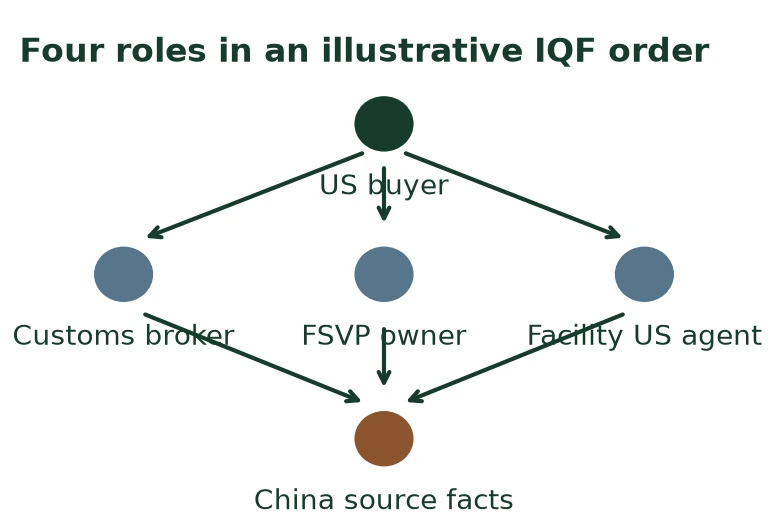
Name each role and keep the evidence it controls attached to the actual processor and food.
Before ocean loading, the ISF importer and filer reconcile the eight early security fields, two later stuffing fields and lowest bill. Prior Notice for the commercial foods follows the FDA rule and mode-specific clock. The customs entry and FDA line data must name the appropriate parties and identifiers. A sample sent by air or courier may avoid ocean ISF but still require FDA Prior Notice; a sample's low value does not erase every FDA rule. This procedure guide focuses on roles, while the dedicated US import guide covers the broader border sequence.
At each point ask for a receipt, not just a promise: CBP identity status; executed broker POA; bond effective confirmation; FSVP importer name/email/UFI and verified programme owner; current foreign facility/agent record; accepted ISF and bill match; accepted Prior Notice; then entry and food-admissibility outcomes. The same reefer may be delayed by one missing receipt even when all supplier paperwork is complete. A procurement tracker should show who requested each item, when, and what exception remains. A screenshot without shipment identity or a date is weak evidence.
The trial strawberry order is useful for testing the role matrix before volume commits. If the buyer uses a different US entity or customer, re-evaluate ownership at entry and FSVP identity. If the manufacturing source changes, recheck registration and supplier verification. If the freight mode changes from air sample to ocean container, add the ISF and carrier tasks. Keep the product specification, lot and intended use tied to the same version of the order. We can help coordinate the supplier data and respond to quality questions while the US team completes its own legal and filing work.
| Task / owner | Inputs and official or professional channel | Completion evidence |
|---|---|---|
| IOR identity - importer / authorised broker | Current 5106; legal name, address, identification and contacts; broker or responsible CBP office | CBP identity result / broker confirmation of usable importer record |
| Broker authority - IOR and licensed broker | Direct executed POA; broker signatory and identity requirements | Signed authority covering the relevant customs activity |
| Bond - principal and surety / agent | Importer identity, goods and exposure forecast; appropriate Form 301 / electronic bond process | Effective accepted coverage for the principal and obligation |
| FSVP - defined US food importer | Food/supplier hazard and verification work; name, email and recognised UFI for entry | Assigned owner, role basis, required verification records and entry data |
| Foreign facility - actual site / US agent | Applicable FDA registration, activity, physical site and agent confirmation | Current facility and agent information for the actual production chain |
Resolve missing identities and preserve four separate receipts
The most common failure is a name that looks plausible but has no assigned responsibility. A warehouse address is entered as FSVP importer without consent. A freight forwarder is assumed to be IOR because it booked transport. A facility US agent is asked to provide a customs bond it never agreed to arrange. A broker receives a sales invoice but no signed POA. Treat these as different open issues with different owners. The order coordinator should halt the affected filing step, identify the responsible party and seek its written confirmation before the vessel or entry deadline makes correction costly.
If Form 5106 information is rejected or an importer number does not match, the IOR and broker correct the identity record and document the acceptance. GreenLand may correct a legal seller name on the invoice if our own document is wrong; we cannot repair a customer's CBP registration or declare it valid. If a bond is pending or insufficient, the broker and surety determine the remedy and timing. If a POA was signed by the wrong legal entity, the importer and broker execute the right authority. Keep the old version in the file so a later audit can see why the replacement was needed.
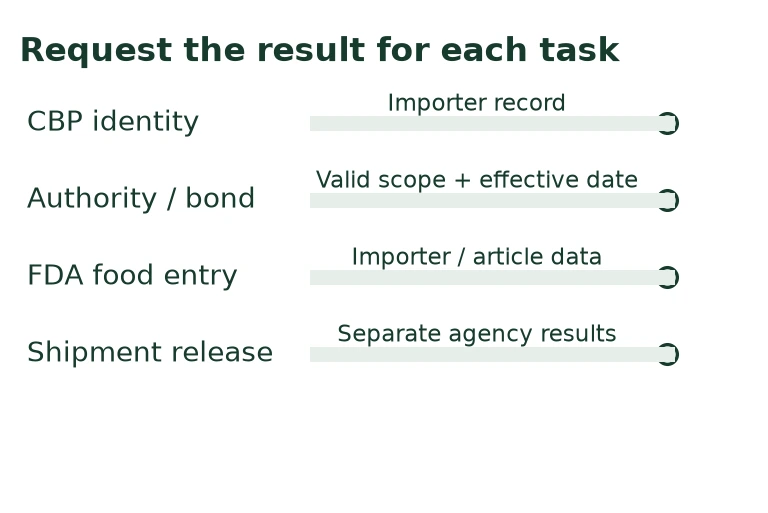
One receipt cannot prove the completion of every customs and food responsibility.
If the FSVP importer is unresolved, determine who owns or has agreed in writing to buy the food at entry. Where none exists, obtain the signed consent of a suitable US representative and verify its ability to maintain the required records. Do not temporarily insert the customs IOR or the facility US agent into the FDA entry field just to pass an electronic edit. If the actual manufacturing facility changes or its registration cannot be confirmed, the facility and buyer's FDA contact resolve that identity before claiming the entry is ready. A replacement supplier may also require a fresh hazard and verification review.
Preserve a four-part acceptance file. First, customs identity: legal IOR name, number and any accepted 5106 update. Second, customs authority/security: executed broker POA and bond coverage appropriate to the entry and, where relevant, ISF. Third, FDA FSVP: named importer, email, recognized UFI, role basis and programme ownership for each food. Fourth, foreign facility: actual site, registration status and US-agent contact. Add separate shipment receipts-ISF, Prior Notice, customs and FDA decisions-only when they actually arrive. The categories help a buyer see which missing item can block which step.
The final procurement review should align title and shipping terms, invoice seller/buyer, production site, intended delivery, tariff and FDA product descriptions, and lot and carton identities. Each role owner signs off its own field set; GreenLand signs off origin-side facts we can substantiate. Recheck after a contract amendment, source substitution or reroute. When the file is coherent, the buyer can commission the broker to file with confidence and respond quickly if CBP or FDA asks a question. That is a concrete basis for planning shipment, rather than a stack of certificates with no named person able to use them.
Government processing and professional onboarding have different costs and times. A brokerage setup fee or surety premium is not a fee for FDA product approval. Ask the broker and provider for their current written quote, required supporting material and expected decision sequence; an official enquiry or case reference remains pending until its result is returned. GreenLand's proposed pre-booking review records each open identity or security item and its owner so that production allocation and a legal filing window can be coordinated realistically. Reviewed 20 October 2026.
- Buyer fixes the transaction structure and names customs and food-responsibility owners.
- Importer and broker establish the usable identity and execute direct authority; principal and surety arrange applicable bond coverage.
- FSVP owner completes the applicable food/supplier work; the actual facility resolves its registration and US agent.
- GreenLand reconciles origin documents with those approved identities before shipment; each role owner retains its own result.
Use the existing order worksheets
Use T10 to assign each field or document to its provider, reviewer, due time and returned reference. T12 records changed source, product or transport facts; T11 preserves arrival evidence. Keep the legal deadline separate from the agreed earlier handover.
Build your frozen food order with GreenLand-food
GreenLand-food is a professional frozen food supplier and manufacturer in China, providing factory-direct wholesale supply for importers, food manufacturers and foodservice programmes.
Send your product form, specification, packing, quantity, application, destination, private-label needs and requested documents. We will organise the product and order requirements with your purchasing and quality teams.