


What Is a White Peach? Flavor, Color and Processing Differences
Sep 01, 2026
Leave a message
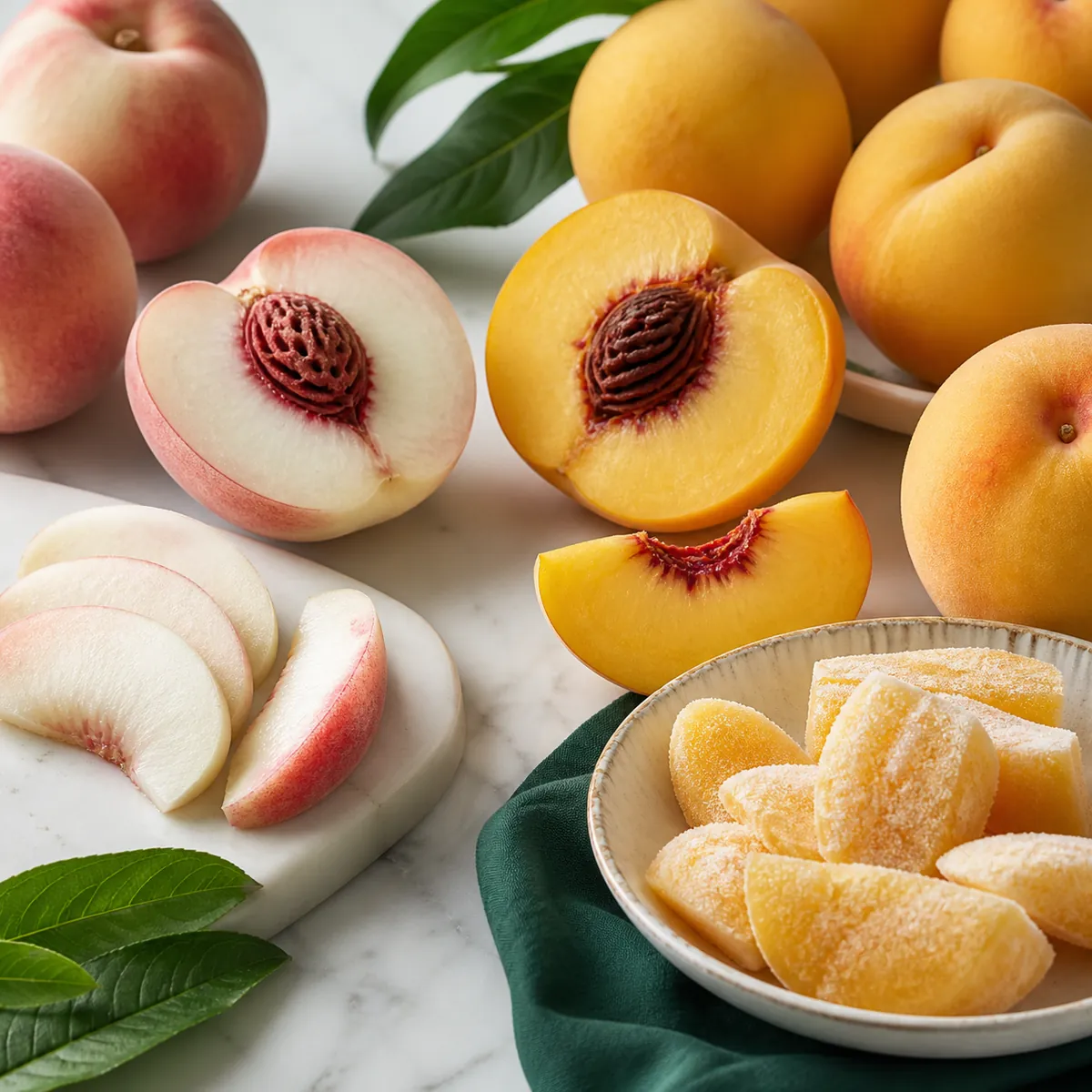
White peach describes flesh color and a typical flavor balance
Cut a ripe white peach and the flesh is pale rather than yellow, sometimes with red or pink pigment near the stone. Many white cultivars have lower titratable acidity, so sweetness and floral aroma seem prominent even when soluble solids are not unusually high. Yellow peaches normally offer a sharper sweet-tart balance and stronger golden color.
For a frozen ingredient, do not buy on the phrase "white peach" alone. Confirm cultivar or approved blend, maturity, soluble-solids and acid range, flesh and skin color, freestone or clingstone behavior, cut, peel status, anti-browning treatment, texture, pack and finished-product trial.
For ingredient format details, see What Is a Freestone Peach? Pitting Yield and Frozen Cut Selection.
Key takeaways
White peach is a cultivar group, not an underripe yellow peach
The pale interior is genetic. A white peach does not become yellow when fully ripe, and a firm pale fruit is not necessarily immature. External skin can show a cream ground color with pink or red blush, but skin appearance varies with cultivar, sun exposure and maturity. Cut the fruit and evaluate the flesh rather than classifying it from blush alone.
The name also does not reveal whether the pit releases easily. Freestone peaches separate from the stone with less flesh attached, which can simplify certain fresh and processing operations. Clingstone fruit holds tightly to the pit and may be preferred in some processed-peach systems. White cultivars can occur in either group. Stone type, flesh firmness and cut yield therefore belong in the specification.
Some white peaches are very soft and juicy at eating ripeness; others retain more structure. That difference matters for freezing. A delicate, overripe fruit may lose its shape after peeling, pitting, freezing and thawing. A processor can select a firmer harvest maturity for pieces while still protecting characteristic flavor.
Do not use "white peach" and "donut peach" as synonyms. Flat or donut peaches describe shape. They can have white or yellow flesh depending on cultivar. Likewise, nectarine refers to smooth skin and is a separate commercial identity even though peaches and nectarines are closely related.
White peach versus yellow peach
| Attribute | White peach tendency | Yellow peach tendency | Buyer implication |
|---|---|---|---|
| Flesh color | Ivory, cream or pale pink-white | Golden yellow to orange-yellow | Match visual identity and oxidation tolerance |
| Flavor balance | Soft acidity, floral sweetness | More pronounced sweet-tart profile | Test with the product's sugar, acid and flavor system |
| Aroma | Often delicate, perfumed and honey-like | Classic robust peach character | White peach may be lost under strong cocoa, spice or heat |
| Texture | Frequently tender and easily bruised, with cultivar exceptions | Many processing types offer firmer structure | Approve harvest maturity and post-thaw piece integrity |
| Typical application fit | Premium beverages, dairy, sorbet, delicate desserts | Bakery, pie, jam, sauce and strongly flavored preparations | This is a starting hypothesis, not a rule |

A frozen peach page is not proof of white-peach availability
GreenLand's frozen peach chunks show a verified peach form, but the visible product is not presented here as a white-peach SKU. Buyers needing pale flesh must request cultivar, flesh color and sample confirmation for the specific offer and season.
This boundary matters. Substituting a yellow-peach photo or specification under a white-peach name would undermine product development and labeling decisions.
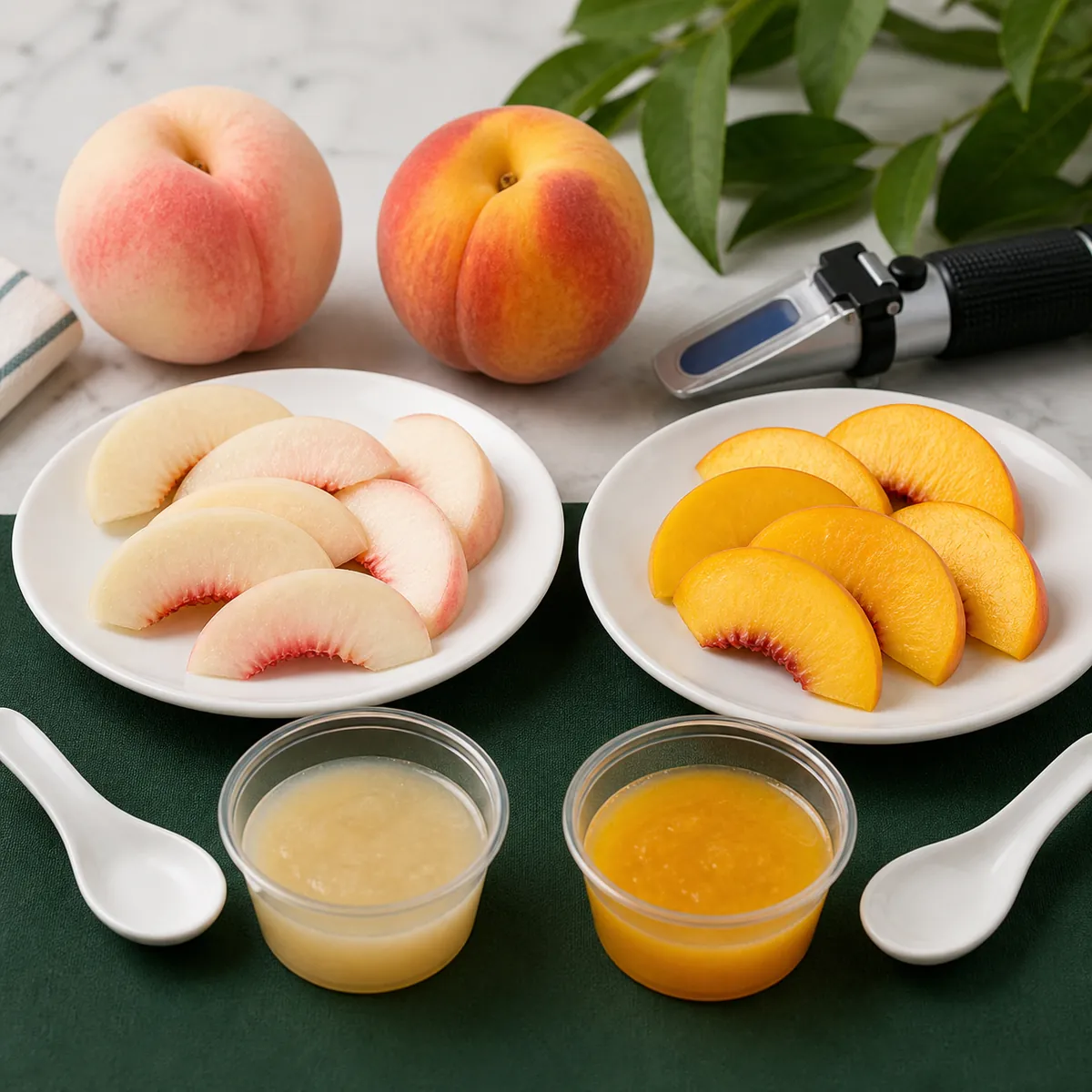
Sweetness is a ratio, not a flesh-color promise
People often call white peaches sweeter. The useful explanation is that perceived sweetness depends on sugar and acid together. A fruit with moderate soluble solids and low acidity can taste sweeter than a higher-Brix fruit with substantial acid. Aroma, temperature and texture also affect perception.
For procurement, ask how soluble solids are measured, what sample size is used and whether the value is a target, typical observation or contract limit. Pair it with titratable acidity or another agreed acid measure. One refractometer reading from one soft fruit does not represent a commercial lot.
Flavor systems can change the result. Yogurt contributes acid, a beverage may contain citric or malic acid, and a bakery filling carries sugar, spice and heat. A low-acid white peach may taste elegant in a lightly flavored drink but disappear in a strongly acidic base. Sometimes added acid makes the peach taste more vivid; sometimes it removes the delicate identity. Only a formulation trial answers the question.
Frozen storage and thawing also release juice and change aroma presentation. Taste the fruit at the point it enters production and in the finished item after the intended hold time.
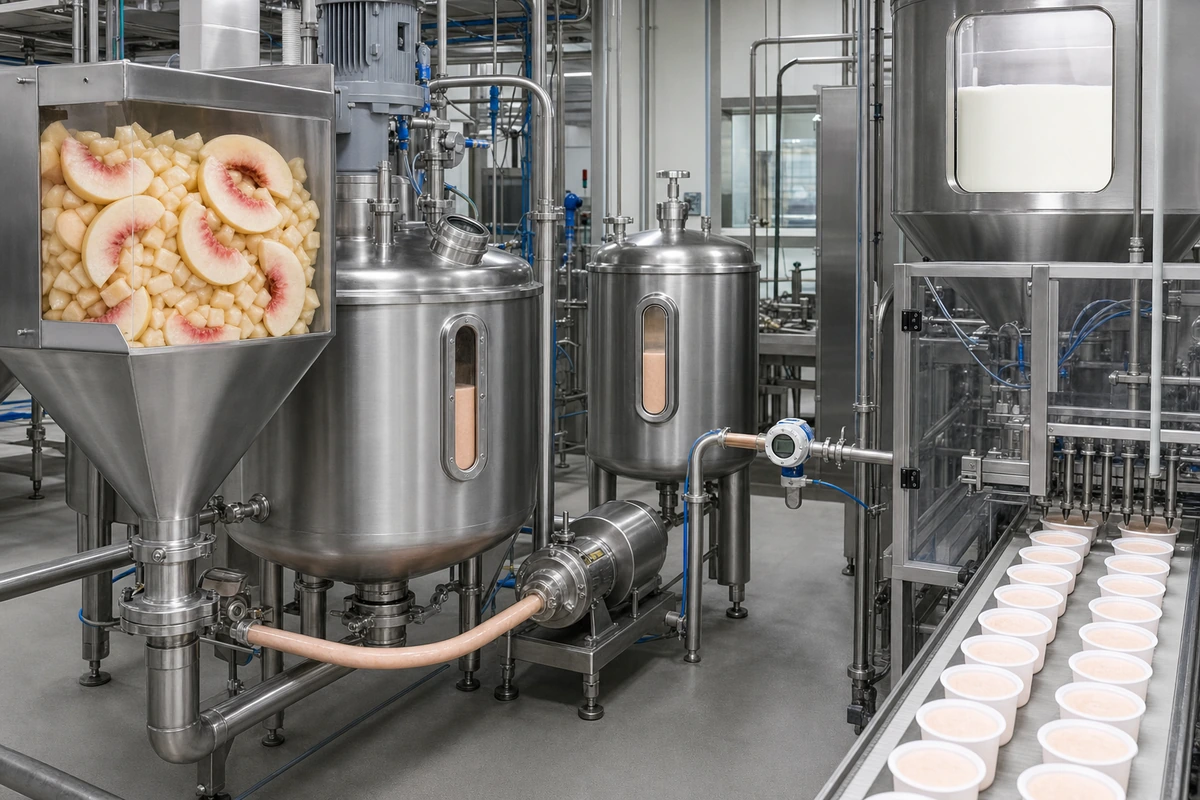
Delicate flavor needs space in the formulation
White peach pairs naturally with yogurt, cream, tea, vanilla and light floral notes. The formulator should watch acidity, heat load and competing flavors. A product can contain technically correct white peach yet communicate no recognizable white-peach character.
Test inclusion rate, particle size and process order. If pieces are intended to remain visible, confirm that mixing and filling equipment do not destroy them.
Application decisions for white and yellow peach
| Application | White-peach opportunity | Risk to test | Sample check |
|---|---|---|---|
| Beverage or tea | Light color and floral aroma | Aroma loss, pulp settling, acid imbalance | Finished drink after process and shelf hold |
| Dairy and yogurt | Premium soft sweetness | Dairy acidity can dominate; enzymes and pieces affect texture | Fruit preparation in the exact base |
| Sorbet and frozen dessert | Clean aromatic profile | Cold suppresses sweetness and aroma perception | Serving-temperature sensory trial |
| Pie or bakery filling | Distinct pale filling and refined flavor | Soft pieces, oxidation and loss under spice | Full bake and cooled slice |
| Jam or sauce | Light-colored premium profile | Heat darkening and food-safety formulation requirements | Validated process, color and flavor after storage |
How freezing changes white peach
Freezing forms ice inside peach tissue. After thawing, pieces are softer and release more juice. That is normal for a frozen fruit ingredient and is why the best applications are blended, cooked or otherwise tolerant of softening. Fast freezing and stable storage help preserve piece definition, but they cannot produce the crisp bite of fresh fruit.
Pale flesh makes oxidation visible. Control time between cutting and freezing, treatment, oxygen exposure and storage stability. Ask whether the product is treated and how the treatment must appear on the ingredient declaration. Treatment can protect color but may shift acidity or flavor.
Piece size affects damage. Very thin slices have more exposed area and can break; large chunks freeze and thaw differently through the center. Choose dice, slices or chunks according to equipment and finished presentation. Confirm the ratio of intact pieces, small fragments and puree-like fines.
Evaluate thawed juice as part of usable yield. Some applications can incorporate it; others need controlled drainage. State whether purchasing and formulation weights refer to frozen net product, thawed product or thawed-drained fruit.

Write a white-peach specification that can be verified
Include cultivar or approved cultivars, flesh and skin color, maturity, soluble-solids and acidity range, stone and peel removal, cut dimensions and tolerance, treatment, color defects, bruising, broken pieces, free-flow, clumping, pack, origin and documents.
A pale color target needs a visual standard and agreed inspection light. A sweetness claim needs a sampling and measurement method. Convert descriptive language into checks the buyer and supplier can repeat.
A careful preservation note
Naturally lower acidity is relevant to preservation safety. University of California guidance warns that white peaches can have a pH profile that makes unverified home-canning approaches inappropriate. Do not substitute white peaches into a canning recipe merely because a yellow-peach version exists. Use a current tested recipe from an authoritative preservation source or choose freezing.
Freezing controls quality deterioration but does not sterilize fruit. Begin with sound peaches, use clean equipment, follow safe handling and maintain frozen storage. Commercial processors must use a validated food-safety plan and market-appropriate requirements rather than household instructions.
This distinction is one reason a product-development team should not reduce white versus yellow peach to flavor preference. Natural acidity can affect formulation, process validation, label review and the permitted preservation method.
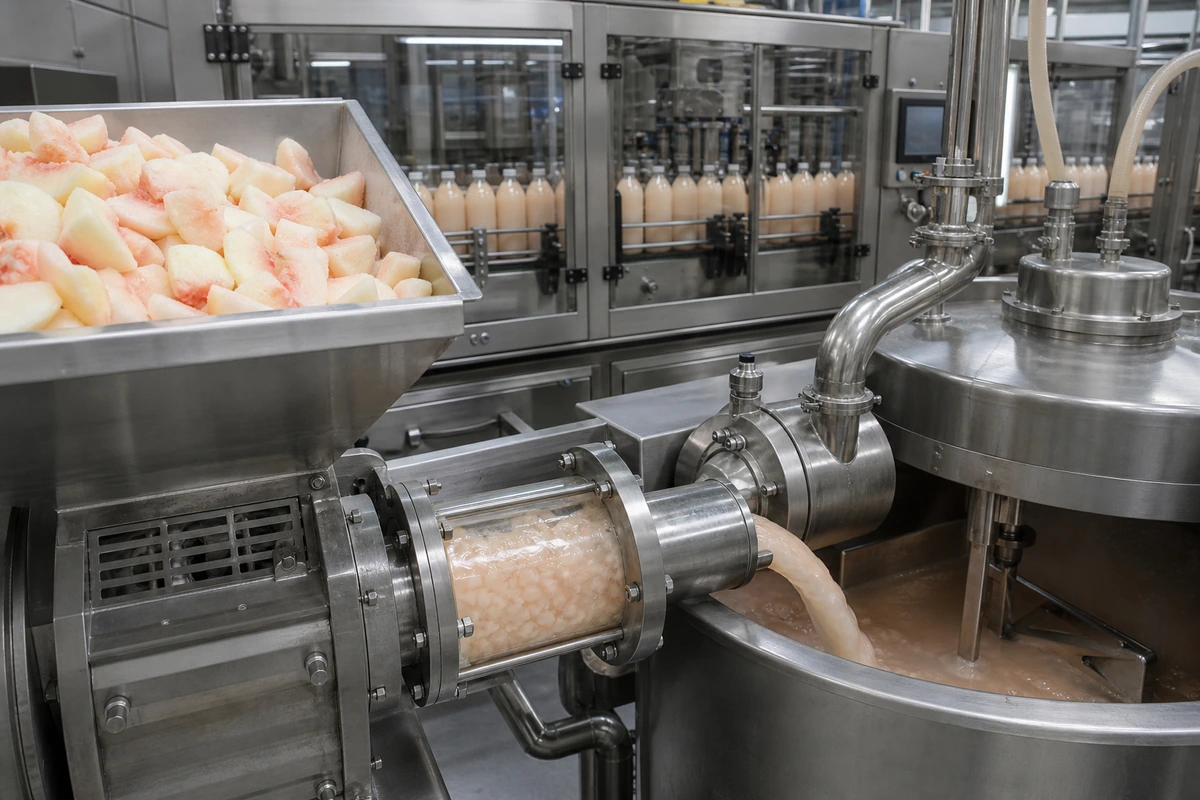
Approve the ingredient in the finished product
Inspect the frozen sample first, then run it through the actual thaw, mixing, heat, shear, filling and storage sequence. Compare white and yellow peach only at equal and commercially realistic formulation conditions.
Record lot, measurements, inclusion rate, process and sensory result. Availability and exact white-peach form should be confirmed order by order; the article does not promise an unverified SKU.
From cultivar request to an approved white-peach ingredient
Start with the consumer promise. White peach may signal pale color, floral aroma, low tartness, a regional cultivar or a premium flavor name. Those are not identical briefs. A beverage that promises a delicate white-peach aroma needs different evidence from a fruit preparation where pale visible pieces are the central claim.
Translate the promise into measurements and sensory references. State an acceptable flesh-color range, soluble-solids and acidity approach, flavor description, piece or puree form and prohibited defects. Decide whether cultivar identity is mandatory or whether an approved blend can meet the profile. If the label names a particular variety, confirm legal and traceability requirements for that market.
Ask how the fruit is harvested and matured for processing. Very firm early fruit can protect cutting yield but may lack aroma. Very soft fruit can deliver flavor while creating excessive fines and drip. The supplier should explain the maturity window used for the offered form, and the buyer should test whether it survives the real process.
Review season and origin. Cultivar availability, crop volume and weather change from year to year. A development team should know whether a sample represents a scalable seasonal lot or a rare reference with no confirmed commercial volume. Alternatives can be qualified in advance, but they should not be substituted silently after launch.
Inspect the frozen sample under consistent light. Record package condition, temperature, clumps, frost, flesh color, skin remnants, pit material, piece range, broken fraction and odor. White fruit can show browning clearly, so compare with a controlled reference rather than memory. Photograph both frozen and thawed states with a neutral background.
Use an agreed thaw test. Refrigerated thawing, room-temperature thawing and direct processing give different results. Define sample mass, time, temperature, drainage and evaluation point. Measure drip if it changes formulation yield, but also determine whether the juice can remain in the beverage, sauce or preparation.
Run the full process, not a spoon tasting. Heat can darken the fruit and drive off aroma. Shear can reduce pieces to pulp. Dairy acidity can shift the flavor balance, and cold serving temperatures suppress sweetness. Packaging headspace and light exposure can alter color during shelf life. Evaluate at production, after expected storage and at serving temperature.
Compare yellow peach as a deliberate benchmark, not as a hidden substitute. It may offer stronger color, acid and classic peach flavor and may perform better in a spiced or baked product. White peach can win when delicate aroma and pale visual identity are valuable. The trial should reveal whether the consumer can perceive the intended difference.
Calculate usable yield and flavor cost. A fragile white-peach lot with high breakage may be unsuitable for visible pieces yet economical for puree. A premium cultivar may allow a lower inclusion rate if aroma is strong, but that assumption needs sensory testing. Delivered price alone cannot describe the value.
Approve both a written specification and a sensory reference. The written document controls measurable limits; the approved sample or controlled profile communicates the aroma and flavor language that numbers miss. Define who can approve changes and how long reference material remains useful in frozen storage.
At receiving, verify lot code, origin, product temperature, packaging and the critical fruit attributes. If a lot is darker, more acidic or softer, place it on hold and run the agreed comparison. Do not compensate with extra sugar, color or flavor before the cause and contractual status are understood.
For this topic, truthful selling is part of quality. A generic frozen-peach product can demonstrate that a supplier handles peach, but it cannot automatically substantiate white flesh, a named cultivar or a particular sensory profile. Confirm each order's exact identity, specification, crop and sample, then make the commercial claim only at that verified level.
Common white-peach development mistakes
Mistake one is using pale color as proof of sweetness. Taste depends on soluble solids, acid, aroma, temperature and the finished base. Measure and taste representative fruit; do not turn a visual attribute into an unsupported sensory guarantee.
Mistake two is selecting a delicate fresh-eating cultivar without a process trial. Fruit that is exceptional at the table can lose shape during pitting, freezing and mixing. If visible pieces matter, firmness and cut yield deserve equal weight with aroma.
Mistake three is hiding white peach under strong flavors. Heavy cinnamon, cocoa, coffee or intense acid can overwhelm its floral profile. Run inclusion and flavor-pairing trials so the premium ingredient remains perceptible.
Mistake four is expecting the pale fruit to stay unchanged. Cutting, oxygen, treatment, heat and storage influence color. Set an acceptable range at the real shelf-life point and decide whether a treatment fits the label and flavor.
Mistake five is comparing inconsistent forms. White-peach puree and yellow-peach chunks cannot reveal only a cultivar effect. Match particle size, fruit percentage, sugar, acid and process so the comparison is fair.
Mistake six is approving a laboratory cup without equipment. Pumps, screens, fillers and homogenizers can shear pieces or separate pulp. Confirm throughput and finished distribution at representative scale.
Mistake seven is overlooking preservation implications. Lower natural acidity can affect safe process design. Use qualified technical review and validated processes; do not adapt a yellow-peach preservation method by intuition.
Mistake eight is launching against an unconfirmed crop. Verify cultivar, origin, season, commercial volume, MOQ and lead time. Keep an approved contingency rather than substituting another peach after artwork and claims are fixed.
The corrective pattern is simple: define the promise, verify the fruit identity, measure its key attributes, process it in the final product, evaluate after storage and align the commercial claim with the exact confirmed supply.
How to evaluate a white-peach sample
Begin by confirming identity. Ask for the cultivar or commercial variety, origin, harvest period and fruit form. White flesh alone does not establish one standard flavor or texture. Photograph the skin and cut flesh under consistent lighting, and record whether red pigment appears near the pit.
Evaluate aroma, sweetness, acidity, firmness and astringency at a defined serving temperature. If the ingredient will be used frozen, compare it after the intended thawing or direct-processing method. A fresh-fruit tasting can describe potential, but it cannot predict piece integrity after freezing, mixing, heating and shelf life.
Measure what matters to the application. For visible inclusions, check cut dimensions, broken pieces, drip, color range and distribution through the base. For beverages, sauces or fillings, evaluate puree yield, soluble solids, pH, flavor balance and stability. Food-safety and preservation decisions require a qualified, validated process rather than a conclusion based on perceived low acidity.
Run the sample against an explicit control. A yellow-peach control should use the same cut, fruit percentage and processing conditions. Blind evaluation can reveal whether people actually perceive the intended difference or are responding to color and product naming.
Finally, connect the result to supply. Confirm available format, packing, MOQ, seasonal coverage, origin documents and lot-to-lot acceptance criteria. If an exact white-peach frozen SKU is required, request confirmation before artwork or claims are approved. A general frozen-peach sample demonstrates processing format, not white-peach identity.
A useful approval record therefore joins sensory notes, measurements, process observations and commercial facts. That record makes the choice repeatable when another crop, lot or supplier is reviewed.
Frequently asked questions
Are white peaches sweeter than yellow peaches?
They often taste sweeter because acidity is lower, but actual soluble solids vary. Judge sweetness and acid together rather than using flesh color as a specification.
What color is the inside of a white peach?
The flesh ranges from ivory to cream or pale pink-white, sometimes with red pigment near the stone. Skin blush does not reliably identify the interior.
Can white peaches be frozen?
Yes. Expect softer texture after thawing and manage oxidation carefully. Select a cut and treatment suited to the finished product and test frozen performance.
Are white peaches safe for home canning?
Do not improvise. Their naturally lower acidity can make unverified methods unsafe. Follow current authoritative guidance and a tested recipe, or freeze the fruit.
What is the best use for frozen white peach?
Potential fits include beverages, dairy preparations, sorbet and delicate desserts. The best use depends on aroma retention, acidity, piece integrity and process conditions.
How can a buyer confirm a white-peach order?
Request cultivar, flesh-color reference, maturity, Brix and acid method, cut, treatment, packing and a representative sample. Confirm availability and specification for the actual order.
Discuss the right frozen peach profile for your application
GreenLand-food is a frozen peach supplier and manufacturer supporting factory-direct and wholesale programs. Tell us whether you need white or yellow flesh, the required cut, application, pack, market and volume so we can review frozen peach supply and sample feasibility without assuming an unconfirmed white-peach SKU.