


Can You Freeze Canned Pineapple? Texture and Syrup
Sep 01, 2026
Leave a message
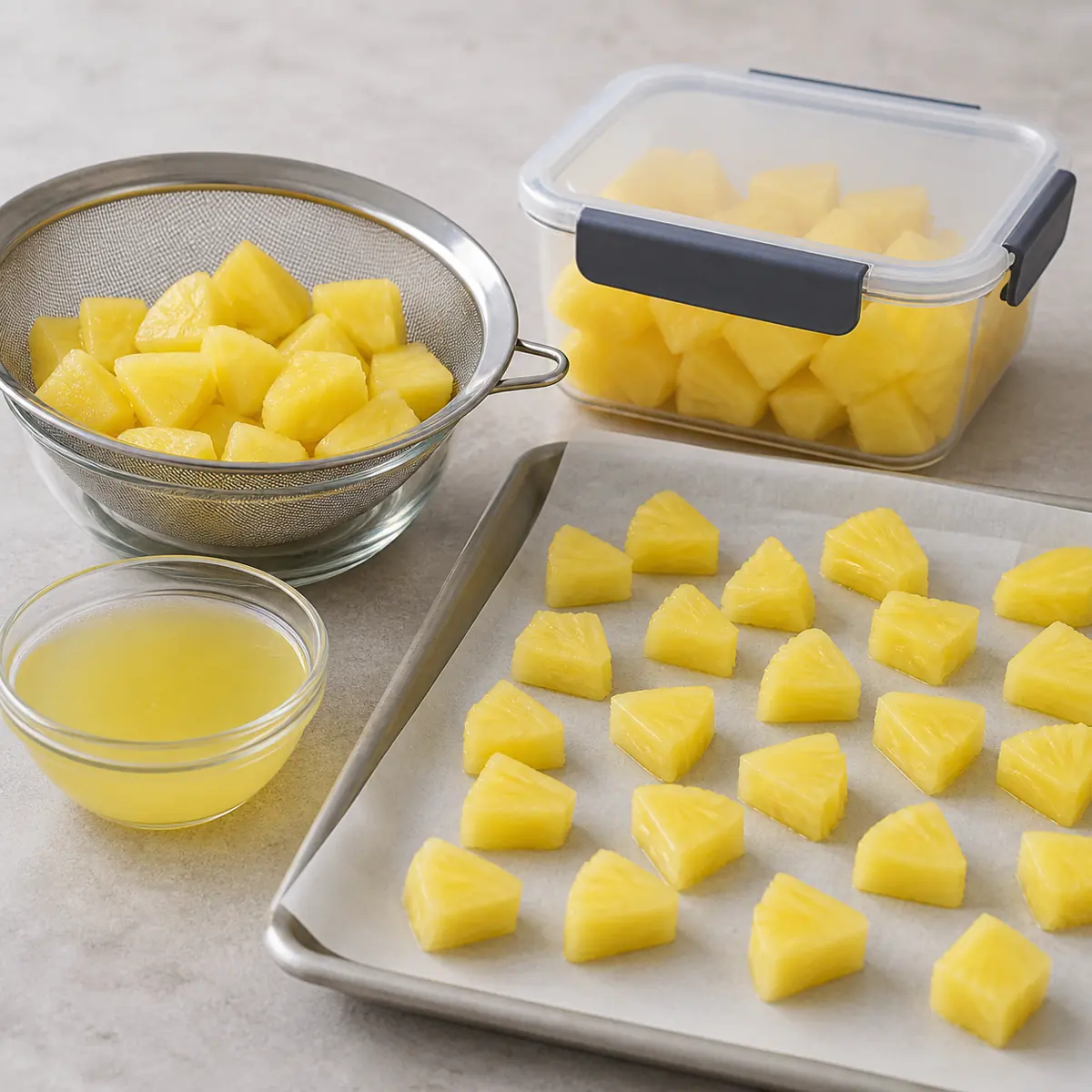
Yes-transfer canned pineapple to a freezer pack and choose whether the liquid belongs in the later recipe
Canned pineapple can be frozen after opening. Do not freeze it in the opened metal can. Drain the chunks or rings when you want separate pieces, or freeze a measured amount with juice or syrup when the liquid will be used in a sauce, dessert or beverage. The pineapple will be softer and may release more liquid after thawing, so it performs best in smoothies, baking, sauces, compotes and cooked fillings.
For preparation details, see Can Pineapple Be Frozen?.
This page keeps canned-product intent explicit. It does not duplicate the broader fresh-pineapple freezing article, and it does not imply that sweetened canned fruit and unsweetened commercial IQF pineapple have the same formulation or texture.
Key takeaways
- Move opened pineapple and its liquid into a clean nonmetal food container; an opened can is not a freezer package.
- Drain and tray-freeze pieces for flexible portions, or freeze a measured fruit-and-liquid portion when the recipe needs both.
- Allow headspace for liquid expansion and protect the package from air, odor and freezer burn.
- Use thawed canned pineapple where softness and released juice are useful rather than expecting the bite of a newly opened can.
Drained, juice-packed and syrup-packed methods compared
| Method | What to freeze | Texture after thawing | Best use |
|---|---|---|---|
| Drained chunks or tidbits | Drain well, tray-freeze, then seal | Softened but easier to portion separately | Smoothies, pizza, baking, salsa cooked into a sauce |
| Fruit with natural juice | Portion fruit and measured juice with headspace | Softer pieces in a useful flavored liquid | Beverages, compote, sauces and marinades |
| Fruit with light or heavy syrup | Freeze the exact fruit-to-syrup amount the recipe needs | Soft, sweet and glossy; slower to harden than drained fruit | Desserts, glazes and sweet fillings |
| Rings | Separate with parchment or freeze in a shallow rigid container | Shape remains visible but becomes delicate | Cooked garnish, upside-down cake and decorative baking |
| Crushed pineapple | Freeze in measured recipe portions | Texture change is less important because structure is already broken | Cake, jam, sauce, yogurt preparation and fillings |

Why the opened can is not the right freezer container
Once the can is opened, transfer both fruit and any liquid you intend to keep into a clean food-safe container. The can no longer provides the sealed protective system it had before opening, and its rigid shape leaves no planned headspace for expansion. A freezer bag or rigid freezer container protects better and makes it possible to divide the fruit into recipe-sized portions.
This transfer is also the moment to inspect the product. Do not freeze a bulging, leaking or badly damaged can, fruit with an abnormal odor, or an opened product with uncertain warm handling. Freezing is a preservation step for sound food; it does not make questionable canned food acceptable.
Drain the pineapple or keep the juice and syrup?
Drain when the later recipe needs pieces without much extra liquid. Let chunks sit in a sieve, then blot only the surface moisture that would create large ice bridges. Reserve the liquid separately if it might be useful. Tray-freezing drained pieces makes it easier to take a handful for smoothies, pizza, baking or a cooked salsa.
Keep some or all of the liquid when it is part of the formulation. Natural juice can become a beverage or sauce base. Syrup carries added sweetness and changes the freezing behavior; a concentrated sugar solution may remain softer than plain fruit at the same freezer temperature. Measure the fruit and liquid together so the thawed portion does not unexpectedly dilute or sweeten the recipe.
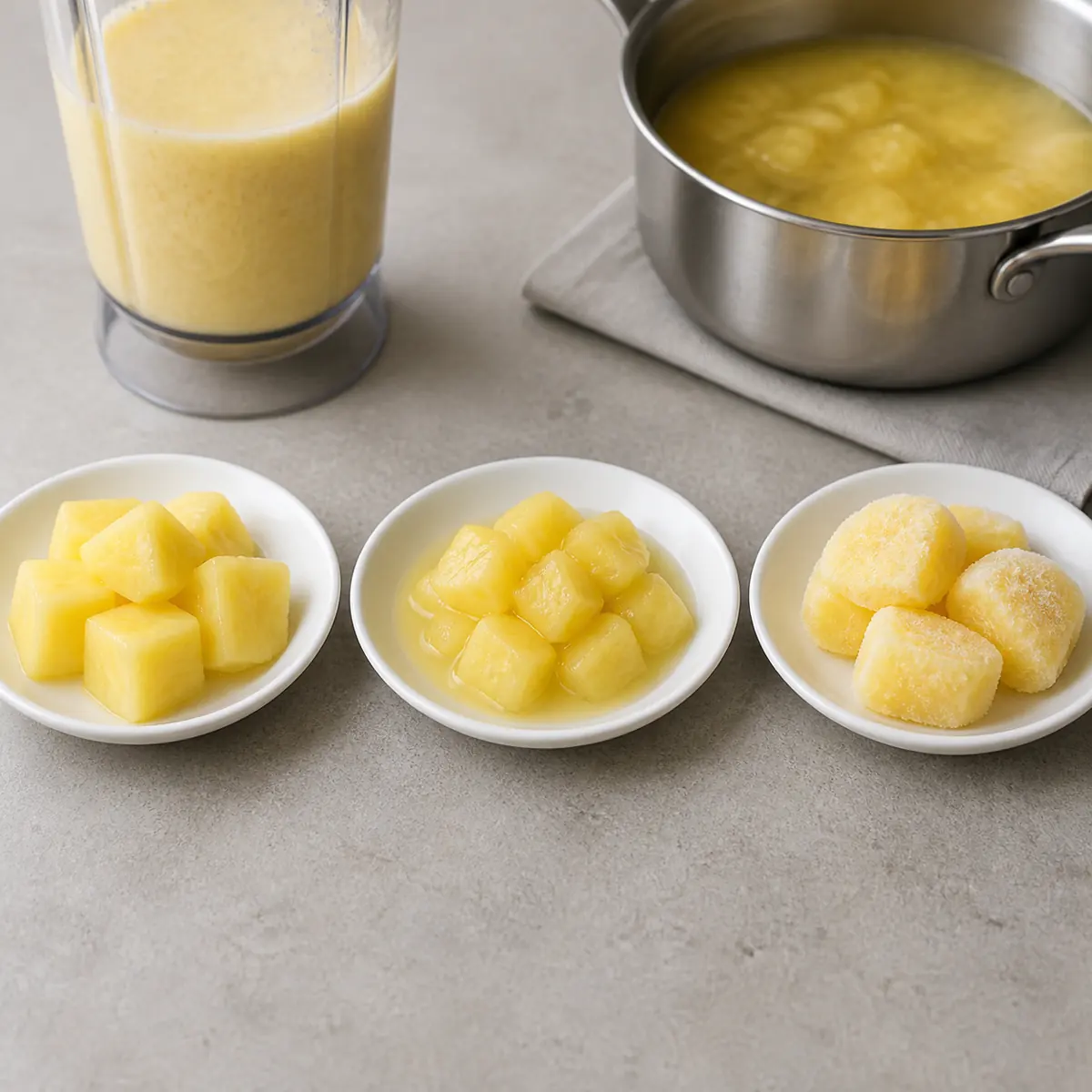
What freezing changes in canned pineapple texture
Canning has already heated the pineapple and softened some plant structure. Freezing then forms ice crystals in the remaining water. After thawing, pieces are usually softer, more translucent at the edges and surrounded by released liquid. Rings may bend or tear when lifted. The flavor can remain useful, but the bite will not be identical to a newly opened can.
That change is not equally important in every use. A fruit-cup garnish depends on neat, resilient pieces and is a demanding destination. A smoothie, cake, compote, barbecue sauce or filling breaks down or cooks the fruit anyway. Choose the later application before deciding that a softer piece is either acceptable or defective.
How to freeze drained chunks so they stay portionable
Drain the chunks, spread them apart on a lined tray and freeze until firm. Do not pile them in a bowl, where residual juice creates one block. Transfer the hard pieces into a freezer-suitable bag or container, remove avoidable air and return them to the freezer quickly. Label the product as canned pineapple so it is not confused with fresh or IQF fruit.
Tray freezing is optional when the whole amount belongs in one recipe. In that case, pack the drained portion directly in a shallow container. A measured 250-gram cake portion is more useful than an unlabeled leftover. Avoid repeated thawing just to separate pieces; make small packs from the start.
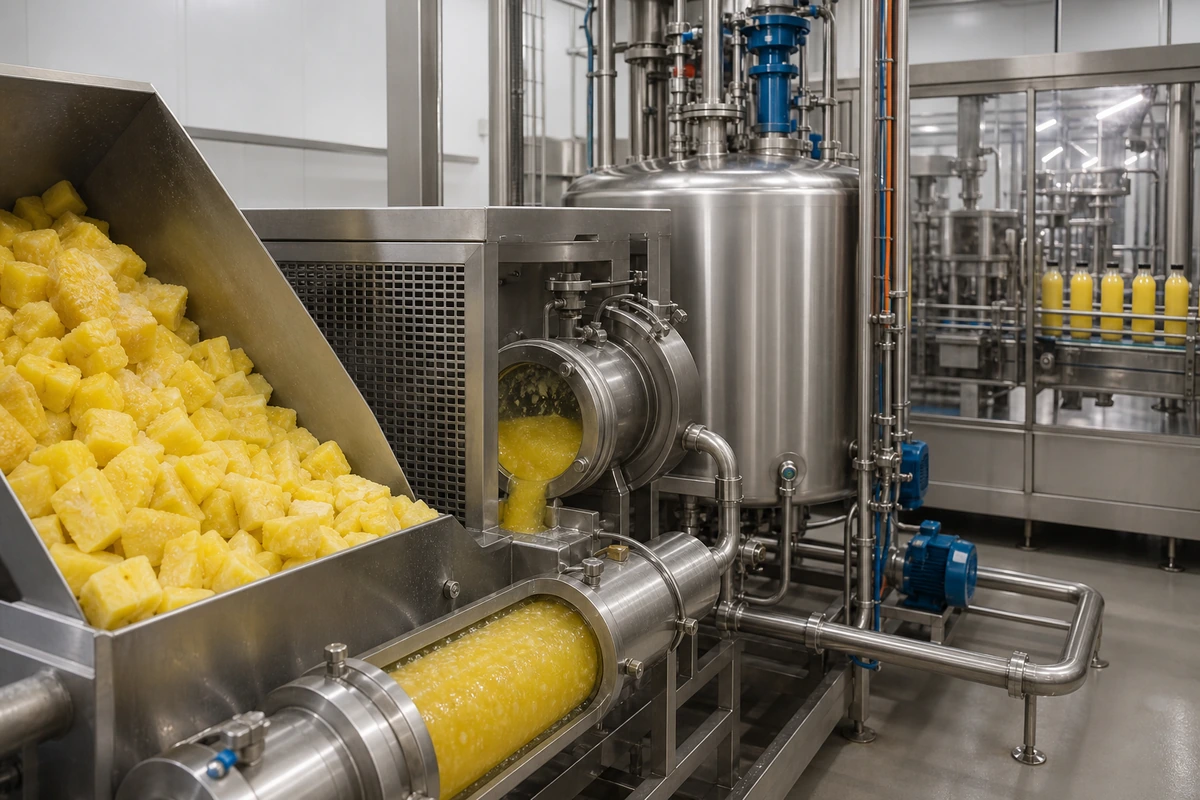
How to freeze pineapple with juice or syrup
Use a rigid freezer container or strong bag that can hold liquid without leaking. Leave appropriate headspace because water expands as it freezes. Keep the sealing surface clean, close the pack fully and freeze it flat or upright where it will not be punctured. Do not overfill a glass jar or use a container not rated for freezing.
Portion by formulation. If a sauce uses 200 grams of fruit and 80 grams of juice, freeze that ratio together. If a beverage team adjusts sweetness separately, freeze fruit and liquid in separate labeled portions. A syrup pack should record the can style-juice, light syrup or heavy syrup-because that information affects both flavor and nutrition calculations.
Thawing and using the fruit without wasting the liquid
Thaw sealed canned pineapple in the refrigerator when you need to inspect pieces or measure the liquid. Place the pack in a dish in case of leakage. For a smoothie, compote or hot sauce, the frozen portion can often go directly into the process. Allow a ring to thaw partially before moving it; forcing a brittle frozen ring apart can break it.
Decide whether the released liquid is an ingredient. Drain it for a pizza topping or fruit garnish where surface wetness is undesirable. Include it in a cake, marinade, glaze or drink when the formula can absorb the water and sweetness. Do not discard it automatically and then compensate with unmeasured water or sugar.
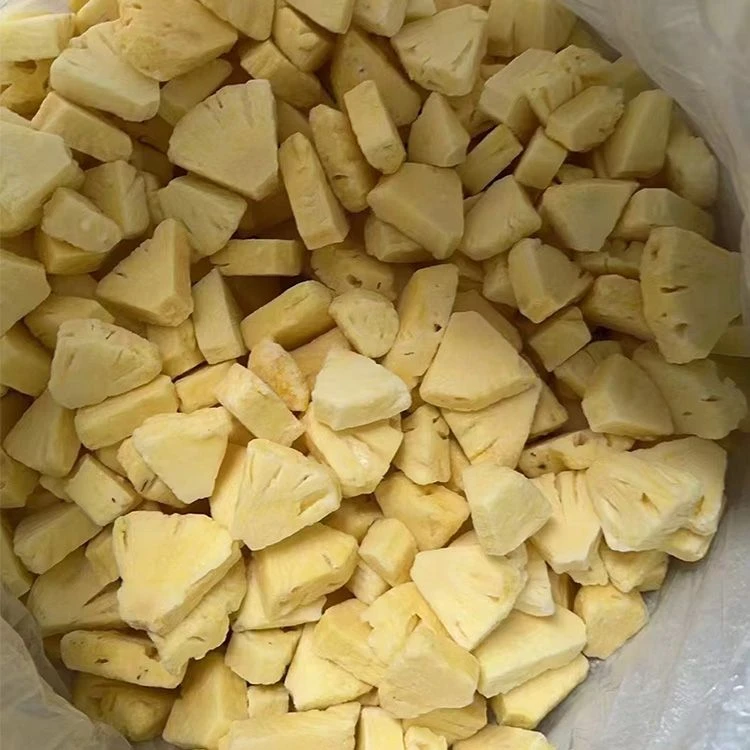
Best uses-and uses that expose the texture loss
Smoothies, sauces, compotes, chutneys, barbecue glazes, muffins, cakes and warm fillings are forgiving because the fruit is blended or cooked. Frozen chunks can also cool a drink, and a controlled thawed dice can work in yogurt preparation. Pizza is workable when pieces are drained well and the topping load is modest.
Fresh-looking fruit cups, delicate rings, cold decorative platters and recipes that depend on firm springy bite expose the softness. Use a newly opened can or another specified fruit format for those applications. In a commercial trial, evaluate the product after the complete bake, cook, chill or hold step instead of scoring the thawed piece alone.
Record the can style before it disappears into the freezer
Canned pineapple may be packed in juice, light syrup, heavy syrup or another declared medium. Once the label is discarded and the fruit is frozen in an anonymous tub, that difference is easy to forget. Record brand or product, cut, packing medium, opened date and portion weight. For a professional kitchen, retain lot traceability according to the site procedure. This matters if a formulation, allergen question or recall check occurs later.
The fruit-to-liquid ratio also affects nutrition and recipe yield. Drained weight is not the same as net can weight. Weigh the drained fruit and reserved liquid when consistency matters. If one frozen portion contains much more syrup than another, a bakery filling or beverage will vary even though staff used the same total scoop weight.
Sugar and acidity influence the next recipe
Syrup lowers the freezing point and carries soluble solids, so a pack may remain softer than drained fruit in the same freezer. That is normal physical behavior. It also means the thawed portion contributes sugar and water to the formula. Reduce added sweetener or liquid only through a measured recipe test; guessing can change bake structure, sauce viscosity and nutrition information.
Pineapple acidity affects dairy, gelatin, starch and meat marinades. Canning heat has already changed enzyme activity compared with raw fresh pineapple, but the packing medium and finished pH still matter. When the fruit is used in a commercial formula, check the actual ingredient declaration and test the complete system. Do not rely on a broad statement about pineapple as if every canned style were chemically identical.
Design a fair fresh-can versus frozen-portion comparison
Prepare the same recipe with a newly opened canned portion and a portion frozen for the expected storage period. Use equal drained fruit and liquid ratios, then score piece integrity, juice release, flavor, color and finished yield. For cake or pizza, include the bake; for beverage, measure Brix and acidity; for yogurt or chilled dessert, evaluate water separation after the product has rested.
The frozen route succeeds when it prevents waste without changing the customer result beyond the agreed limit. It is not necessary for the thawed chunk to look identical in a white dish if both batches perform identically in sauce. Conversely, pleasant flavor cannot compensate for a wet pizza topping or a broken decorative ring when appearance is the requirement.
Know when a purchased frozen pineapple format is simpler
Freezing opened cans works for occasional surplus, but it adds draining, portioning, labeling and freezer inventory. A kitchen that repeatedly opens cans and freezes half may have a pack-size mismatch. Smaller cans, recipe changes or a commercial frozen pineapple pack may reduce handling. Compare cost per usable fruit portion, liquid utilization, labor and freezer space rather than can price alone.
IQF pineapple can offer free-flowing unsyruped pieces for smoothies, bakery and foodservice, but it brings its own specification questions. Confirm cut, Brix, acidity, maturity, core and peel residue, defects, packing, thaw drip and cold chain. It should not be represented as a direct sensory copy of canned pineapple; it is a different ingredient route with different advantages.
Manage portions, labels and thawed liquid as one inventory
A freezer inventory should distinguish drained chunks, rings, crushed fruit, juice portions and syrup portions. Use containers that show the amount clearly or label the weight. Date the pack and connect it to the original opened product under the applicable traceability rule. Do not combine leftovers from different can styles merely because all of them are pineapple; their sweetness, cut and handling history may differ.
Plan the thaw route on the label. A smoothie portion can say use from frozen, while a pizza portion can say refrigerator-thaw and drain. A cake portion may include the exact amount of liquid required by the formula. This prevents one cook from discarding juice and another from pouring all of it into the same recipe. Consistency comes from treating the liquid as an ingredient rather than as an inconvenient by-product.
After thawing, keep the pineapple refrigerated and use it within the site's controlled plan. Do not leave a liquid-rich pack at room temperature through a long preparation period, and do not refreeze a warmed portion simply because some remains. Smaller original packs are the best prevention. Discard fruit with abnormal odor, mold, fermentation signs, leaking packaging or uncertain handling instead of trying to hide it in a cooked sauce.
Review freezer stock regularly. If the same canned remainder appears every week, change purchasing or formulation. An occasional frozen portion is sensible waste control; a permanent accumulation is evidence that the pack size and recipe demand do not match. The commercial answer may be smaller cans, a larger batch made on opening day, or a frozen pineapple format that lets the kitchen take only what it needs.
Keep best-quality planning separate from food safety
A recommended freezer period is usually about sensory quality, not a moment when continuously frozen food suddenly changes from safe to unsafe. Texture, color and flavor can decline gradually through air exposure and temperature cycling. Food safety depends on the condition before freezing, how long the opened product stayed warm, cleanliness, package integrity and the thawing method. Follow the can label and applicable storage guidance whenever they set a stricter limit.
This distinction matters in waste decisions. A well-handled portion can be safe yet too soft for a visible garnish, while a beautiful piece from a doubtful warm container should not be saved by freezing. Use the freezer early for sound surplus, choose a forgiving cooked or blended application, and discard product with an unacceptable or uncertain history. Quality redirection is useful only inside clear safety boundaries.
A thawed pack should stay linked to its original date and handling history; thawing does not create a new fresh-life clock. Mark when thawing began and use the site rule for refrigerated use. Take only the quantity needed, keep utensils clean and avoid pouring unused thawed fruit back into a frozen master pack. These simple controls protect both traceability and sensory quality.
How to freeze canned pineapple after opening
-
Inspect the can and opening history
Use sound canned pineapple that has been opened cleanly and kept within a controlled handling period. Do not freeze product from a swollen, leaking or suspicious can.
-
Transfer out of the metal can
Move fruit and any retained liquid into clean food-safe equipment. Decide immediately whether the recipe needs drained pieces, fruit with juice, or fruit with syrup.
-
Measure the intended portion
Divide the pineapple by actual recipe use. Record the style, cut and packing medium so sweetness and liquid are not forgotten later.
-
Tray-freeze drained pieces or allow liquid headspace
Spread drained pieces in one layer for separation. For liquid packs, use freezer-suitable containers and leave expansion space.
-
Seal, label and freeze promptly
Remove avoidable air, close the package fully and label canned pineapple, cut, liquid style, portion and date. Keep the freezer temperature stable.
-
Thaw in the refrigerator or use from frozen
Refrigerator-thaw when you need to assess or drain pieces. Add directly from frozen to smoothies and many cooked applications, accounting for the included liquid.
Canned leftovers and commercial IQF pineapple are different sourcing questions
Freezing an opened can is a waste-reduction method for an already processed product. Buying IQF pineapple is a specification decision made before the product reaches the kitchen. IQF fruit is normally supplied without canned packing syrup and is evaluated for variety, maturity, Brix, acidity, cut, defects, core or peel residue, free-flowing condition, packing and thawed behavior.
Compare products in the real formula. For a beverage, measure fruit, added liquid, Brix and acidity. For bakery filling, record piece integrity, drip, bake stability and migration into dough. For pizza or foodservice garnish, evaluate drain time, surface wetness and hot-hold appearance. A photograph of yellow chunks cannot establish these functions.
Commercial discussion should also cover MOQ, pack size, carton, net weight, production season, loading, shelf life, facility and certificate scope, cold-chain expectations and required documents. GreenLand-food can review available frozen pineapple formats for importers, wholesale buyers and manufacturers, while final approval remains tied to a written specification and sample trial.
Frequently asked questions
Can canned pineapple be frozen after opening?
Yes. Transfer it from the opened can into a clean freezer-safe package. Freeze drained pieces for flexibility or a measured fruit-and-liquid portion for a recipe that needs the juice or syrup.
Can you freeze canned pineapple in its syrup?
Yes. Use a freezer-safe container, leave expansion headspace and label the syrup style. Expect a soft, sweet thawed product suited to desserts, glazes and fillings.
Should canned pineapple be drained before freezing?
Drain it when you want separate pieces or less liquid in pizza, baking or smoothies. Keep measured juice or syrup when it belongs in the later formula.
Does frozen canned pineapple become mushy?
It usually becomes softer and releases more liquid because canning and freezing both affect cell structure. The result is best in cooked, blended or sauce-based uses.
How should frozen canned pineapple be thawed?
Thaw it sealed in the refrigerator when you need to inspect or drain it. Add it directly from frozen to smoothies, sauces and many cooked recipes.
Reference points
- USDA FSIS - leftovers and food safety
- FoodSafety.gov - cold food storage charts
- USDA FSIS - freezing and food safety
These references support the measured handling points and method boundaries. Product labels, local food-safety requirements, site procedures and lot-specific specifications still control a real decision.
Confirm frozen pineapple against your real application
GreenLand-food is a frozen-food supplier supporting each manufacturer, importer, distributor and wholesale buyer. For factory-direct sourcing support, send the required form, cut, application, packing, quantity, destination and trial method. We will review available frozen pineapple specifications and the next practical step.
For a closer explanation, see Is Frozen Pineapple Good for You?.