


Whole Mandarin Receiving: Intact Peel Can Hide Internal Compression Damage
Oct 09, 2026
Leave a message
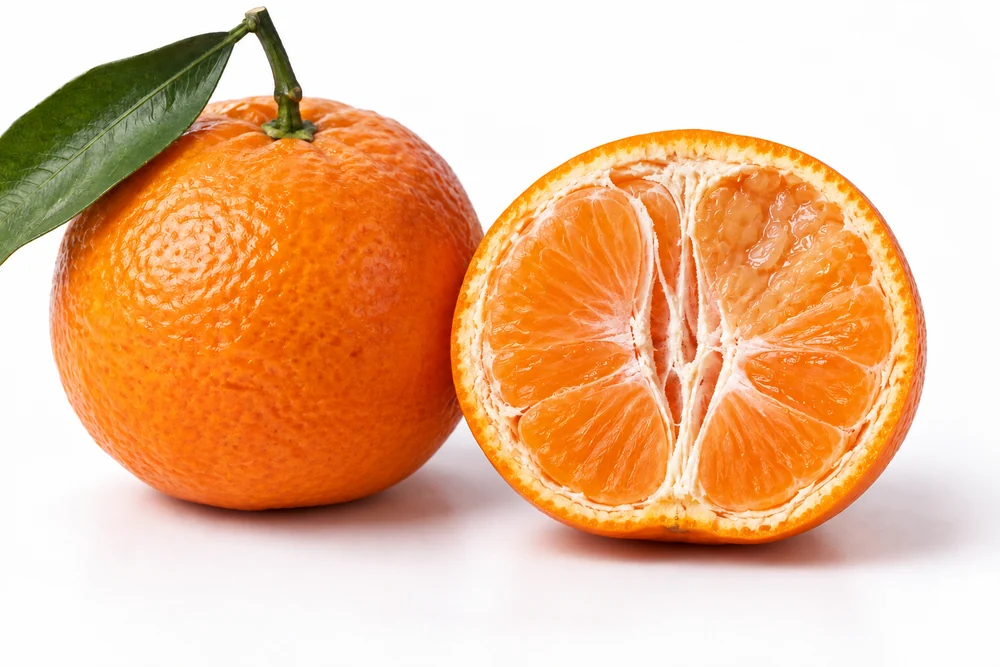
Check the whole-fruit stage rather than the frozen segment
Mandarin orange presents two different surfaces to an inspector. The outside is a rind whose color, tears, blemishes, and apparent firmness can be checked without opening the fruit. Under that rind are separated edible sections containing juice sacs. Those sacs and their enclosing segment membranes matter to the yield of useful flesh. An intact surface may be reassuring for some visible defects, but it is an incomplete observation of the material that will be sold as peeled natural segments. The original compression question begins with that mismatch: an applied load can affect internal pulp even when the peel has not visibly torn.
The timing of the load helps frame the investigation. Whole fruit can receive a prolonged stacking pressure, a brief impact, friction in a packing line, or local pressure at an edge. These are different exposures, and the response can vary with the variety, maturity, fruit size, temperature, and prior handling. A processor who finds wet or collapsed juice sacs while peeling should therefore avoid jumping directly to a single cause. The observation may be consistent with earlier compression, but the record should show when the problem first appeared. Photographs and counts at incoming inspection, during peeling, after separation, and after freezing can locate the stage more reliably than an exterior image of the original fruit alone.
There is a clear boundary between the fresh whole-fruit study and GreenLand-food's frozen segment offer. Our frozen mandarin orange page discusses peeled mandarins, segments and pieces, with checks such as segment integrity, membrane condition, juice release and drip. The product being purchased may no longer have the outer peel and may already have been frozen. The CT experiment did not establish a direct conversion from a fresh-fruit compression condition into those finished-product values. It suggests a possible upstream mechanism worth investigating when incoming whole fruit is available; it cannot settle a complaint about finished frozen segments without evidence from the stages between.
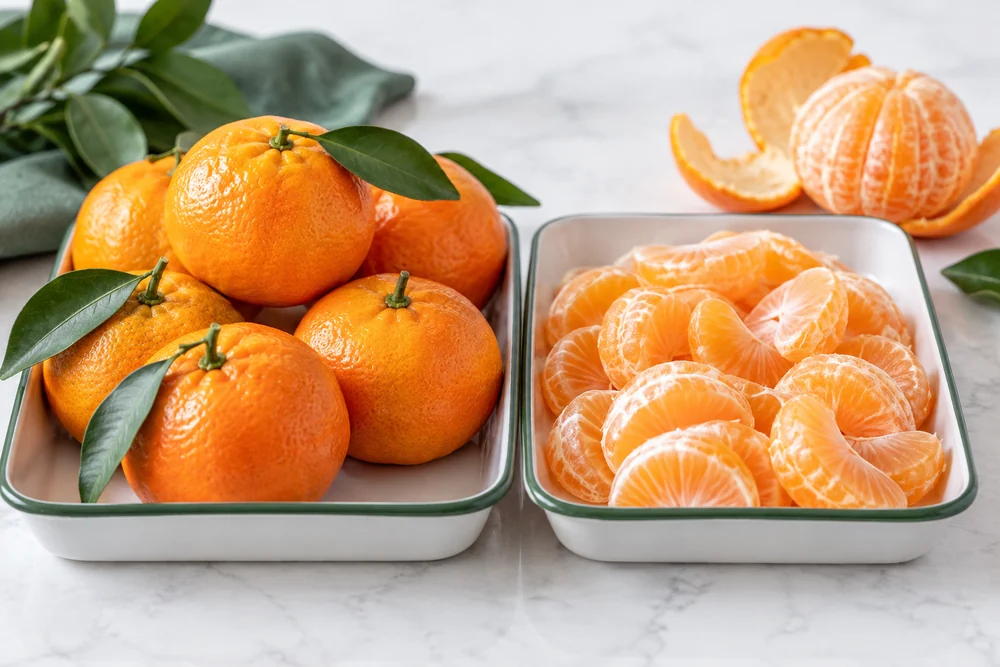
The compression question begins with whole fruit before peeling and segmentation.
This distinction also prevents confusion about risk. A ruptured juice sac is a quality observation relevant to yield, texture, leakage, and shelf appearance. It is not by itself a food-safety diagnosis. Conversely, a clean-looking peel does not prove that the internal fruit meets a buyer's quality specification or that all safety controls have been met. The facility's established food-safety and raw-material acceptance program remains responsible for its own hazard decisions. For this specific buyer question, separate the mechanical-quality investigation from the routine safety assessment so neither is inferred from an unrelated photograph.
The incoming form determines what can be seen. If the processor receives whole mandarins, it can compare rind observations with a cut-open sample of the same lot. If it receives peeled segments from a supplier, it cannot retroactively inspect the original whole peel; it can ask for the supplier's receiving and process records while assessing the delivered segments directly. If a product is a mix of fruit forms or sources, lot identity becomes especially important. A clean exterior grade on one source cannot explain damaged flesh in a different lot. The record should keep variety, source, receipt date, handling stage, and sampled unit together.
An illustrative scenario shows the decision. A processor asks GreenLand-food why apparently intact whole mandarins reveal damaged pulp during segment preparation. This is a hypothetical sourcing question, not a historical customer case or a GreenLand test result. We would ask which whole-fruit lot, handling path, and segment outcome are involved. We would then compare the external receiving observations with representative internal examinations and document when the first damaged juice sacs were found. The research supports asking that question; it cannot identify the party or event responsible for this imagined batch.
The original experiment observed hidden internal injury
The original mandarin compression experiment applied controlled deformation to fresh whole fruit and used CT imaging and image processing to inspect internal tissue. The authors deliberately investigated conditions in which internal pulp damage could be observed without obvious rupture of the peel. The images and analysis let them follow damage inside the tested fruit, rather than relying only on an exterior visual grade. This is the finding relevant to a processor considering whole-fruit input inspection. It is an experimental observation, not a ready-made specification for all mandarins in commerce.
The paper reports displacement levels and relationships within its own apparatus and fruit sample. These values are often tempting because they are precise. A receiving team should not turn the reported onset in that study into an "allowable millimeters" rule for an ordinary pallet. A fruit in a stack has contact points, loading duration, prior impacts, and a history that differ from a controlled compression fixture. The tested fruit also had its own size, maturity and condition. A number from one geometry cannot be carried over to another line or a new variety without validation. For receiving, the useful finding is that internal and external injury observations did not move together under the tested conditions.
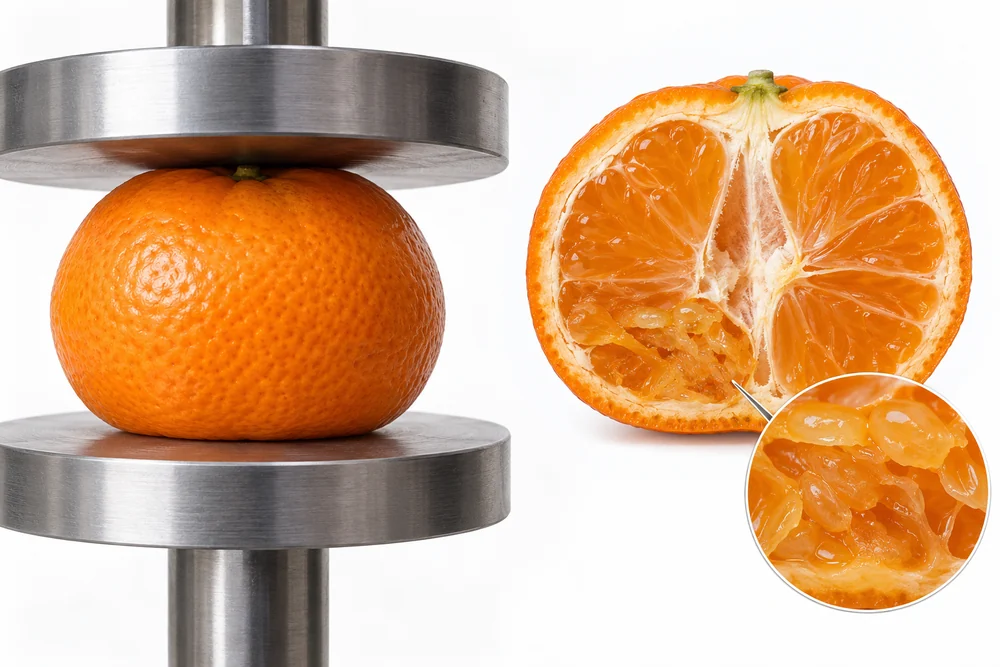
Controlled whole-fruit compression can be examined at the pulp as well as the peel.
CT provided a way to see inside the experimental fruit. It does not follow that every whole mandarin shipment needs a CT scan. Destructive cutting of a representative sample may be enough to answer a practical receiving question, particularly when the defect is evident in opened sections. Specialist imaging can be useful in a targeted investigation where the internal structure, timing, or competing explanations need more detail, but it brings cost, sampling and interpretation questions of its own. The original investigators used CT to characterize an experimental mechanism. A factory should choose an examination method that answers its actual decision with sufficient reliability.
Other citrus research reinforces the need to name the type of load. A Satsuma mandarin packing-line study described internal juice-sac and membrane injury in a set of handling experiments. A tangerine impact study observed internal quality changes without a consistent exterior color change in its cultivars. Those papers involve different fruits, equipment, and impacts or static loads. They add independent evidence that visible rind condition cannot tell the entire internal story, while offering no single threshold or diagnostic pattern for every incoming mandarin lot.
Fresh-fruit storage findings also have a limited place in this decision. The mandarin paper followed quality during storage after experimental injury. Its observations can help explain why mechanically affected whole fruit may deteriorate later, but a frozen natural segment passes through peeling, membrane handling, freezing and thawing. The fresh-storage result cannot be used as a shelf-life guarantee or a causal explanation for a later frozen-segment defect. A buyer should keep the experimental fruit state in the title of the data it cites: compressed fresh whole mandarin, with internal tissue assessed under that protocol. This prevents a scientific result from silently changing material as it moves into a purchasing memo.
The paper can guide a sampling question without dictating a processing instruction. If a line suddenly sees lower usable segment yield despite normal-looking whole fruit, taking a defined subsample of whole incoming fruit and opening it before line handling can reveal whether tissue damage is already present. The same observation later in the line can indicate whether additional deterioration appears during processing. That paired sampling logic is an inference for the buyer to validate locally. It is more defensible than copying the study's experimental compression settings as an operational limit or demanding a routine CT program without evidence that it would improve this buyer's decision.
External grading has an internal-damage blind spot
Exterior grading is valuable but has a limited field of view. It can identify ruptured peel, visible bruises, decay, surface contamination, gross deformation, and other defects that the buyer has defined. It cannot see the condition of every juice sac behind the rind. If the defect of concern is a collapsed or leaking section, the absence of a peel tear is a weak proxy. The fresh-fruit compression experiment was designed around precisely this gap. A buyer can maintain exterior checks while adding a targeted internal observation when an outcome suggests that the unseen pulp deserves attention.
The tissue geometry explains why two outcomes can be separated. The peel, white inner rind, membranes and fluid-filled sacs have different structures. A whole fruit distributes an applied load through those layers. Local deformation inside can occur without an equally obvious external opening, and a visible rind blemish can occur without the specific pulp defect the processor fears. The exact response depends on how and where the fruit is loaded. The article does not claim that all intact peels hide damage; it explains why an intact peel alone cannot rule damage out when a segment-quality investigation is warranted.
An operator looking only at the top layer of a box may miss another source of bias. Pressure within a stack need not be uniform, and damaged fruit may be concentrated in certain positions or containers. A representative investigation should note where sampled boxes came from, how fruit was selected within each, and whether the exterior and interior observations refer to the same units. If a team chooses only fruit that looks suspicious, it learns what a suspicious fruit contains but cannot estimate the condition of the apparently normal remainder. If it chooses only attractive fruit, it may miss the problem. Deliberate sample selection serves a better purpose than a large but uncontrolled pile of cut fruit.
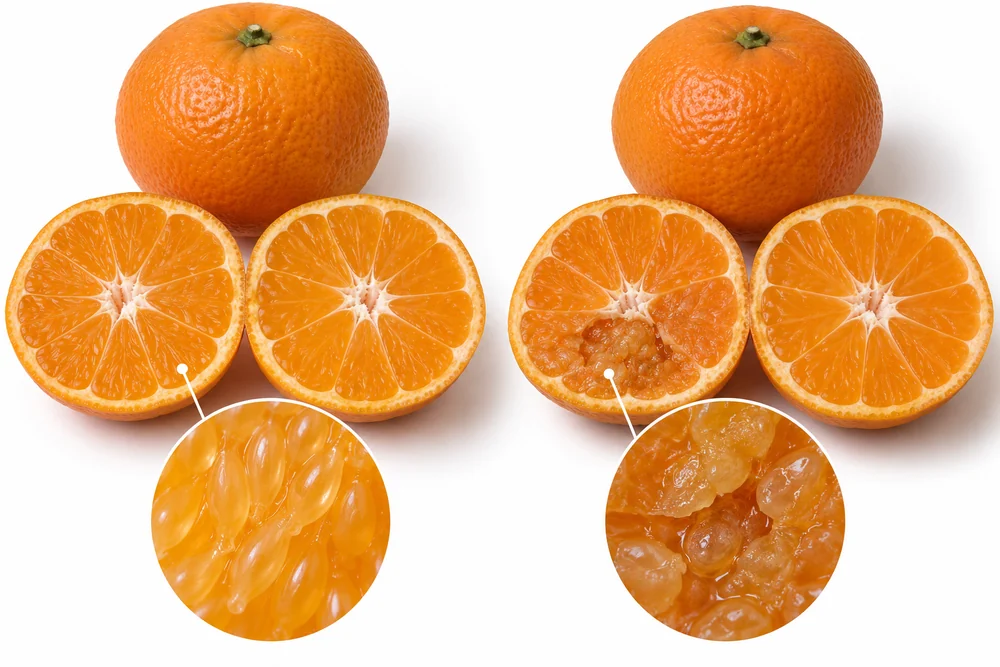
Similar peel appearances do not establish the same pulp condition.
Appearance also cannot assign responsibility. An internal damaged patch may prompt questions about pallet stacking, manual transfer, sorting-line contact, or transit. The symptom alone seldom identifies which event caused it. A dated chain of observations is needed: condition at receipt, photographs of pack configuration, known handling exposures, and what changed after each processing stage. The citrus mechanical-properties research also found that variety and storage conditions affected test responses. That makes it even less reliable to judge an unknown event from one fruit's appearance using a threshold borrowed from another cultivar.
Some internal defects are unrelated to the compression question. Segment dryness, development differences, later decay, and damage introduced during peeling can each lead to disappointing flesh. The buyer need not diagnose every possible citrus disorder from a single sample; it should state which condition is being investigated and collect evidence to discriminate plausible stages. Open a fresh input sample before it enters the suspect step. Compare it with fruit leaving that step under the same classification rule. Retain lot and time identifiers. If the defect exists upstream, focus inquiry there; if it appears later, inspect the transition. This approach turns the peel blind spot into a manageable test design.
The practical value of an internal check depends on the final use. A beverage base may tolerate some loss of segment shape while still demanding acceptable flavor and yield. A retail frozen segment or dessert inclusion may need intact natural sections and controlled leakage. The exterior peel grade remains part of raw-material selection, but the internal acceptance observation should be tied to the useful flesh required by the product. Otherwise a team can improve cosmetic grading without improving its actual processing outcome. At GreenLand-food, we would ask the buyer which segment appearance, membrane tolerance, drip and process yield matter before proposing a quality comparison.
Use a proportionate investigation of representative inputs
Start with a defined question: Are juice sacs or segment membranes already damaged in whole fruit at receipt, and does that condition correspond to the yield problem after peeling? This can be tested without an elaborate universal inspection program. Select fruit from representative containers and positions, record the external condition, then open the same pieces carefully. Photograph the peel and internal sections under consistent light. Note whether juice is already pooled inside, whether sacs are collapsed or ruptured, and whether the membranes are intact enough for the intended segment form. The terms should be defined before inspectors begin so two people do not give the same fruit different labels.
The sampling plan should be proportionate to the consequence of the defect and the variability of the incoming load. One clean fruit cannot clear a mixed pallet; one damaged fruit cannot establish a lot-wide failure. Draw across relevant receipt units, sources, grades and pallet positions. If several varieties or suppliers are mixed, keep them separate in the record. A targeted complaint investigation may require more detailed sampling than routine monitoring, and the method should be documented so later results can be compared. The purpose is to produce an honest estimate of the observed condition, not to manufacture a precise number by choosing fruit after seeing the desired answer.
Record the stage at which destructive examination occurs. Cutting a mandarin can itself rupture juice sacs, so the opening technique should be gentle and consistent. Inspectors should distinguish juice released by their cut from tissue that was visibly damaged before the knife passed through it. A paired photograph taken immediately after opening may help, but the observation should include written notes about location and texture. When feasible, repeat the examination with a second operator or a blinded review of coded samples to see whether the defect rule can be applied consistently. If inspectors cannot agree, repair the category definition before using the results for a supplier decision.
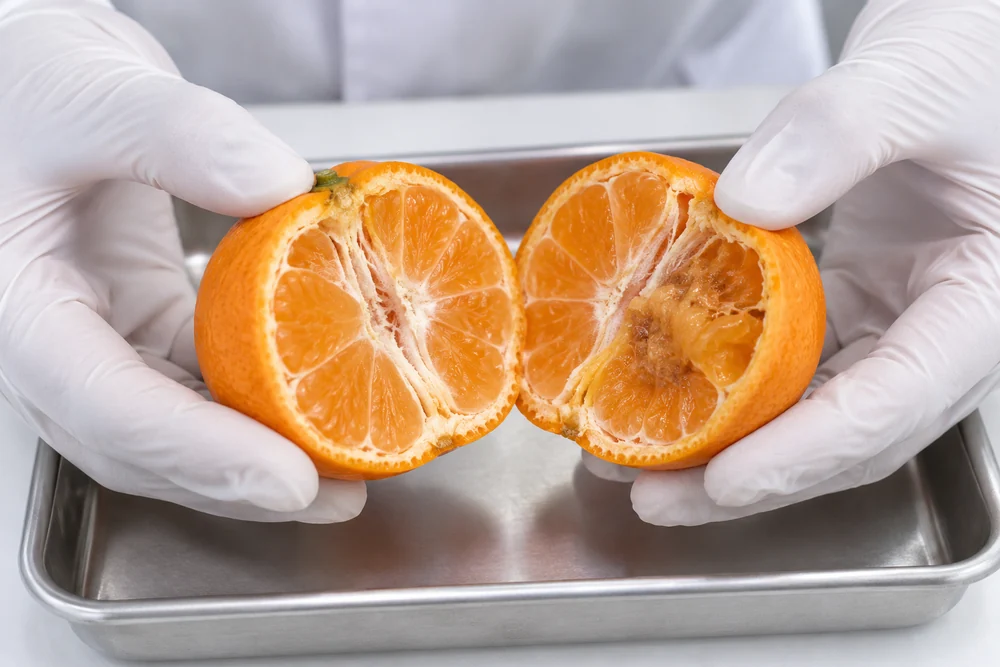
A representative cut-open sample can clarify the condition of incoming flesh.
Where the pattern remains unclear, specialist imaging may add value. The original researchers used CT to see internal geometry without relying on surface appearance, and other fruit CT research illustrates the broader inspection method. An imaging study for a commercial incident would need appropriate sample selection, a question the images can answer, and qualified interpretation of the tissue patterns. It should not become a routine expectation merely because the source paper contains persuasive scans. The decisive evidence may come from simpler before-and-after cutting at the suspected point in the line, supported by handling and pack records.
Link the internal observation to a process outcome. If the team cares about whole natural segment yield, record the number or mass of useful segments from the sampled fruit under a defined peeling and separation method. If leakage or broken sacs matter, define how they will be scored before comparing lots. Keep the mass of whole fruit, peel, membrane and usable flesh on a consistent basis so yield comparisons are not distorted by fruit size or trimming practice. A small sample can identify a concern; acceptance of a high-volume program should reflect representative material and the real line conditions. The test should also specify whether it is assessing raw fruit, in-process segments or the finished frozen ingredient.

Peeled mandarin segments show the commercial form that follows receiving and processing.
The resulting record can support a disciplined discussion with the supplier. It can show that a stated share of sampled whole fruit appeared externally intact while a separately stated share showed internal damage under the agreed examination. It may show that the observed damage was present before peeling. It may also fail to locate the stage, in which case the conclusion should remain open. Do not infer the exact force the fruit experienced, a breach of a specific packaging contract, or a food-safety failure from the tissue image alone. Request the corresponding receiving, handling and traceability records where they are needed to resolve the practical question.
For an export frozen-fruit program, the purchasing and quality teams should align the investigation with the ordinary specification and documentation flow. Identify the crop and lot, requested frozen form, intended application, pack, quantity, destination and required documents. If a new raw-material condition is to become part of the agreement, define how it will be observed and what action follows a failed sample. GreenLand-food's frozen segment page describes whole and broken forms and the buyer inputs used for a quote. The hidden-injury check belongs beside those confirmed requirements, not as an unsupported stand-alone number copied from fresh-fruit research.
Set acceptance around the intended segment yield
An incoming whole mandarin is a raw material; the buyer generally needs usable flesh in a particular final form. Acceptance should therefore connect the exterior observation to internal integrity and to the segments that the process can actually use. For a visible IQF inclusion, intact natural sections, acceptable membrane condition, limited broken pieces and controlled juice release may be the principal outcomes. For a beverage or cooked base, the balance can shift toward flavor, Brix, acidity and usable yield. The claim that "the peel was intact" is inadequate in either case when the concern is the state of the flesh.
Keep the fresh-fruit result on its own side of the comparison. The original CT work demonstrates a possible blind spot during whole-fruit handling. It does not say how many GreenLand frozen mandarin segments will break after a particular IQF line, storage period or customer thaw. Peeling and segment separation can create damage of their own; freezing and subsequent handling can change texture and drip. Any claim about the finished ingredient needs inspection of that ingredient under the agreed condition. A buyer can use the paper to justify checking raw fruit internally when there is a reason, then use product sampling to judge the commercial order.
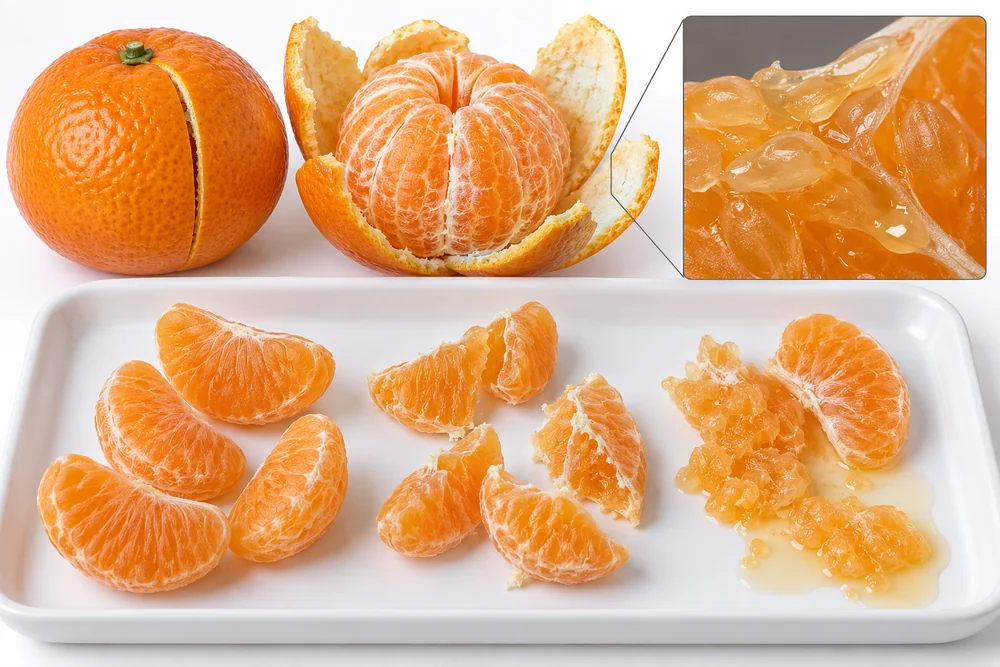
Acceptance depends on the useful segment condition required by the application.
The strongest acceptance language identifies stage and method. A raw-fruit incoming specification might set the exterior and cut-open categories to be checked and state how a representative lot sample is drawn. A frozen-segment specification might separately set the form, whole-to-broken basis, visible defects, pack condition and an application test. If the same buyer controls both steps, paired records can reveal where most loss appears. If different firms control them, traceable records and agreed descriptions allow a fairer discussion than a photograph circulating without its lot, stage or sampling context.
If an upstream internal defect is confirmed, the response should fit what is known. The team may adjust fruit selection or handling, sample more closely from a suspect source, review stacking and transfer points, or direct the fruit to an application that can use it if the relevant quality and safety requirements are met. Those are possible corrective investigations, not automatic recommendations from a single CT image. If the evidence instead shows sound fruit entering the line and damaged segments appearing after separation, examine that step. The first task is attribution by stage; the second is a validated response, followed by a check that the useful segment yield improved.

A segment specification needs inspection of the edible tissue as well as the incoming whole fruit.
For a quotation or trial with GreenLand-food, tell us whether you need peeled natural segments, pieces, or another confirmed form; the target whole and broken condition; the application; packing and quantity; the destination; and the documents your team needs. If your current concern is apparently intact incoming fruit with damaged pulp, send the paired whole-fruit and segment observations with sampling details. We can then discuss the actual supply specification and what evidence would answer the buyer's question. The scientific lesson remains modest but important: a peel can look sound while the valuable tissue inside has already changed, so the acceptance method must examine the tissue the product depends on.
Plan frozen mandarin orange supply with GreenLand-food
For frozen mandarin orange, tell us the intended product form, application, pack, and inspection priorities. GreenLand-food is a China-based frozen-food supplier and manufacturer. We can discuss factory-direct wholesale supply around the specification you need to evaluate.