


What Do Mulberries Look Like?
Sep 03, 2026
Leave a message
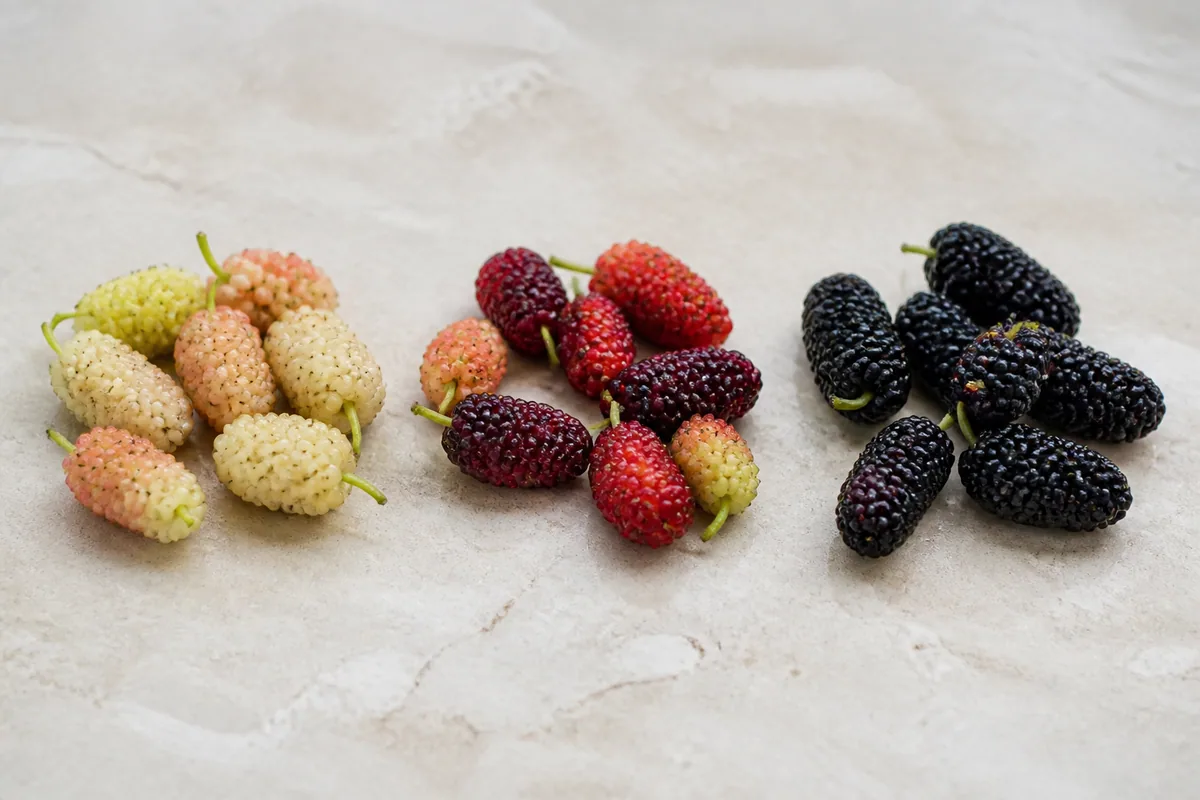
An elongated cluster of tiny drupelets, not a single berry
Mulberries are usually about finger-tip sized, oblong and made of many small bead-like drupelets. Unripe fruit is often green, then changes through white, pink, red or purple according to species and cultivar. Ripe dark types become purple-black and very soft. Confirm the tree, leaves and species context because color alone cannot distinguish red, white and black mulberries.
Mulberries grow on trees; similar-looking blackberries and raspberries usually grow on canes or brambles.
Key takeaways
- White mulberry does not always mean white ripe fruit; Morus alba cultivars can ripen pale, red, purple or dark.
- Red mulberry commonly changes from red to deep purple-black, while black mulberry is often very dark and richly pigmented.
- Ripe fruit detaches easily and bruises quickly, which makes harvest and freezing speed important.
- Frozen buyers should define whole-fruit rate, size, color range, broken ratio, juice leakage, stems, leaves and free flow.
Quick comparison
| Type or stage | Typical appearance | Important caution | Frozen implication |
|---|---|---|---|
| White mulberry group | Cream, pink, red, purple or dark; often slender | Species name does not guarantee pale fruit | Confirm cultivar, color range and application |
| Red mulberry group | Red while developing, deep purple-black when ripe | Can look black at maturity | Use tree/origin context, not color alone |
| Black mulberry group | Deep purple to black, plump drupelets | Very soft ripe fruit damages easily | Whole rate and leakage need tight handling |
| Underripe fruit | Green to pale or red, firm, resists detachment | Color path varies | May give pale color, high acid and firm texture |
| Ripe fruit | Full cultivar color, soft, detaches easily | Short handling window | Best flavor but highest bruise and leakage risk |
Mulberry is an aggregate fruit with an elongated shape
Each visible mulberry is formed from many small fleshy drupelets clustered around a central axis. That gives it the bumpy surface of a blackberry, but the whole fruit is often longer and narrower. The tiny round sections are not damage; they are the natural structure. The central stem can remain inside the fruit, contributing a faint fibrous bite. Size varies with species, cultivar, crop and maturity, so a photograph without scale can mislead.
Fresh fruit can look glossy when firm and more matte as it softens. The drupelets should be reasonably filled rather than dry and collapsed. Misshapen fruit may result from incomplete pollination, weather or damage. For commercial grading, "whole" should be defined because a soft aggregate fruit can remain recognizable while losing several drupelets.

White, red and black names do not make a simple color key
Morus alba, commonly called white mulberry, includes fruit that ripens white, pink, red, purple or nearly black. Morus rubra, red mulberry, is red during development and often deep purple-black when ripe. Morus nigra, black mulberry, generally produces dark, strongly pigmented fruit. Hybridization and cultivar variation further blur a color-only shortcut. The correct identification uses leaves, twigs, bark, fruit, location and expert botanical context.
For a food buyer, exact wild-tree identification may be less important than an agreed cultivated identity and product specification, but the supplier should not promise a species merely from frozen color. Origin records, cultivar information when available and a representative sample are stronger evidence.
Ripeness changes color, softness and detachment together
Watch a fruit through development instead of judging one isolated color. It commonly begins green and firm, then softens and develops the cultivar's final color. A ripe mulberry releases with a light touch or falls onto a sheet placed under the tree. Fruit that must be pulled strongly is usually underripe. Full flavor and dark color often arrive with very soft tissue, which shortens the time available for packing or processing.
Pale-fruited white mulberries require special care because "darkest" is not the ripeness test. Taste, softness, easy detachment and the grower's cultivar standard matter. For every type, mold, fermentation, insect damage and wet collapse are defects, not signs of advanced sweetness.
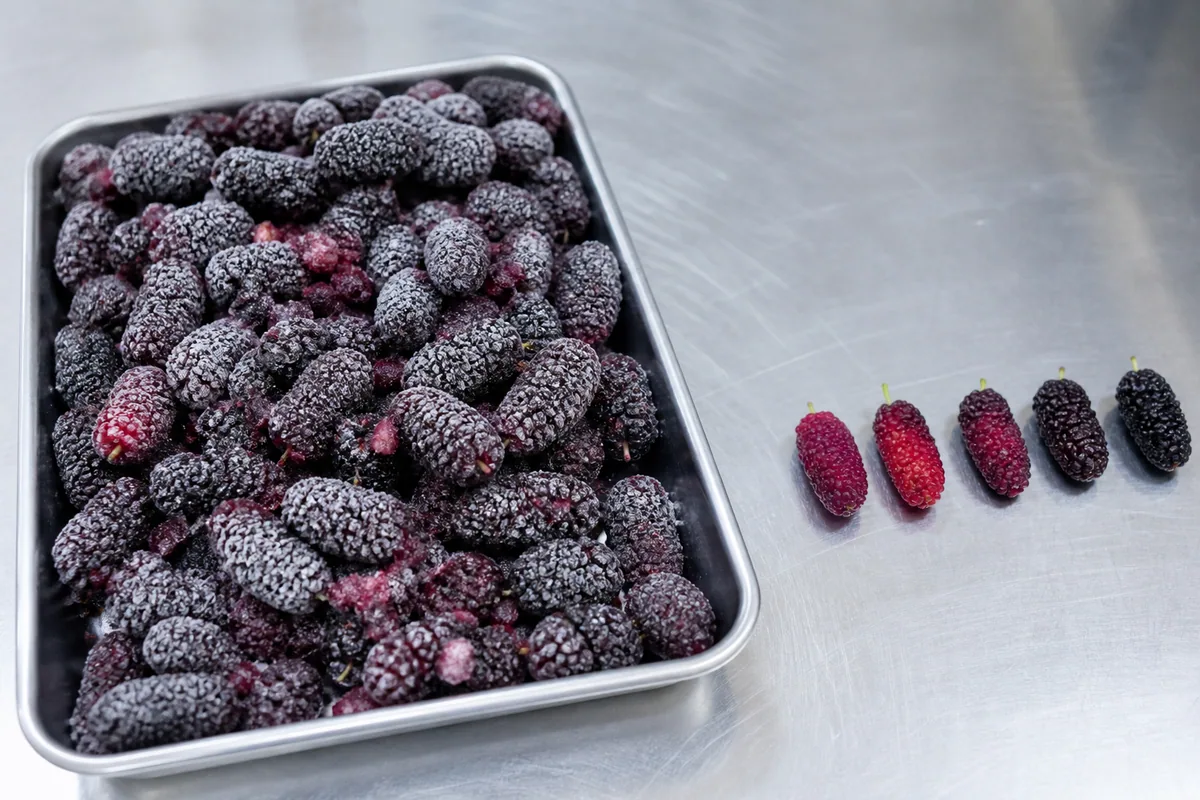
Leaves and tree form separate mulberry from bramble fruit
Mulberries grow on woody trees. Leaves may be unlobed or lobed, sometimes on the same tree, and usually have toothed margins. Blackberries and raspberries grow on thorny or thornless canes. Their fruit may look similar in close-up, but the plant architecture is different. Never eat an unknown wild fruit based only on an image; confirm the plant with reliable local botanical guidance.
A food product should carry its accepted common and botanical identity in the supplier file. Black mulberry is not blackberry, and white mulberry is not an immature black mulberry. Correct naming prevents recipe, allergen-adjacent, tariff and purchasing confusion.
For a closer explanation, see Are Mulberries Edible? Fresh, Dried and Frozen Forms.
Freezing preserves identity but softens the structure
IQF can keep mulberries individually separated, yet ice formation damages delicate cells. Thawed fruit becomes softer and releases juice. Fully ripe dark fruit gives strong color and flavor but may show more broken drupelets and leakage. Slightly firmer intake can improve handling, although harvesting too early sacrifices sweetness and color. The processor balances maturity with whole-fruit yield.
Inspect frozen fruit while still hard for shape, frost, clumps and visible residues. Then thaw a measured sample on a screen and record whole recognizable fruit, broken pieces, drip and color. A pack can look excellent while frozen and collapse during a topping or fruit-cup application. Approval must include the state in which the customer uses it.
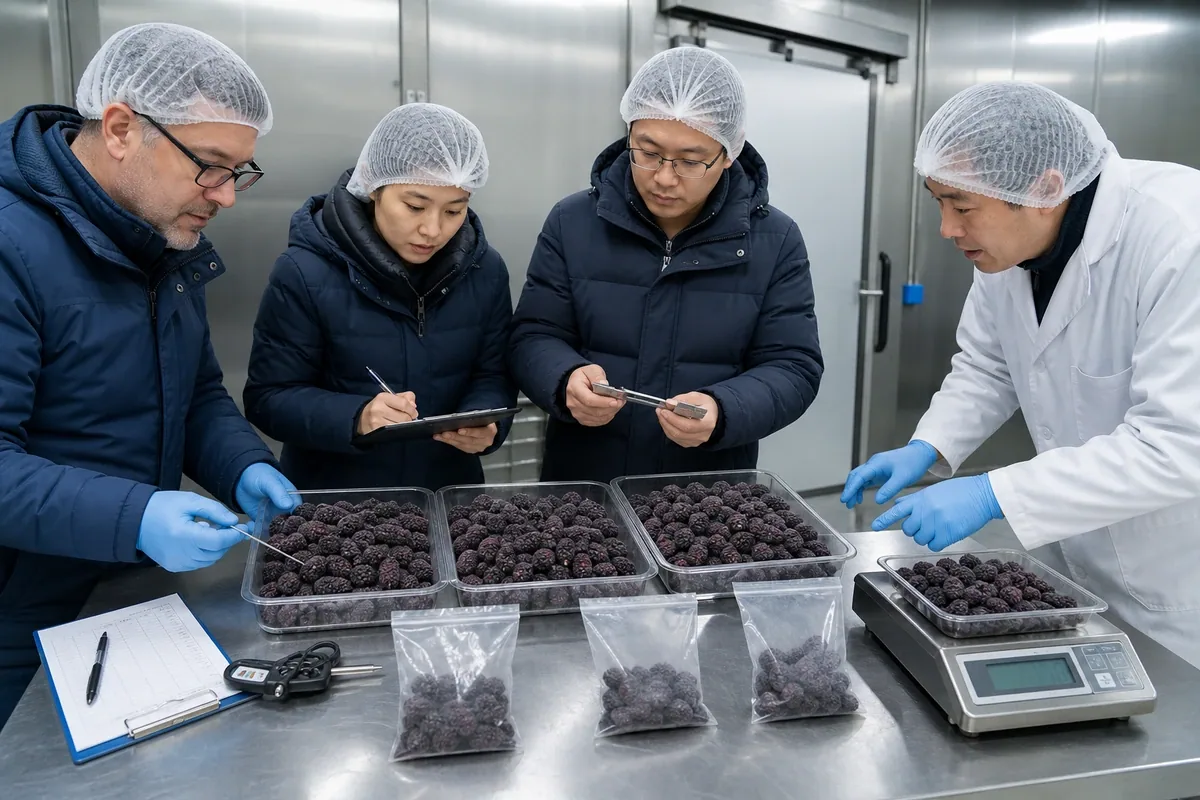
Whole rate and broken ratio must be defined visibly
"Whole mulberry" can mean an intact central fruit with minor missing drupelets, or it can mean only perfectly shaped fruit. Set a photographic standard. Define length or size bands if portioning matters, and specify broken pieces, fines, detached drupelets, stems, leaves, unripe fruit, foreign matter and juice staining. Natural color variation should be shown against the intended grade.
For puree, beverage or jam, a controlled broken grade may be efficient, but safety and foreign-material standards do not become looser. Do not pay for premium whole appearance only to crush the fruit at intake. Conversely, do not use a puree grade for a retail bag and expect intact presentation.
Frozen color depends on crop and application conditions
Dark mulberry pigments can stain surrounding ingredients. In yogurt, bakery and mixed berries, pH, oxygen, heat and storage influence the final purple-red color. White or red mulberry types produce different visual outcomes. Buyers should approve color in the finished matrix, not only against a digital screen where lighting and display settings vary.
At GreenLand-food, we discuss available IQF frozen mulberry against origin, maturity, Brix, fruit size, natural color, free flow, broken-fruit rate, leakage, stems, leaves, pack and application. Crop conditions cause variation, so binding criteria follow the approved sample, specification and order.

A photo standard works best with a measured thaw test
Photograph a known weight of frozen fruit in a shallow white tray under fixed lighting. Count whole recognizable fruits, broken units and clumps. Thaw a second portion under refrigeration on a defined screen for a defined time, then weigh fruit and drip. Photograph again. This creates a practical appearance-and-performance record.
Add a final application trial: yogurt swirl, beverage, bakery filling or retail pack. A high whole rate may matter in a transparent retail bag but not in a smoothie. The trial connects color and shape to commercial value instead of treating visual perfection as universal quality.
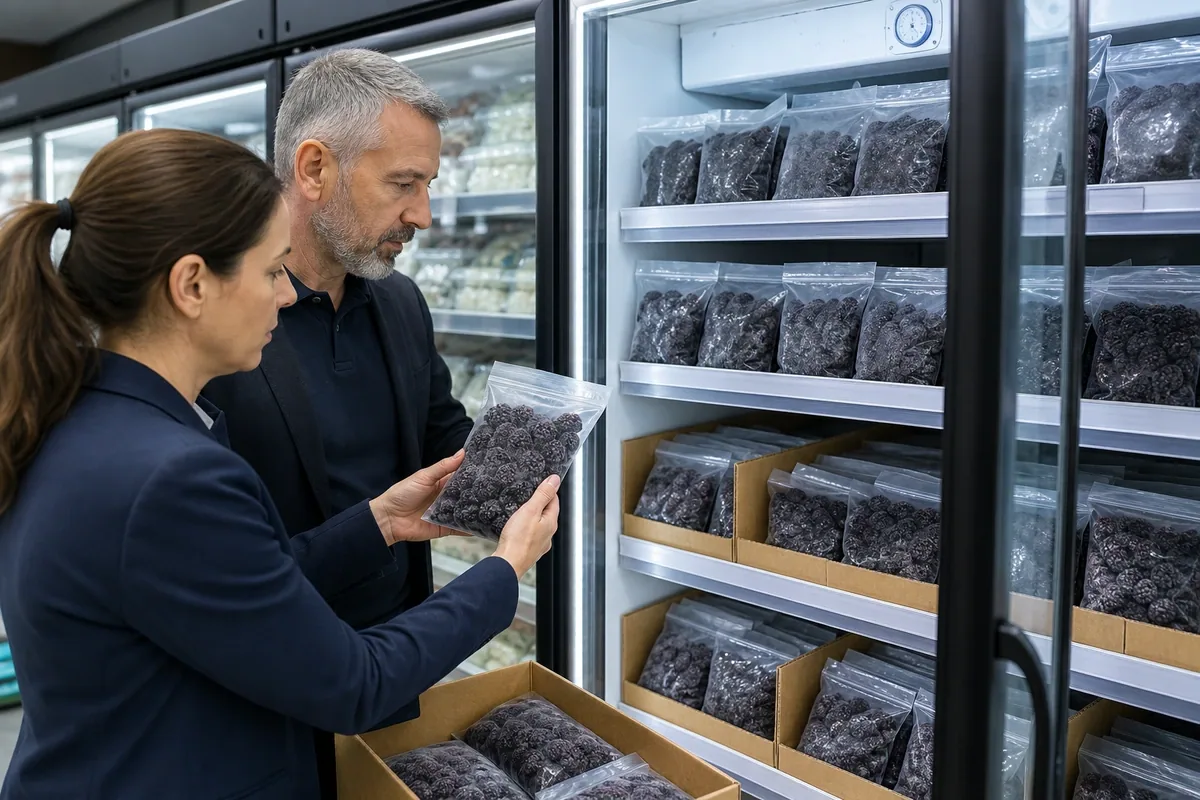
Worked decisions that a short answer cannot cover
Why a white mulberry can be black
The common name refers to the species, historically linked in part to pale buds or fruit in some forms, not a rule that every ripe berry stays white. Cultivars of Morus alba can ripen to deep purple. Therefore, a dark fruit cannot be assigned to Morus nigra from color alone.
Commercial copy should avoid a false three-color chart. Ask for origin and cultivar evidence, then approve the actual frozen color range.
Worked thaw example: intact frozen, broken after ten minutes
A lot arrives with beautiful separated dark fruit. After ten minutes at room temperature, many berries slump and leave purple liquid. That does not automatically mean the IQF process failed; fully ripe mulberries are naturally delicate. The question is whether the result fits the application and agreed test.
Standardize thaw temperature and time. Comparing one supplier frozen and another fully thawed creates a false verdict.
Central stem sensation can surprise formulators
Mulberries commonly retain a fine central axis. In puree it may be milled; in whole fruit it remains part of the bite. A customer expecting a seedless grape texture may call it woody.
Include stem-fiber perception in sensory approval and choose whole, crushed or screened puree according to the final product.
Digital color is not a contract standard by itself
Phone cameras, white balance and screens change purple fruit dramatically. Use photos for structure and defect examples, but pair color with a physical approved sample or an agreed instrumental method when color is critical.
Record lighting conditions and avoid filters. Current-lot photos support communication; they do not replace the signed range.
More detail for a repeatable decision
Photograph mulberries in a way that preserves scale
Place a ruler, calibrated grid or known tray in the frame without covering fruit. Photograph frozen product from directly above and from a low side angle. Use the same distance and lighting for every lot. A dramatic close-up can make small fruit look large and hide a high proportion of fragments outside the frame.
Spread a representative weight in one layer instead of selecting perfect pieces. Include the bag remainder in a wide shot when documenting a claim. Record frozen temperature because warming changes frost and shape quickly.
For fresh ripeness, photograph fruit on the tree and after gentle harvest. The two views link cultivar color with handling condition. Keep original files and timestamps; edited marketing images are not inspection evidence.
Natural surface marks need a defect boundary
Drupelets vary slightly in size and can show small dry areas. A few detached drupelets may occur during handling. Define when those natural variations become broken fruit, decay or unacceptable leakage. Photographic standards should show the threshold rather than only ideal fruit.
Frost can be normal on frozen fruit, but heavy snow, free ice or large clumps may signal surface water or temperature movement. Thaw a sample and look beneath the frost before scoring color.
Stems and leaves are separate from natural central fruit structure. Train inspectors to distinguish the internal axis from an external twig or long attached stem. Otherwise the defect count will be inconsistent.
Application determines how much shape matters
A retail transparent bag sells visible whole fruit, so elongated identity, color and free flow are important. A smoothie bag may still benefit from easy portioning but can accept more controlled breakage. A jam factory mainly needs sound fruit, color, flavor and process yield.
A bakery topping lies between those extremes. Fruit must remain recognizable after mixing and baking, yet perfect raw symmetry may not survive. Run a bake test and measure visible fruit after cooling.
Write grade names around these outcomes. Premium, standard and processing should each have measurable whole, broken, color and defect limits rather than functioning as price labels.
Mixed-berry programs can hide or magnify variation
Dark mulberries blend visually with blackberry and dark cherry, but their elongated form and softer thaw behavior differ. In a retail mix, a fragile mulberry can create purple coating on lighter strawberries or blueberries. Test the full blend after packing and distribution simulation.
Size distribution affects segregation in a bag. Small dense berries may settle while large soft pieces remain near the top. Sampling only one scoop can misstate the mix ratio. Define a mixing and sampling method.
For puree blends, visual whole rate disappears but flavor and color interactions remain. State each fruit percentage and approve the formula after heat and storage.
Create an appearance specification that survives real handling
Start with a representative 1 kg frozen sample spread in a tray. Photograph it before sorting and count recognizable whole fruits, large fragments, small pieces, clumps, external stems, leaves and other defects. Define whole using the central fruit identity rather than demanding mathematically perfect drupelets.
Run a second portion through the planned thaw or blend. For a topping, record drip, color transfer and shape after the service hold. For a smoothie, record portioning and blender performance. For jam, measure usable yield after the screen. The same frozen appearance can carry different value in those three applications.
Agree a natural color range with physical references or controlled photography. State species or commercial identity and cultivar evidence when available. Never use "white," "red" and "black" as if they guarantee three fixed ripe colors. The specification should describe the fruit received, not repeat a botanical shortcut.
Include crop and lot variation in the approval process. Weather changes size, pigment, Brix and softness. A current-lot sample can be accepted inside a range without pretending agriculture is uniform. Serious changes require documented buyer approval rather than a quiet grade shift.
Close the file with packaging and cold-chain checks. Mulberries that are individually frozen at production can arrive clumped after temperature movement. Seal, carton, pallet, loading temperature and reefer records help preserve the shape standard that both sides approved.
Putting the answer into practice
A quick field identification should use fruit, leaf and tree together. If the plant is unknown, do not taste it from a photograph. A confirmed cultivated supply should still carry traceable origin and commercial identity because frozen color cannot establish species.
A quick frozen inspection should use representative weight, not hand-selected fruit. Spread the sample, count the conditions and repeat after controlled thawing. Shape, free flow and leakage answer different questions and all can matter to a visible application.
A useful specification accepts natural agriculture while controlling customer risk. It can allow a defined color range and minor drupelet variation while rejecting fermentation, mold, foreign material, excessive broken fruit and uncontrolled clumps.
The visual answer is therefore richer than "long blackberry." Mulberry identity comes from elongated aggregate shape, tree context, species-dependent color and maturity behavior-then freezing adds a separate condition that must be measured.
Before using a comparison image, confirm that the fruit is actually mulberry and avoid treating pale, red and dark examples as a rigid species key.
What to confirm before approving volume
A useful inquiry describes the ingredient and the job it must do. Send the product identity, form, target application, packing, quantity, destination and the quality points your team will measure. We will review current availability and an appropriate supply route where possible. Final size, process, ingredients, limits, microbiology, documents, shelf life, lead time and commercial terms remain subject to the approved specification and order confirmation.
- Confirm mulberry species, origin or accepted commercial identity.
- Define whole fruit, controlled broken or puree grade.
- Set size, natural color, maturity and Brix references.
- Define broken, leakage, stem, leaf, unripe and foreign-material tolerances.
- Run a fixed frozen and thawed appearance test.
- Approve color and texture in the final application.
Frequently asked questions
What shape are mulberries?
They are usually oblong or finger-like aggregate fruits made of many small drupelets around a central axis.
Do mulberries look like blackberries?
Yes in surface texture, but mulberries are often longer and grow on trees; blackberries grow on canes.
Are all ripe mulberries black?
No. Ripe fruit can be cream, pink, red, purple or black according to species and cultivar.
Can white mulberries be dark purple?
Yes. Some Morus alba cultivars ripen red, purple or nearly black. Species cannot be identified from fruit color alone.
What do red mulberries look like when ripe?
They often move from red to deep purple-black and become soft and easy to detach.
How can you tell when a mulberry is ripe?
Use the cultivar's full color, softness and easy detachment together. Pale varieties need more than a darkness test.
Do mulberries have seeds?
Each drupelet contains a tiny seed, and the fruit also has a small central stem that can contribute texture.
Why do frozen mulberries look broken after thawing?
Ice damage and very soft ripe tissue reduce structural strength. Thaw method and time also affect appearance.
What should whole frozen mulberry look like?
It should match the agreed elongated identity, color range, free-flow condition and tolerances for broken fruit, leakage, stems and leaves.
Can GreenLand-food supply frozen mulberries?
We can discuss whole IQF mulberries, grade, maturity, Brix, color, packing, quantity and destination against current crop and stock.
Reference points
- Missouri Department of Conservation red mulberry
- NC State Extension Morus rubra
- GreenLand frozen mulberry
These sources support the classification, method or supply boundaries used above. The applicable product label, specification, food-safety plan and destination-market rules still control a real batch.
Source Frozen Mulberry for your real application
GreenLand-food is a frozen mulberry supplier and manufacturer in China, providing factory-direct wholesale support for importers, food manufacturers, foodservice distributors and private-label programs. Send the required form, specification, packing, quantity, destination, application and documents. We will review available order options and the next practical step.