


Why Is an Onion Green Inside?
Sep 24, 2026
Leave a message
Research This Article & Topic with AI
Verify key claims, compare reliable sources, and explore GreenLand-food's practical frozen food knowledge.
Article details and research questions are prepared in the links. Sign-in or sending may be required.
VIDEO EXPLAINER
Green Inside an Onion: Location Matters
Short educational video from GreenLand-food. Watch on YouTube
Identify the green part by its position
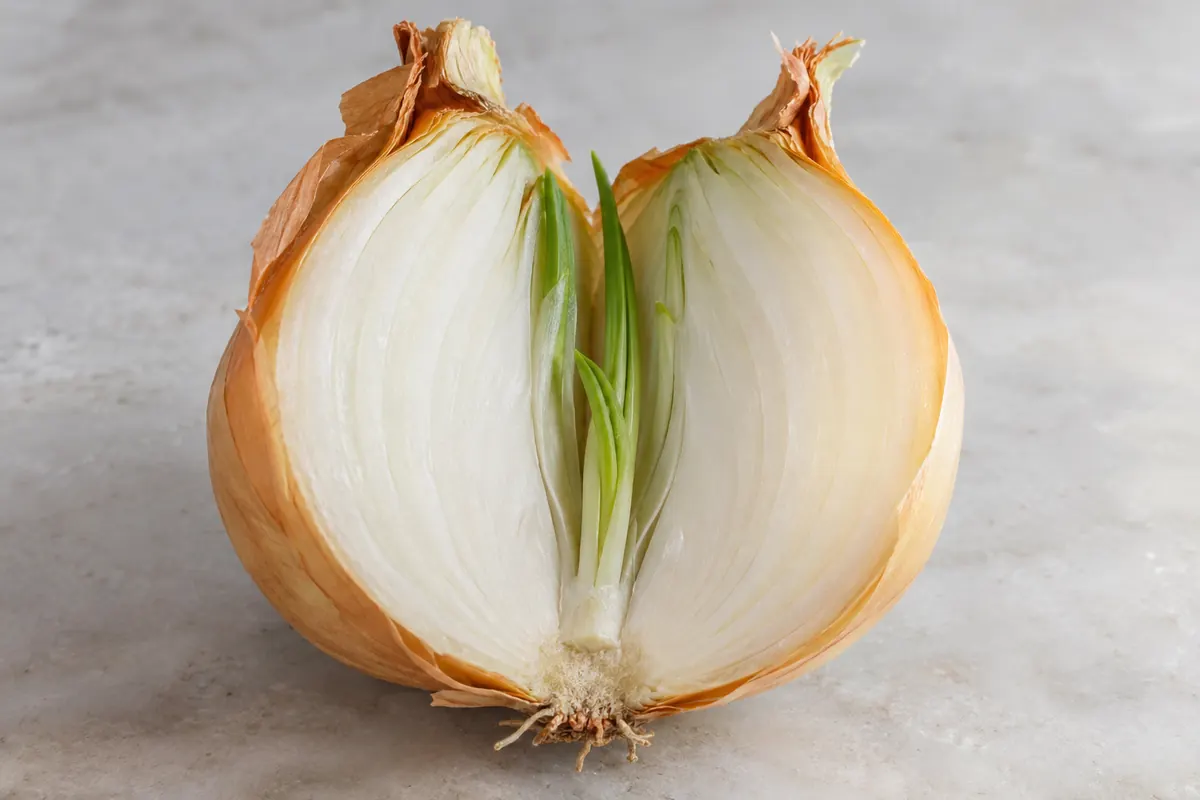
Cut the onion from neck to root and look at where the color starts. A narrow green shoot running up the center, often toward the neck, is a sprout. Its surrounding bulb layers may still be firm and white. The hero image shows this common pattern. A green patch just inside the papery wrapper near the shoulder is a different position: the outer scale received light during growing or curing and developed chlorophyll. A blue-green fuzzy patch between softened scales is not a sprout and should be treated as a spoilage sign.
The three-example visual in this section is designed to make those locations clear. Do not rely on hue alone, because a kitchen light or camera can make yellow-green tissue look blue. Touch and smell the cut bulb as part of the decision. Sound flesh should be crisp to firm and have the characteristic onion smell. Wet, slimy, collapsing or foul-smelling layers point toward deterioration. If mold is visible, discard the affected bulb rather than trying to interpret the fuzzy growth as a harmless sprout.
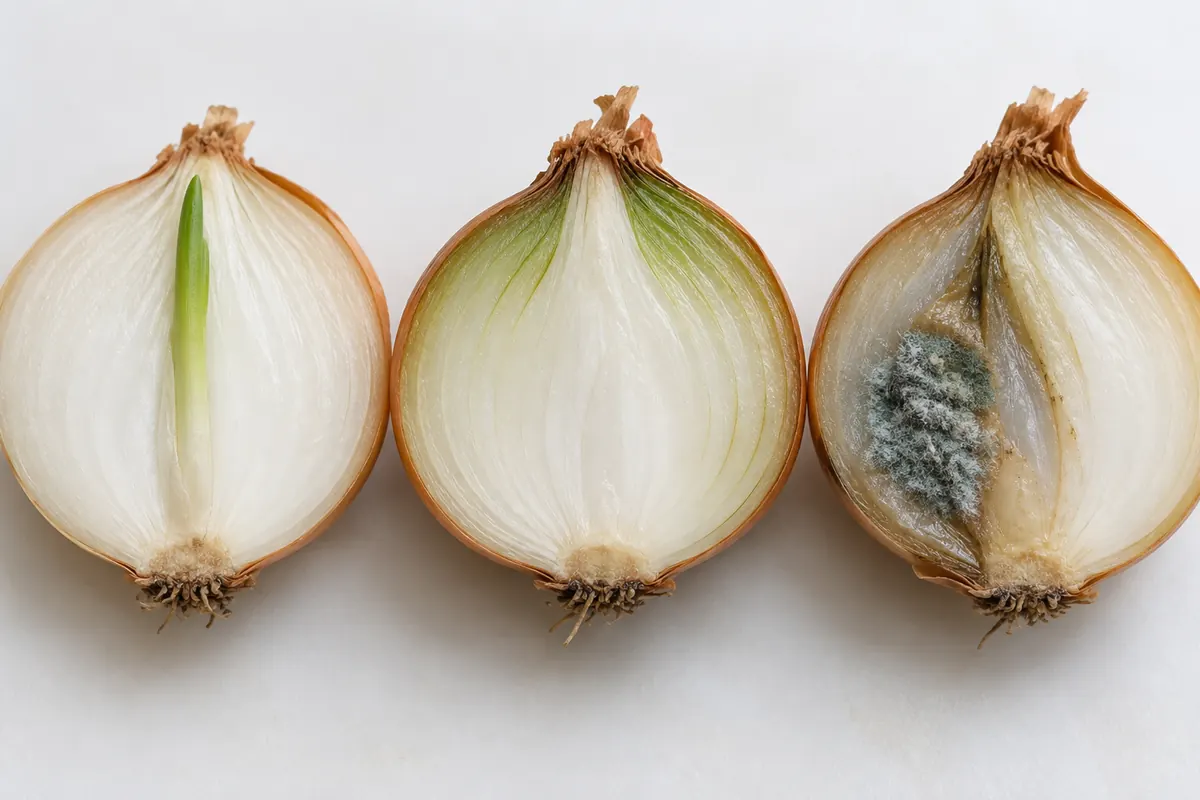
Cut onions showing central sprout, outer greening and mold in separate examples.
An onion can show more than one condition. A sprouted center may coincide with a soft scale because storage has continued long enough for the bulb to lose moisture or deteriorate. Conversely, a bulb can have pale green outer scales without any central shoot. Separate the observations in the receiving note: central sprout length, outer-scale green area, soft or wet tissue, mold and off odor. This helps decide whether trimming is reasonable for a home kitchen and whether the lot meets a commercial specification.
The green line can also be tiny. A very early internal shoot may be visible only after cutting, before a green tip emerges from the neck. Research on onion storage defines internal sprouting as a shoot seen inside a dissected bulb before external growth is obvious. A whole onion may therefore appear normal on a shelf while a cross-cut sample reveals the beginning of sprouting. Sampling cut bulbs is particularly useful when a processor needs a pale, uniform ingredient for a visible final product.
For a cook, the first practical question is whether the rest of the bulb remains sound. Purdue Extension's onion guide says firm white flesh can still be used after sprouting, though the onion deteriorates quickly afterward. That is a reason to use a sound sprouted bulb soon, not to store it for weeks in the hope that the green center will disappear. If condition is uncertain, do not force a use decision based on the color photograph alone.
Explain internal sprouting and light greening
An onion bulb consists of layered fleshy leaf bases around a short basal stem and central buds. During storage, an internal shoot can extend upward toward the neck. As it develops green leaf tissue, the cut onion shows a green spear or line among paler scales. The anatomical image here emphasizes the central path. It is not a disease spreading through every layer; the growing shoot uses resources stored in the bulb. As growth continues, the onion may become drier, softer or less pleasant in flavor even if no rot is present.

Green onion sprout growing from the center of a bulb.
Temperature, storage duration and cultivar affect how long the bulb stays dormant. Warmth and fluctuating conditions can encourage visible growth; moisture also increases the risk of deterioration. It is tempting to describe all green tissue as caused by light, but a central shoot can develop within a stored bulb before it ever protrudes into sunlight. Location is therefore the useful clue. A green central spear points to growth from the bud; a green surface scale under the outer wrapper points to light exposure.
The outer greening process is well documented in onion production. Bayer's onion greening guide identifies sunlight as the cause of chlorophyll in exposed outer bulb scales. This can occur when bulb shoulders receive sunlight in the field or during extended curing in moderate light. The location near the surface matters: it is not the same pattern as a central green shoot. The separate outer-scale image later in this section shows a green shoulder band while the center stays pale.
The cause matters to a commercial buyer because prevention differs. A grower limits light exposure and manages curing for outer greening; a storage program manages time, temperature and ventilation to reduce sprouting and decay. A processor removes unacceptable outer scales or internal sprout material according to the product standard. Describing both defects simply as "green onion" obscures the action required and can lead to inconsistent trimming from shift to shift.
The center may also appear pale yellow-green rather than vivid leaf green. Do not diagnose a defect solely by shade. Examine whether there is a smooth organized shoot, whether tissue remains firm, and whether the discoloration lies at the surface or inside. If a color is unusual for the declared onion type or accompanied by wet brown tissue, hold the product for closer inspection. The aim is a decision based on observable structure and condition, not a guess about pigment from one cut face.

Onion cut face showing green outer scales below papery skin.
Decide whether the onion is usable
When the only change is a small smooth green sprout and the bulb's other layers are firm, using the firm portion is usually reasonable. Remove the shoot if the dish requires a mild, pale onion appearance or if the sprout tastes harsh. Cook the rest according to the recipe and use it soon. EUFIC's 2026 storage guidance says onions with minor sprouting can be used when the inner layers remain firm and there is no mold, while recommending removal of sprouts.
The side-by-side image contrasts a sound sprouted onion with one that has wet brown internal decay. A smooth green blade is a plant structure. Dark, slimy or water-soaked layers are signs that the tissue itself is breaking down. A soft onion with an unpleasant odor, visible mold or extensive discolored wet areas should be discarded. Do not try to rescue an obviously spoiled bulb by removing only a narrow central strip. The extent of deterioration may be difficult to judge from a single surface cut.
There is no need to treat an onion sprout like a green potato. Those are different plants with different chemistry. The practical onion decision is about condition, flavor and intended use. A sprouted bulb may taste sharper or have a thinner, drier layer because reserves are feeding new growth. That can be tolerable in a cooked sauce but noticeable in a raw garnish. Taste a small cooked sample when quality matters, and leave questionable bulbs out of raw applications.
For foodservice, consistency is important even when a trimmed onion is usable. If one prep cook removes every visible green center while another includes them, the finished dish may vary in color and bite. Give the team a simple rule for firm sprouted bulbs, softened bulbs and mold. Keep the rule tied to the venue's food safety plan and receiving standards. Recording how often trimming is needed helps purchasing see whether a low-cost lot creates more labor and waste than expected.
For a manufacturing line, a green sprout may appear as an unwanted fragment after dicing. A white sauce or clear soup makes it obvious, whereas a seasoned stew may hide it visually. Visibility does not eliminate the need to inspect for decay, but it changes the cosmetic tolerance. Separate "green center/sprout" from "rot or mold" in the defect list and set a documented limit for the former. The latter needs a much stricter safety and quality response under the plant's control plan.
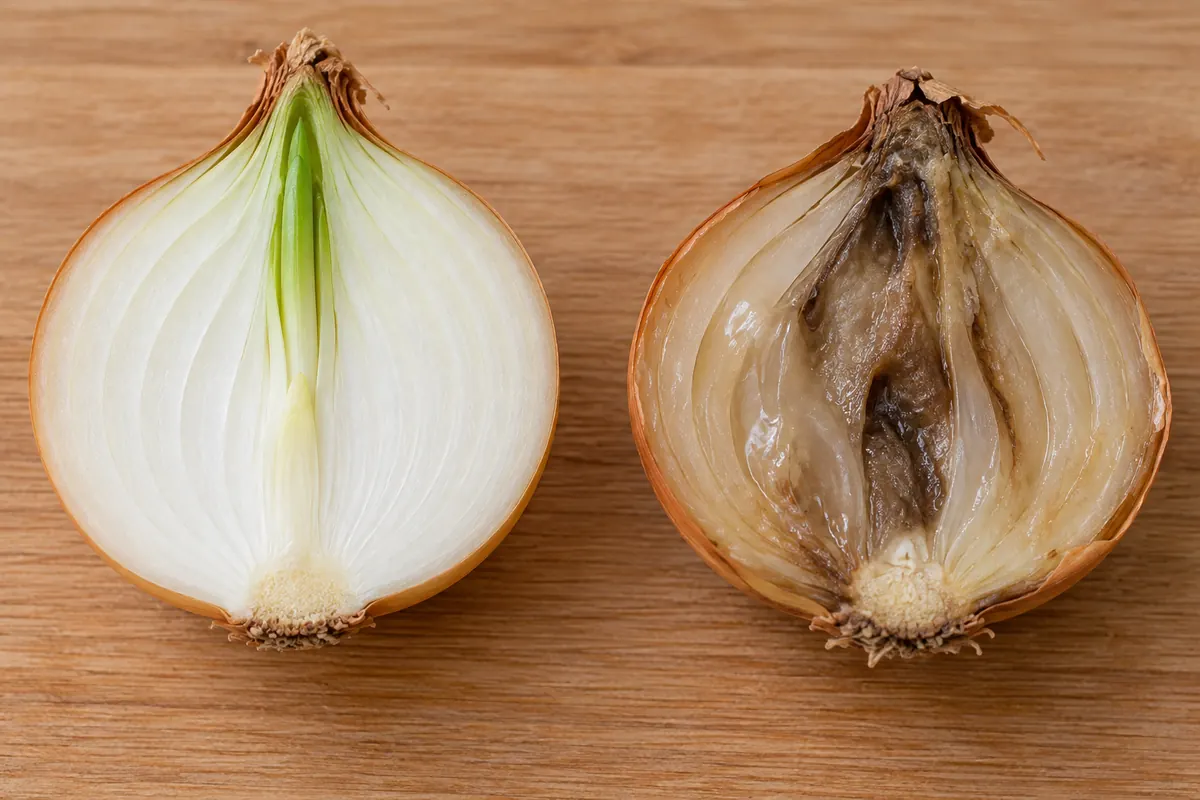
Firm onion with a green sprout beside an onion with wet internal rot.
If the bulb feels uncertain after cutting, do not assume a quick rinse or extra cooking will make spoiled tissue acceptable. Hold it out of use and follow the kitchen or plant's rejection procedure. A green color in firm tissue can be natural; deterioration cues override that general observation. This hierarchy gives staff a clearer decision than either extreme of discarding every sprout or using every onion with green tissue.
Store whole onions to limit sprouting
Whole storage onions keep best in a cool, dry, well-ventilated place away from direct sunlight. Use a basket, ventilated crate or mesh that allows air around the bulbs. Do not seal them in a damp plastic bag or place them where condensation collects. The storage photograph shows dry papery skins and air gaps in a crate, the physical conditions a kitchen can inspect. A pile with wet skins or no circulation is a different environment even if the room feels cool.
For home or small-kitchen storage, check bulbs regularly and use any beginning to sprout before they soften. Remove decaying bulbs so they do not sit against sound onions. Keep cut onions separately under refrigerated, covered conditions and follow local food safety guidance for their use period. Whole storage practice and cut-product handling are different questions; a cut surface exposes more moisture and needs a different routine.
For a closer explanation, see Is an Onion a Vegetable?.
EUFIC's storage guidance recommends cool, dry, ventilated storage away from direct sunlight and explains the spoilage signs to watch for. Exact temperature and holding period depend on onion type and facility, so a foodservice operation should set its own receiving rotation and storage target. A sweet onion usually has a different keeping profile from a cured storage onion, and the same calendar rule should not be assumed for every variety.
For a buyer receiving large fresh lots, ask how the onions were cured and handled before delivery. Inspect neck dryness, wrapper integrity, firmness and visible sprouting in more than one case. Cut a sample to see internal shoots that are not yet visible outside. The goal is to estimate remaining usable life for the intended schedule. A lot that looks acceptable today but already has many internal sprouts may be unsuitable for a long warehouse hold.
Sampling should reflect the way the lot will be used. Pull bulbs from several cartons and positions, not only a convenient top layer. Record how many show an internal green shoot, how long the visible shoot is and whether those bulbs are still firm. A processor that dices every bulb may set a stricter internal-sprout limit than a kitchen that cuts and trims by hand. If the result is close to the agreed limit, increase the sample or follow the contract's dispute method before releasing the lot. A single attractive or unattractive onion is a poor picture of a shipment.

Dry intact onions stored with air space in a mesh crate.
Rotation helps but cannot reverse a sprout already growing inside. Label incoming cases with lot and receipt date, keep air paths clear and use older sound stock first. Recheck the remaining cases during storage, especially if a warm period or condensation event occurred. Once bulbs are cut, move to the operation's refrigerated handling procedure; a halved onion in an open crate is no longer protected by its papery wrapper. These simple controls make the later cutting-board decision more predictable.
If the application allows frozen prepared onion, buying an IQF cut can move trimming and color sorting upstream. Frozen onion is usually intended for cooked applications because thawed pieces soften and release moisture. The frozen format also has its own cold-chain requirements; it is not a universal substitute for fresh sliced onion. Compare the actual dish, yield and labor rather than assuming one storage form is inherently better.
For ingredient format details, see Can You Freeze Onions? Raw, Diced and Cooked.
Handle green centers in foodservice prep
Start with a decision at the cutting board. Halve a representative bulb, identify whether green tissue is an organized central shoot or a diffuse outer scale, and check for soft or wet layers. Trim a small shoot if the rest of the bulb meets the kitchen's standard. Use the sound flesh promptly and record excessive trimming or waste. The real frozen white onion-slice photograph in this section illustrates a prepared commercial form whose visible color can be assessed after cutting, not a diagnosis of a fresh bulb's green center.
For raw service, appearance and flavor often justify a narrow tolerance for sprout fragments. In a cooked soup or sauce, a small trimmed sprout may be less relevant to presentation, but a soft or deteriorating bulb is still unacceptable. Write the prep standard around the product and dish: whole onion for roasting, pale dice for a white sauce, or slices for a topping. A single generic "remove green" line does not tell staff how much tissue to discard or when to reject the bulb.
Measure usable yield during a trial. Weigh the received onions, the peeled and trimmed material, and the cooked usable portion. A lot with repeated internal shoots can cost more in trimming time and waste even if the outer size is attractive. If a prepared frozen format is available, compare its carton price with usable yield and prep labor. The same evaluation should include texture after cooking, because an IQF slice behaves differently from a freshly cut crisp onion in raw use.

Frozen white onion slices in commercial packing.
Cross-contamination and sanitation remain normal prep concerns. Keep knives and boards clean, separate rejected material from acceptable food and follow the facility's handling plan. A green sprout is not an excuse to bypass ordinary controls, nor is it a reason to invent a special decontamination step. If mold or wet decay appears during prep, remove the bulb from the food stream and document the lot issue if it is more than isolated.
GreenLand-food supplies frozen onion formats including slices, dice, strips and whole peeled bulbs through its frozen onion range. For a buyer concerned about green fragments, the order can define color grade, sprout or core tolerance, peel removal and cut inspection. We confirm which finished appearance matters to the application, then align the cut and QC plan with that result. The receiving team should still inspect representative bags; a supplier statement does not replace lot acceptance.
For ingredient format details, see How Long Does a Whole Onion Last?.
Specify color and defect checks for frozen onion supply
A frozen onion RFQ should state white, yellow or red variety; whole, sliced, strip or diced form; nominal cut dimensions; raw or blanched status; and the desired color range. Then list defects separately: green sprout fragments, light-greened outer scales, brown or translucent tissue, peel, root material, broken pieces, clumps and foreign matter. The real red-onion dice photograph shows why a color reference must match the declared onion type. Natural purple-red and white layers in red onion are normal; an unexplained green shoot fragment is a different observation.
Set an inspection method before agreeing a percentage. For a visible white-onion product, examine a measured sample under consistent light, count or weigh unacceptable pieces and record the result. A processor may prioritize individual visible green fragments; another product may be more sensitive to off-odor or water-soaked pieces. The signed specification should distinguish cosmetic limits from safety defects. A broad "less than 5% defects" line combines unlike risks and is hard to enforce fairly.
Describe the sample in terms the receiving team can repeat: how many sealed bags to open, how much product to spread, whether to inspect frozen or after a defined thaw, and whether the result is counted by pieces or weighed. A tiny green sprout fragment may matter in a white sauce even if its weight is negligible, so a weight-only limit might miss the defect that prompted the request. Conversely, a red onion dice naturally includes red-purple layers and pale centers; those colors should not be counted as foreign green tissue. Agree on example photographs and keep them with the signed specification.

Diced red onion lot with natural color and size variation.
If green pieces appear in a delivered bag, trace them to their likely source before changing the entire order. A narrow organized strip suggests sprout tissue left during trimming. A broad green surface piece may come from an outer scale that received light. Mold, wet brown flesh or an off odor calls for immediate quality escalation. The supplier's corrective action will differ for crop sorting, peeling, cut inspection and sanitation. Separate findings give both sides a better chance of resolving the problem than a vague complaint that the onions "look green."
The GreenLand-food bulk frozen onion detail describes diced, sliced, strip and whole peeled programs with separate checks for discoloration, peel, roots, clumps and size. We confirm the exact grade and acceptance basis with the buyer rather than treating a website example as the contract. Ask for an approved product photo and sample, the batch specification, pack format, lot code and requested COA or test records as appropriate for the destination and application.
Frozen condition deserves a separate check. Pieces should be free-flowing to the degree required by the order, with intact bags and a stable cold chain at or below the agreed storage temperature. Heavy clumping, excess ice or torn liners can complicate dosing and signal handling problems. An otherwise pale piece can still perform poorly if the shipment has warmed and refrozen. Inspect outer cartons and inner bags across the lot, then run a small cook test to assess moisture release, color and aroma in the actual formula.
For a recurring purchase, compare the incoming lot with the approved reference, document exceptions and review whether the trimming rule stays effective. GreenLand-food can discuss the product form, specification, packing, quantity, destination, private-label needs and required documents with the purchasing team. The practical objective is straightforward: the kitchen receives the onion identity and color it expected, while a central green shoot, light-greened scale and true spoilage remain distinguishable at inspection.
Source frozen onion with GreenLand-food
GreenLand-food is a professional frozen onion supplier and manufacturer in China, providing factory-direct wholesale supply for importers, food manufacturers, foodservice distributors, and private-label programs.
Send the product form, specification, packing, quantity, application, destination, private-label needs, and requested documents.