


What Type of Onion Is Best for Burgers?
Sep 24, 2026
Leave a message


Choose the onion by the burger's finished bite
Begin with the flavor and texture the burger needs. Yellow onion is versatile and usually becomes sweeter and rounder after sustained heat. White onion tends to make a clean, pronounced raw bite and can also be griddled. Red onion brings purple color and a recognizable sharpness to a raw layer, while cooking softens its edge and changes its hue. A sweet onion is mild enough for a thick raw slice in some menus, but a generous slice can overwhelm a small patty by bulk even if its flavor is gentle. The image of the three onion types beside burger portions shows visible choice, not a promise that one cultivar will always taste the same.
Match the onion to the rest of the build. A rich beef patty with cheese and a creamy sauce can handle a thin sharp raw ring. A lightly seasoned chicken or vegetable burger may benefit from a softer cooked topping that does not compete with its base flavor. Pickles and acidic sauce already add bite; an equally sharp onion can be intentional, but it should be tasted together with the full burger. A topping chosen alone on a cutting board may behave differently between hot bread, fat and sauce.
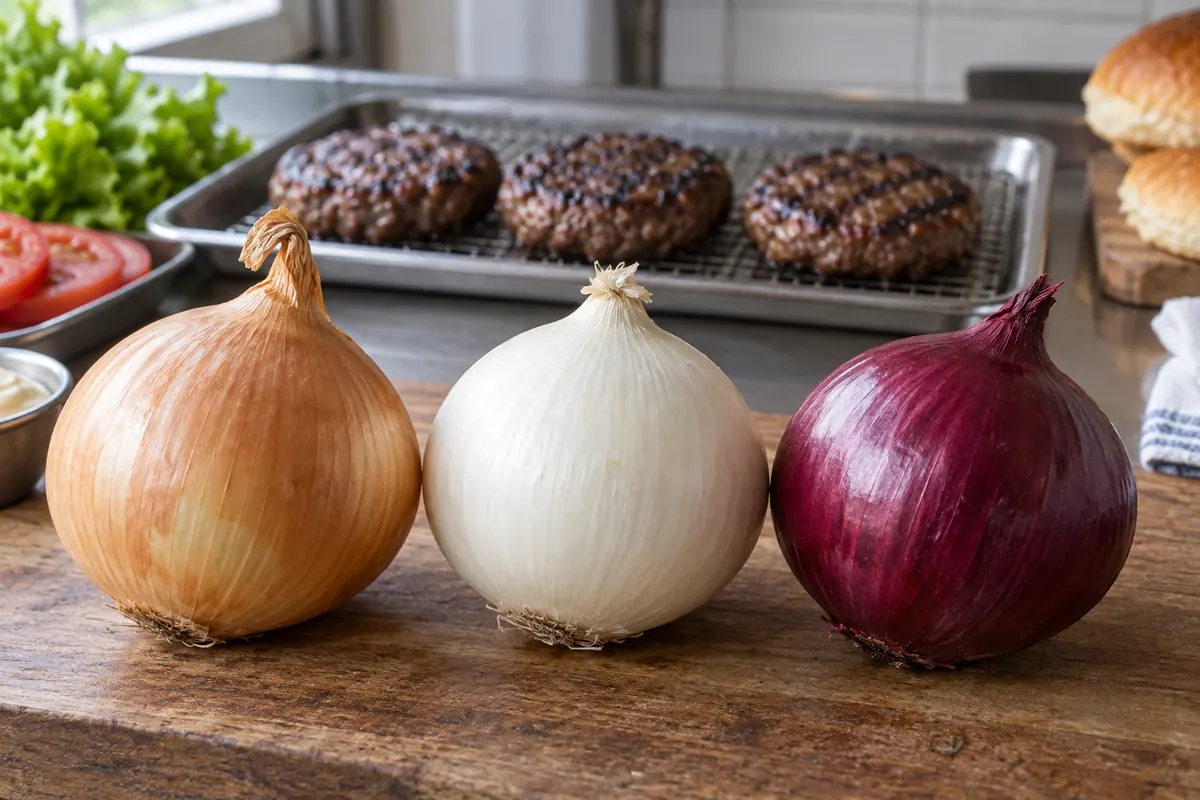
Yellow, white and red onions beside prepared burger portions.
Restaurant and recipe pages commonly name several "best" onions, which is useful as a starting list rather than a final purchasing decision. Freddy's burger guidance distinguishes raw, pickled and cooked uses, while Burger Republic compares types and preparations. Those perspectives support a menu-first trial. They do not establish a universal sensory ranking across crops, storage periods or cooking equipment. For a recurring menu, test at least one raw and one cooked candidate in the actual sandwich.
The cut is part of that trial. Thin rings cover the patty evenly but may pull out with one bite if they are long and slippery. A half-moon slice is easier to scatter, while small dice spread through a sauce or chopped topping. A thick whole slice announces the onion as a separate layer, which can be desirable on a large burger but awkward on a small bun. Before choosing a variety, agree whether the onion should be a crisp layer, soft strand, sweet mound or subtle background ingredient.
If several outlets will make the same burger, write a practical target rather than only "red onion" or "yellow onion" on the recipe card. State raw or cooked, target cut, approximate amount per burger, desired flavor level and acceptable holding time. The same variety may look consistent in a supplier catalog yet arrive in different bulb sizes and give different ring diameters. A measured cut and plated reference let kitchen teams reproduce the intended bite.
Raw onion: color, bite and slice thickness
Raw onion is selected for crispness and freshness. A thin white onion slice gives a pale, clear-looking layer with a stronger onion note. Red rings add color against lettuce, cheese or a light sauce. Yellow onion can be used raw, but its bite may seem more assertive depending on the lot. Sweet onion may be pleasant for a thick raw slice where the diner should notice onion without much sharpness. The visual of separate white and red rings beside a burger makes the difference in appearance clear; it does not tell you how strong a particular lot will taste.

Thin white and red onion rings beside a burger for raw topping comparison.
Thickness changes the experience as much as color. A very thin ring gives aroma and a little snap, but can wilt under a hot patty or damp sauce. A thicker ring holds its shape and crunch yet can dominate each bite or slide out intact. Test several thicknesses using the same onion lot and complete burger. If a guest repeatedly pulls out a long ring, try a half-moon or smaller cut rather than automatically changing variety. Knife or slicer setting should be documented if several cooks share prep.
Freshness is central to a raw garnish. Select firm onions with sound internal layers, clean peel removal and no off odor or wet tissue. After cutting, keep the product under the operation's refrigerated food-safety procedure and in a covered, labeled container. Use a realistic prep window for the outlet's sales pattern: a tray prepared for the lunch rush has a different quality target from a garnish held through the next day. GreenLand-food's cut-onion storage article provides more context for handling after cutting.
Raw red onion may soften in an acidic pickle, which can be desirable, but a pickled topping is a separate recipe. Acid, salt and time alter color, sharpness and texture. Do not treat a quick rinse, a pickle and a fresh slice as interchangeable merely because the base onion is red. If a chain offers both a standard burger and a pickled-onion special, retain separate specifications and photographs. A product that works beautifully as a bright pickle may be too sharp or too thick as a straight raw ring.
For receiving, ask the vendor for bulb size or a finished cut sample, not just a variety. Look at ring diameter, thickness distribution, ragged cuts and the number of small inner rings. A large outer ring may overhang a small bun, while many tiny centers provide uneven coverage. Taste a representative slice and inspect the cut face for sprouting or internal defects. If raw onion is a signature part of the burger, a fresh-cut trial at the outlet is more informative than a generic variety description.

Crisp raw red onion rings beside cooked caramelized yellow onion strips.
Grilled and caramelized onion: heat changes the choice
Heat changes both the onion and the selection criteria. Sliced yellow onion on a griddle loses sharpness as it softens and browns, making it a reliable first candidate for a savory cooked topping. White onion can give a lighter visual result and still build flavor. Red onion can be grilled for color and a different flavor, although the vivid raw purple will mute. Sweet onion may brown readily and soften quickly, so it needs attention to water release and sticking. The griddle image shows browning in progress, not a universal time or temperature for every equipment load.
Separate "grilled" from "caramelized" on the menu and production sheet. A briefly griddled slice retains some structure and can show browned edges with a still-defined center. A slowly cooked caramelized topping is much softer, darker and more concentrated. Their yield per kilogram, labor and holding behavior differ. If a burger picture shows a mound of deeply browned onion, a quick warm-up of pale slices will not deliver that look. The detail visual contrasts crisp raw red rings with cooked yellow strips to emphasize that their roles are different.
Pan loading matters. A shallow, even layer allows moisture to escape and surfaces to brown. Overfilling a flat-top or deep pan steams onions, which can be useful for softening but gives a paler result. If the kitchen needs a consistent cooked topping during rush service, define batch size, oil or fat, turning, target color and how long the cooked onion may be held. Record finished weight after cooking, not only the raw amount placed on the grill. Water loss can make portion cost differ substantially from a raw onion comparison.
Do a small side-by-side cook with the exact equipment and seasonings used in service. Add the same amount of yellow, white or red onion cut to the same width. Observe browning, sweetness, remaining bite, free liquid and final yield. Then assemble each topping on the real burger and taste after the intended holding interval. The winner for a tasting straight from the pan may not be the best after ten minutes in a warm holding pan or inside a wrapped delivery burger.

Yellow onion slices browning on a flat-top griddle.
For packaged burgers or ready meals, test the full heating route. A cooked onion topping may be chilled or frozen with the sandwich, then reheated by microwave, oven or conveyor. Browning achieved during first cook can survive visually while texture becomes softer. A topping that released little water on the griddle can still wet the bun during reheating. Evaluate onion, patty, sauce and bread together before fixing the ingredient. The goal is a burger that tastes and looks repeatable at the actual point of consumption.
Cut shape, portion and holding during burger service
Choose a cut that stays on the burger and can be portioned quickly. A single thin ring is simple to place, but a pile of long half-moons may fall away when the bun is compressed. Diced onion covers more evenly in a chopped topping or sauce, though it loses the recognizable onion-layer look. The prep-pan visual shows ring, half-moon and dice forms at one station. In a commercial kitchen, the cut must suit both the guest's bite and the operator's motion during a rush.
Set a target portion in grams or a count that staff can repeat. "A handful" varies with hand size, cut width and moisture. For raw rings, a specified count plus diameter band may work. For cooked onions, a drained finished weight is usually more reliable than a scoop volume, because browning and water loss change bulk density. Weigh several normal staff portions to see the natural spread, then set a range that preserves flavor and plate cost. A small change per burger compounds across a busy menu.
Holding affects crisp and cooked toppings differently. Raw slices lose snap when exposed to heat and sauce; keep them cold under the facility's approved procedure and add them near assembly. Cooked onions can be hot-held according to the operation's food-safety plan, but prolonged holding may darken or soften them further. If the service model is delivery, wrap a burger and check its condition after the typical travel time. The onion may need a different cut or placement to avoid wetting the bun.
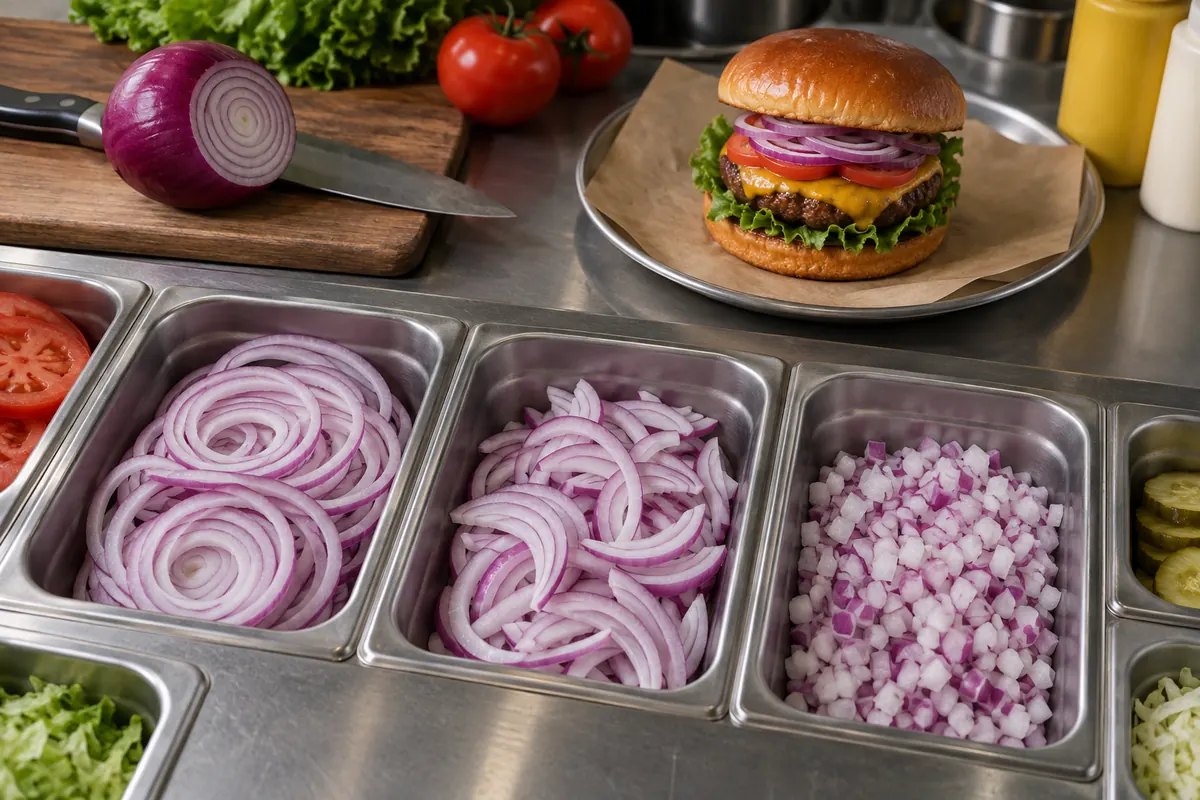
Onion rings, half-moon slices and dice in separate prep pans.
Make a visual assembly reference. Photograph the approved onion portion from above and in cross-section, with the actual patty and bun size. Train staff to notice whether pieces extend beyond the bun, whether a raw ring stays in one bite, and whether cooked strands distribute across the patty. A reference also helps a supplier understand why the same onion cut cannot be casually changed from ring to shred or from 5 mm to 10 mm dice.
For multi-site restaurants, compare prep labor along with ingredient cost. Whole fresh onions require peeling, trimming and slicing; a prepared frozen cut can reduce those tasks in cooked applications. Yet the frozen product adds cold storage, tempering or direct-cook behavior and different moisture release. Measure how long the team spends to produce an approved topping from each format, the usable yield and the quality after holding. A cheaper carton that needs extra draining or sorting may not save money at service.
Where frozen sliced or diced onions fit
IQF sliced or diced onions are useful ingredients for cooked burger toppings, sauces and prepared fillings. Their main value is a repeatable cut with much of the peeling and slicing already done. The real GreenLand photograph in this section shows frozen white onion slices in a bag. It documents a supplied cut, not a claim that thawed slices retain fresh raw crunch. For a raw burger ring, use a suitable fresh onion unless a product has been specifically tested and approved for that use.
For a griddled topping, add a measured frozen portion according to the kitchen's cooking plan and allow moisture to escape before judging color. Product size, load and equipment determine the time. A deep pile of frozen slices can steam before it browns, so a trial should use the real batch size and pan area. If the pieces clump, check the pack and cold-chain condition against the agreed IQF standard. GreenLand-food's sliced onion page shows a commercial format that can be sampled for this application.
Dice can work in burger sauce, a chopped onion topping, meat formulation or a ready-meal filling. The smaller cut disperses flavor but will not form a visible grilled strand. GreenLand-food's diced onion page illustrates the separate format. A buyer should specify the nominal cut dimensions and permitted fines rather than asking simply for "frozen onion." Too many small fragments can disappear in cooking or alter sauce viscosity; oversized pieces can interrupt the expected mouthfeel.

Frozen white onion slices for cooked burger toppings.
Compare frozen and fresh on the same recipe and finish point. Weigh input onion, free liquid after cooking, cooked yield and portion count. Assess color, aroma, sweetness and texture after any hot holding or reheating. A frozen slice can be a strong operational choice for a cooked topping even if a fresh slice wins in a raw tasting. That difference is normal: freezing changes plant cell structure and thawed tissue releases moisture. The useful decision is whether the final burger meets the menu standard.
Packaging and logistics also matter. Confirm bag size suited to the outlet's daily draw, resealing or handling method, carton strength, lot coding and storage at the required frozen temperature. A large case may be economical for a central kitchen but inconvenient for a small restaurant. If several outlets use the same cooked topping, a controlled frozen cut can reduce variation in prep skill and bulb size. Still require a sample and cook test: cut consistency alone does not guarantee the right flavor or finished texture.
Check the supplier's processing description before creating kitchen instructions. Raw frozen onion is an ingredient for further cooking, while a separately prepared cooked topping may have different handling and labeling requirements. Confirm whether the quoted product is raw or blanched, its cut dimensions, pack size, stated storage temperature and intended use. Do not interpret the word "IQF" as a ready-to-eat claim; it describes individual freezing. The restaurant's approved food-safety process must still bring the topping to the required endpoint for the actual menu.
For a delivery-heavy burger brand, test a small order through the longest realistic route. Cook the frozen cut, hold it during assembly, close the wrapped burger and assess it at the typical arrival time. Note whether liquid collects under the patty, whether the topping slides, and whether browned flavor remains noticeable next to sauce. A cut that works well on a dine-in plate may need a different drain, portion or placement for delivery. This feedback should be recorded with the supplier sample rather than lost as an informal staff impression.
Specify onion supply for a repeatable burger menu
Turn the burger test into a purchasing brief. Identify variety or color, fresh or IQF state, raw or cooked application, cut shape and dimensions, acceptable broken pieces, and the expected amount per finished burger. Add a photograph of the approved topping on the actual bun. The real red-onion-ring product image here shows a distinct commercial cut and natural purple-white tissue; it should be evaluated in a cooked trial rather than substituted for a crisp raw slice by assumption.

IQF red onion rings with purple outer tissue for commercial menu trials.
If the topping is raw, define bulb condition, ring thickness, cut quality, temperature and use period under the outlet's food-safety controls. If it is cooked, define the desired result: pale softened onion, lightly browned edges or deeply caramelized strands. Specify finished portion and the cooking route used to approve the sample. A supplier can meet a nominal cut width while the kitchen misses the target because the griddle is overcrowded or the topping is held too long.
Ask for an approved sample and check several bags or cartons across a lot. For frozen pieces, look at color, peel and root material, clumping, broken fragments, size distribution and packaging condition. For fresh bulbs, inspect firmness, sprouting, decay and internal quality after cutting. Separate cosmetic deviations from food-safety concerns in the acceptance standard. If the burger has a visible red ring, a red-onion color reference matters; if the onion cooks into a sauce, consistency of cut and flavor may matter more.
Run the sample through a realistic service cycle. Prepare enough toppings for the expected rush, portion them as staff normally would, assemble burgers, then taste immediately and after delivery or holding. Record cooked yield and rejected material. This trial answers the commercial questions a product-page image cannot: whether one bag gives the intended number of portions, whether the topping stays on the burger, and whether the cut creates avoidable line delays.
GreenLand-food's frozen onion category covers multiple cuts and colors for wholesale supply. Tell us the burger style, cut, pack size, forecast quantity, destination and documentation needs so we can align a sample with the application. A menu that values raw onion crunch should keep its fresh specification clear. A menu that needs a cooked topping can compare frozen slices or dice on yield and consistency. The best onion is the one that produces the intended bite, shift after shift.
Source frozen onions with GreenLand-food
GreenLand-food is a professional frozen onions supplier and manufacturer in China, providing factory-direct wholesale supply for importers, food manufacturers, foodservice distributors, and private-label programs.
Send the product form, specification, packing, quantity, application, destination, private-label needs, and requested documents.