


How to Cut Pineapple into Chunks
Sep 07, 2026
Leave a message
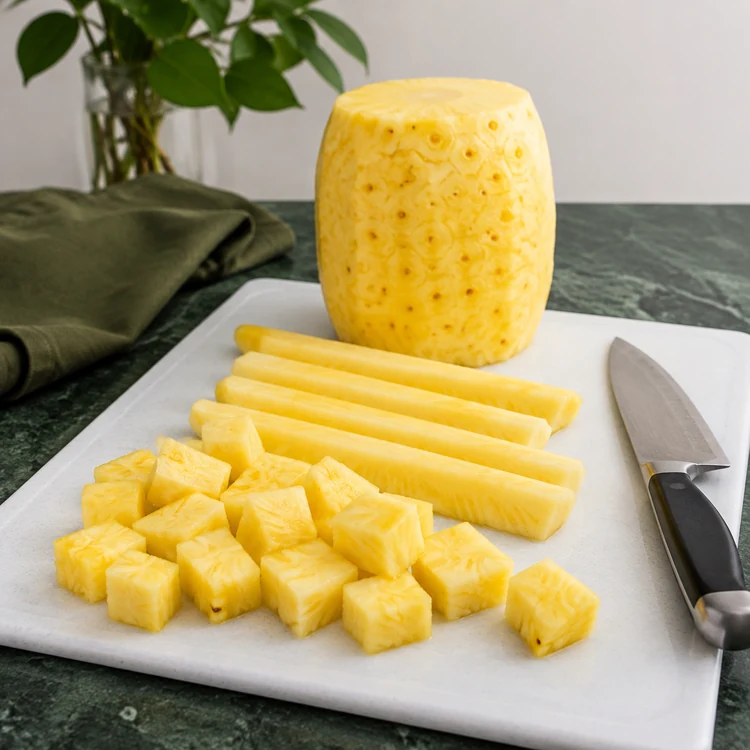
Set the cut before judging the yield
A sharp knife, a stable board and a clear size target make the work easier. For repeat foodservice or manufacturing use, measure the accepted yield and compare manual chunks with a specified IQF cut rather than assuming every bag or bowl of pineapple pieces is equivalent. For repeat preparation, photograph a few accepted pieces beside a measurement scale and retain the written dimensions. Combine that reference with eye and core limits so a fast cut is not approved at the expense of usable quality.
Create stable flat surfaces, peel in controlled strips and inspect for eyes and core before cross-cutting the spears.
Specify cubes and irregular chunks differently; a product name without dimensions or tolerances leaves room for misunderstanding.
Compare manual and IQF cuts in the finished application, with the same output stage and clearly recorded losses.
Prepare a stable, clean cutting station
Use a board large enough to hold the pineapple without crowding the knife path. Stabilize the board using an appropriate non-slip arrangement and keep the surrounding surface clear. A sharp chef's knife should be suitable for the fruit's size. A smaller knife can help remove individual eyes after the main peeling step, but do not choose a tool so small that it requires awkward force.
Inspect the fruit before cutting. It should be sound and suitable for the intended food use. Wash the intact pineapple under running water and prepare with clean hands and equipment. FDA's produce guidance explains why washing remains relevant even when the rind is discarded: preparation can transfer material from the surface to the edible portion.
Set out separate containers for accepted pieces and trim. This keeps the board clear and makes yield measurement possible. In a commercial kitchen, prepare only the quantity the team can handle and protect promptly. A crowded station with skins, juice and finished pieces mixed together makes both safe cutting and consistent inspection more difficult.
Cut pineapple into chunks in seven steps
The sequence below produces ordinary cored chunks. Adjust the final dimensions to the dish, but keep the earlier stability and inspection steps. There is no need to turn the pineapple into a decorative spiral unless that shape serves the intended presentation.
- Remove the crown and base. Lay the fruit securely on its side and cut off enough at each end to create flat surfaces. Avoid removing thick sections of good flesh merely to make the cuts look generous.
- Stand the fruit upright. Place the flat base on the board. Check that the fruit sits firmly before making downward cuts. Keep fingers out of the blade's path.
- Slice away the skin. Follow the pineapple's curve in controlled downward strips. Work around the fruit and remove the outer rind without automatically cutting deeply enough to remove every eye in one pass.
- Remove remaining eyes. Inspect the peeled surface and trim the brown eye pockets with a smaller knife if needed. Keep the fruit supported on the board while working.
- Quarter lengthwise. Cut the peeled pineapple down the center, then divide each half again. Lay the pieces on stable flat faces for the next cuts.
For ingredient format details, see How to Freeze Fresh Pineapple: Chunks, Rings and Puree.
- Remove the firm core. Cut away the central fibrous strip from each quarter according to the required eating texture. Inspect for remaining hard sections rather than removing an arbitrary thick wedge.
- Make spears and cross-cut. Divide wide quarters lengthwise as needed, align the spears and cut across at the chosen interval. Check a few pieces for size, core residue and eye remnants before transferring them to the clean container.
Move trim away as it accumulates and wipe up slippery juice using the kitchen's normal hygiene procedure. The aim is a clear, controlled sequence, not maximum speed at the expense of stability or inspection.

Remove eyes without sacrificing every outer layer
Pineapple eyes extend beneath the outer skin. A very deep peeling cut can remove them quickly, but it may also discard a substantial layer of usable flesh. A shallower first peel followed by targeted eye removal can improve recovery when labor and the required finish make that approach practical.
Eye pockets often follow diagonal patterns, which is why spiral trimming appears in many demonstrations. Individual trimming is another option. Choose the method that fits the operator's skill and the product requirement. A spiral pattern is not necessary for chunks, where the final shape will be changed again. Focus on removing the unwanted material without leaving hidden brown pockets.
For a commercial comparison, time the method and weigh the accepted output. A slower method that saves a small amount of flesh may or may not be worthwhile at the site's labor cost. Conversely, fast deep peeling can look efficient while losing enough product to increase the cost per usable kilogram. Measure the whole task rather than judging it from the speed of one knife stroke.
Choose chunk size for the final dish
Small pieces distribute through a filling or fruit mixture; larger chunks remain more visible and may suit skewers or a substantial fruit portion. The appropriate size is the one that performs in the dish and can be portioned reliably. There is no universal chunk dimension that serves every recipe.
| Application | Size question | Practical trial |
|---|---|---|
| Fruit cup or dessert | Will pieces fit the spoon and portion target? | Assess eating size and portion consistency |
| Pizza or savory topping | Will pieces distribute without excessive bulk? | Test moisture and coverage after cooking |
| Bakery filling | Should pieces remain visible or blend into the filling? | Check texture and leakage after the full process |
| Smoothie or blending | Can the equipment handle the largest piece? | Test the actual blender and loading method |
| Skewer or grilled portion | Is the piece substantial enough to handle? | Assess breakage and finished texture |
For a home recipe, cutting at roughly equal intervals is usually sufficient. For production, define a nominal size or range and a tolerance for fragments and oversized pieces. A photograph with no scale can communicate shape, but it cannot establish the dimensional requirement on its own.
A simple cutting reference can be made from a few accepted pieces laid beside an ordinary measurement scale during the trial. Show the nominal target and examples near the permitted limits. Photograph the actual fruit under clear lighting, then retain the written dimensions with the image. The photo helps the operator recognize the desired result; the dimensions prevent camera perspective from becoming the specification.
Check both length and thickness. A long thin piece and a compact cube can have the same longest dimension while eating and cooking differently. If the dish needs cubes, define all three dimensions as appropriate. If it only needs bite-sized irregular chunks, an overcomplicated cube specification may add cost without improving the result.
For hand cutting, inspect a small portion periodically rather than waiting until the entire batch is finished. The spears can drift in width as the operator moves through different-sized quarters. Correcting that early reduces later sorting. Keep the board layout consistent so accepted pieces do not become mixed with core strips or unfinished quarters.
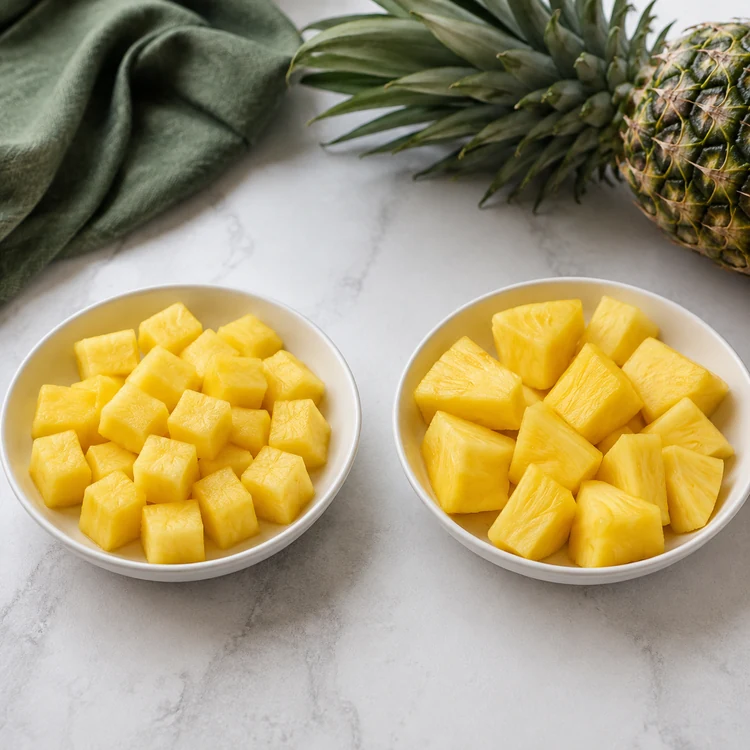
Chunks, cubes and tidbits are different specifications
Chunks often means irregular bite-sized pieces. Cubes implies a more regular geometry with defined dimensions. Tidbits commonly describes smaller pieces, but commercial usage varies, so the name should be supported by the actual size description. Do not assume that two suppliers use these terms identically.
| Description | What to define in an order | Why it matters |
|---|---|---|
| Cubes | Nominal dimensions and permitted variation | More predictable piece size and portioning |
| Irregular chunks | Minimum and maximum size, shape expectations | Avoids an unsuitable mix of large wedges and fragments |
| Small pieces or tidbits | Size distribution and fines tolerance | Controls spread, dosing and visible fruit content |
| Spears or slices | Length, thickness and core-removal basis | Supports presentation and equipment fit |
We confirm the cut description for frozen pineapple cubes and other forms before sample approval. A nominal dimension is a starting point, not the full acceptance standard. Flavor, color, fibrous material and the condition after the buyer's process still determine whether the ingredient is suitable.
For ingredient format details, see What Are Pineapple Tidbits? Size, Uses and Frozen Supply Formats.
Control core residue and fibrous pieces
The central core is usually firmer and more fibrous than the surrounding flesh. Its acceptability depends on the variety and the dish. Ordinary soft fruit chunks often need it removed, while another process may tolerate or deliberately use more of that material. State the required outcome rather than assuming every operator has the same interpretation of "cored."
Inspect the prepared quarters before cross-cutting. Once a fibrous strip is divided into many small pieces, it becomes harder to remove efficiently. Check the inner face and the transition between firm center and softer flesh. A consistent trimming reference helps operators remove enough material without cutting away excessive good fruit.
For frozen purchasing, request an appropriate sample and test it after the handling stage relevant to the recipe. A frozen piece can feel uniformly hard, concealing texture differences that become obvious after thawing or cooking. Define how core residue and fibrous pieces will be assessed. Do not use a frozen photograph as the sole evidence of eating tenderness.
Measure the usable fruit you actually recover
Weigh the whole input and the accepted prepared pieces. Usable yield equals accepted piece weight divided by whole input weight. Keep the crown, peel, core and other trim separate when conducting a detailed review. This shows whether the losses come from normal preparation, an unnecessarily deep cut or poor incoming condition.
For example, if a 6 kg whole-fruit trial gives 3.2 kg of accepted chunks, the observed recovery is about 53.3%. This is an illustrative calculation, not a standard yield. Repeat the method on representative fruit before using the result for purchasing. A trial using one especially large fruit or unusually light trimming will not represent every delivery.
Record preparation time as well as weight. A commercial kitchen needs to know how many acceptable kilograms a method produces per unit of labor, not just the highest possible recovery. Keep the cutting specification fixed when comparing operators or tools. Otherwise a faster result may simply contain more eyes, core or unsuitable pieces and will not be comparable at the point of service.
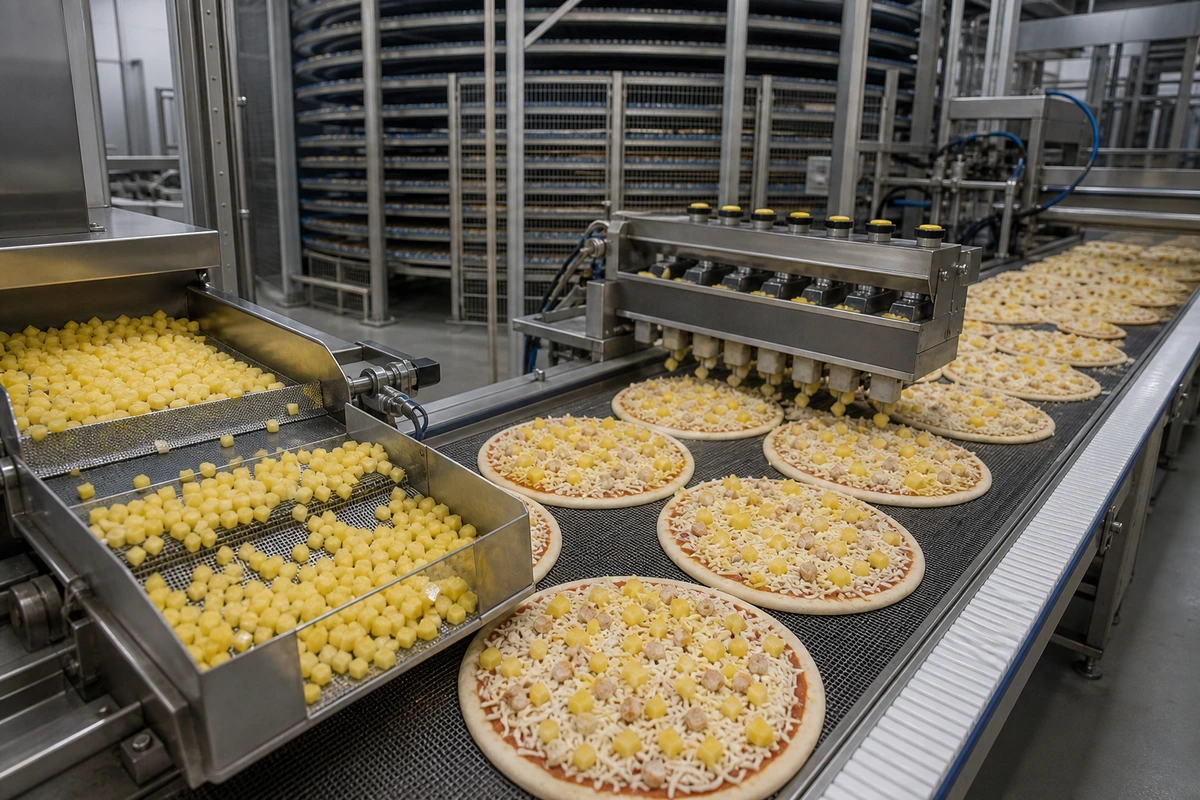
Move from manual preparation to IQF cuts
IQF means individually quick frozen. In purchasing terms, the buyer still needs a defined product: the fruit, cut, packing, physical acceptance points and intended use. The acronym does not establish the exact size, uniformity, microbial status or performance of every supplied lot.
Prepared IQF pineapple chunks move peeling and cutting upstream and can simplify portioning when the pieces remain suitably separate. Evaluate the actual pack for the required flow and piece distribution. Clumping should be investigated with the product and handling information rather than treated as automatic proof of one particular cause.
Compare manual and frozen routes at the same stage of use. Include peeling labor and waste for whole fruit, and the relevant frozen storage, thawing or direct-use handling for prepared pieces. If the recipe uses released fruit liquid, include it consistently. If it requires drained chunks, use a defined draining method. The useful comparison is acceptable ingredient in the dish, not simply whole fruit weight against frozen carton weight.
Compare manual and purchased cuts with a short, controlled production exercise. Prepare a measured quantity of whole fruit to the agreed standard and record the accepted mass, time and trim. Then prepare a measured quantity of the proposed frozen cut using its supplied handling instructions. Evaluate both in the same final recipe and keep the output stage identical. This prevents one option from being weighed before draining and the other after.
Include the pieces that fail the application. An irregular fragment may be perfectly edible but unsuitable for a decorative topping; a fibrous piece may be unacceptable in a soft dessert even if it meets the nominal size. Name the reject reason so the supplier can respond to the right requirement. Calling every unsuitable piece "waste" conceals whether the problem is geometry, texture or incoming quality.
Review the operator's work as well as the ingredient. If the frozen trial is overloaded into a pan or the fresh trial is cut to a different size, the comparison is no longer fair. Repeat only the part needed to resolve the difference, then retain the accepted method. The goal is a decision the kitchen can reproduce, not a contest designed to favor one purchasing route.
For a mixed menu, the result may support using more than one format. Regular cubes can serve a portioned dessert while irregular pieces enter a filling. That arrangement should be reflected in stock allocation and recipe instructions so the wrong cut is not substituted during a busy shift.
Match frozen pieces to the cooking or blending step
Follow the product's intended-use and cooking instructions. Some applications use frozen pieces directly; others need controlled thawing or draining. The correct method depends on the ingredient, equipment and finished food. Do not assume that frozen fruit is sterile or that every product is suitable for an unheated application without reviewing its supplied information.
For a blender, check the largest piece size and the equipment manufacturer's loading guidance. For a filling, assess liquid release through the full heating and cooling process. For a pizza or savory topping, test the portion in the actual oven cycle. An acceptable raw or thawed sample does not necessarily predict the result after cooking.
Record any process adjustment needed for the frozen format. If staff compensate by adding less liquid or cooking longer, that change belongs in the approved recipe. Do not leave it as an informal trick known only to one operator. We review frozen pineapple pieces against the intended application so the cut and handling method support repeat production.

Keep cut pineapple protected during service
Once pineapple is cut, treat it as prepared perishable food. Transfer the pieces to a clean food-safe container, cover and refrigerate promptly under the applicable handling plan. Keep them separate from raw foods and dirty equipment. Cutting more fruit than can be protected and used creates a storage problem that a good knife technique cannot solve.
For domestic refrigeration, use 4°C or below and follow appropriate time limits for perishable food. FDA storage guidance advises no more than two hours unrefrigerated, reduced to one hour above 32°C. These are general handling limits, not a promise about the shelf life of a particular batch of cut pineapple.
For a café or production kitchen, label the prepared container with the information required by the site's system and use a defined rotation plan. Avoid topping an older container with fresh pieces. If freezing surplus is part of the plan, our guide to freezing pineapple covers that separate decision. Keep this cutting procedure focused on producing a clean, consistent ingredient ready for its next controlled step.
A practical cutting and receiving checklist
Use the same acceptance language at the cutting station and at receiving. If the kitchen expects pieces without visible eyes and with limited fibrous core, those expectations should also appear in the purchased-cut specification. Otherwise the buyer and chef may be judging different products while using the same name.
Before release, inspect a representative portion for size, shape, eye remnants, rind fragments, core residue and damaged material. Weigh the accepted output when yield is part of the trial. Record whether the product was assessed fresh, frozen, thawed or cooked. The state of the sample changes what can be observed and should be part of the result.
For routine production, keep the checklist short enough to use: correct lot, sound condition, clean preparation, stable equipment, approved cut, acceptable defects, recorded quantity and prompt protected storage. Use photographs or a retained reference where they clarify a limit. A long form that nobody completes is less useful than a few clear checks tied to an action when the product falls outside the requirement.
Order the right cut for repeat production
Send the application and the required prepared quantity, then define the cut. Include nominal dimensions or size range, core and eye tolerance, packing format and any required sensory or analytical checks. If the operation portions by piece count, explain that constraint; if it blends everything, say so. The same fruit can require different specifications for those two jobs.
We review the requested quantity, destination, delivery timing and private-label needs with the product form. MOQ, lead time, packing and loading arrangements need confirmation for the actual order. Request the specification and relevant lot or destination documents before approval. Do not infer a complete product commitment from a catalog image alone.
Keep the approved sample result with the purchase specification. If the cut changes later, repeat the relevant portioning or process trial before treating the new format as equivalent. A reliable pineapple program begins with clear preparation and acceptance decisions, whether the cutting happens in the buyer's kitchen or upstream before freezing.
Questions about tools and alternative cuts
Does the longest dimension fully describe a pineapple chunk?
Not always. A thin strip and a compact cube can share the same longest dimension but portion and cook differently. Specify all relevant dimensions for cubes, or a practical size and shape range for irregular pieces, based on the application.
Can one cut serve both a filling and a decorative topping?
It may, but test both uses. A filling can accept shapes that are unsuitable for a visible topping. If separate formats perform better, keep their stock allocation and recipe instructions clear so staff do not interchange them during service without review.
Source frozen pineapple with GreenLand-food
GreenLand-food is a professional frozen pineapple supplier and manufacturer in China, providing factory-direct wholesale supply for importers, food manufacturers, foodservice distributors and private-label programs.
Tell us the product form, required specification, packing and quantity, along with the application, destination and delivery timing. Include seed or cut preferences where relevant, private-label requirements and the documents your team needs. We will review the sample, MOQ, lead time and loading arrangement for the proposed order.