


What Can You Do with Pineapple Skin?
Sep 07, 2026
Leave a message
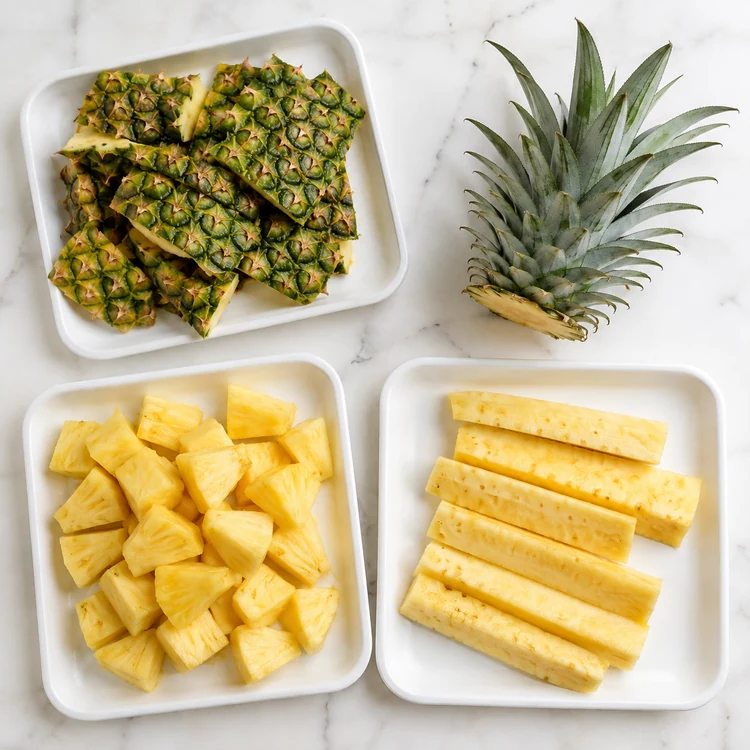
Separate food recovery from waste collection
Fermented drinks, animal feed and industrial ingredient recovery are separate processes with their own requirements. For a kitchen or food business, the first useful step is to separate edible flesh, potentially recoverable material and waste at the cutting station, then choose a route the operation can actually control. Choose the destination while the fruit is being cut. Potential food material needs its own suitable container and prompt approved use; scraps intended for compost or disposal should remain outside the food-preparation stream.
Decide the route before skins enter a waste container; material recovered for food needs a suitable starting point and handling plan.
Treat infusions, fermentation and industrial recovery as different preparations with different controls, without unsupported health claims.
Measure crown, peel, core and edible-flesh losses separately before choosing a reuse project or prepared pineapple format.
Choose a route before collecting the skins
The intended destination determines how material should be handled. Peels reserved for a food preparation cannot be collected in the same container as floor sweepings, packaging or general waste and later promoted back into food. Make the decision while the fruit is being prepared, before the skins enter a waste stream.
| Possible route | Suitable starting point | Main limitation |
|---|---|---|
| Cooked flavor infusion | Sound fruit and hygienically collected, suitable peels | Requires food handling and a defined use plan |
| Managed fermentation | A controlled recipe and process with suitable material | Time, temperature, acidity and gas production need control |
| Compost or accepted food-waste collection | Material accepted by the local system | Contamination and collection rules still apply |
| Industrial recovery | Segregated, characterized processing side streams | Requires equipment, quality criteria and an approved market |
| General disposal | Material unsuitable for the other routes | Follow the local waste arrangement |
For occasional household preparation, composting or the local food-waste service may be the most practical use. For a café, a peel-flavored drink only makes sense if the kitchen can prepare and handle it as a food product. Recovering value is useful when the new route has a purpose; collecting skins indefinitely without a destination simply creates another perishable inventory.
Food-use peels need a controlled starting point
Begin with a sound pineapple whose condition is acceptable for food preparation. Inspect the rind, base and damaged areas. A fruit with mold, leakage or deteriorating tissue should not become a source of peel tea because the flesh was going to be discarded. Food recovery starts with suitable material, not with a decision to hide a defect in another recipe.
For the preparation step that produces peel and usable flesh, see cutting pineapple into chunks.
Wash the intact fruit under running water before cutting and keep the preparation equipment clean. FDA produce guidance advises washing produce even when the peel will not be eaten and does not recommend soap or detergent for washing food. The rough pineapple surface makes careful handling relevant, but no home washing method should be presented as removing every contaminant.
If a business intends to use the outer skin as a food ingredient, review that use with the supplier and the operation's food-safety controls. The conditions acceptable for a peel that is discarded are not automatically a complete specification for a peel that will enter a beverage. Keep the material covered and identified, and move it promptly into the approved process rather than leaving a mixed collection beside the cutting board.

A cautious approach to a cooked peel infusion
A peel infusion uses pineapple skins to transfer flavor into water, after which the solids are removed. Some preparations include ginger or spices. The result should be understood as a flavored drink, not as an extraction with guaranteed medicinal effects. The amount of attached flesh, peel preparation and added ingredients can all change the taste.
For home experimentation, use only suitable skins collected during clean preparation of sound fruit, follow a reliable cooked recipe and prepare a small quantity for prompt use. Strain through clean equipment and handle the finished liquid as a perishable prepared drink. Do not interpret boiling as a universal treatment for unknown residues, spoiled raw material or an uncontrolled storage history.
For a café menu, standardize the preparation before selling it: ingredient weights, water, flavor additions, process, cooling, storage and service conditions all belong in the product instruction. A chef's successful tasting sample does not establish a commercial shelf life. If the aim is a bottled product with extended storage, that requires a separately validated process and packaging plan. Keep the decision focused on flavor and a manageable use case rather than claims about detoxification, weight loss or disease prevention.
Why rinsing and boiling are not universal fixes
Washing is useful preparation, but it does not turn an unsuitable raw material into an acceptable one. The same is true of a cooking step. Different hazards respond differently to treatment, and a household process is not a general guarantee about pesticide residues, microbial toxins or foreign material. Avoid claims that salt water, vinegar or a particular number of minutes removes "all toxins."
This distinction matters when assessing online peel recipes. An instruction can describe a pleasant drink without establishing the safety of every pineapple skin a reader might use. A business needs to know where the material came from, how it was handled and what the intended process achieves. It should not copy a preservation claim from a recipe comment or infer safety from the drink's acidity.
If the material has already entered a waste bin, mixed with cleaning chemicals or developed mold, choose the appropriate non-food route. Do not taste it to decide whether it can be salvaged. A clear rejection rule saves staff from making improvised judgments under pressure. It also protects the food-recovery program from being used as a reason to accept poorer raw material in the first place.
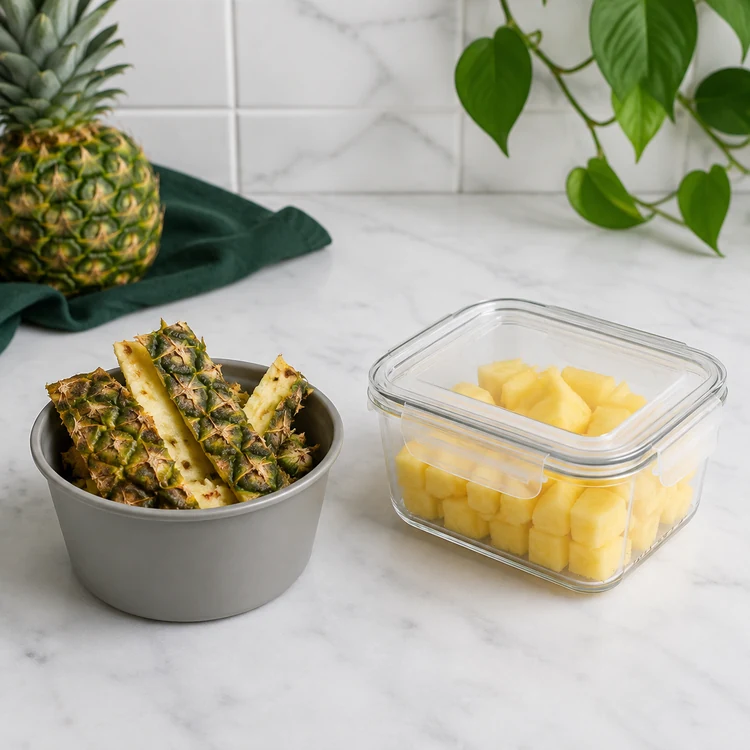
Fermented drinks need a separate process
Tepache and related pineapple preparations are familiar examples of fermented drinks made with pineapple material and added sugar. Fermentation is a real food process, not merely leaving peels in sweetened water until bubbles appear. The organisms present, ingredient proportions, time, temperature and resulting acidity can vary, especially in an uncontrolled wild fermentation.
For a commercial operation, use a process designed and verified for the actual recipe and market. Consider the product's microbiological controls, alcohol potential, packaging and storage. Gas production can create pressure in a closed container, so an improvised sealed-bottle method should not be treated as a casual extension of a peel infusion. A bubbly appearance does not establish that the fermentation has reached an acceptable endpoint.
Visible mold is not an instruction to skim the surface and continue. An abnormal batch needs rejection or a qualified investigation under the operation's system. This article does not provide a universal fermentation schedule because the information needed to validate one is absent. A kitchen can still reduce waste through suitable collection or composting while a separate fermented beverage project receives the technical attention it requires.
Composting is often the simplest option
Where a composting system accepts fruit scraps, pineapple skins can join the appropriate organic stream. Check the requirements of the actual system, especially for a municipal collection, community compost service or commercial waste contractor. Their accepted materials and handling arrangements may differ from a small garden compost pile.
Keep stickers, ties, plastic packaging and other non-compostable material out of the collection. If the operator's guidance calls for smaller pieces, prepare them safely without turning waste handling into an unnecessary knife task during a busy food service. Use a suitable covered collection container and empty it on the agreed schedule. The goal is orderly separation and prompt transfer, not a decorative bowl of scraps that attracts pests near food preparation.
For a business, measure the material going into this route. A waste log can show whether peeling practice, purchasing quality or batch size is creating avoidable loss. Composting gives an appropriate destination to genuine waste; it should not conceal excessive removal of usable flesh. Review the cutting process as well as the waste collection so prevention and recovery can improve together.
Keep non-food experiments away from food equipment
Pineapple peel is sometimes promoted for homemade cleaners, crafts or other experiments. Keep those projects separate from edible preparations. A liquid made from fruit scraps is not a validated food-contact sanitizer, and its smell or acidity is not a substitute for a cleaning product used according to its instructions.
If a non-food project is undertaken, use clearly identified containers and equipment and prevent the material from returning to food service. Do not store an unlabeled experimental liquid beside beverage ingredients. Avoid applying unverified mixtures to food-contact surfaces, where residues and ineffective cleaning can create a new problem rather than solve a waste issue.
Some non-food uses require specialist knowledge too. Animal feed suitability depends on the animal, material condition, diet and applicable arrangements; it is not enough that a fruit is edible to humans. A business should use an approved outlet with defined acceptance criteria rather than hand mixed food waste to an unknown recipient. Treat a proposed use as a real material destination with requirements, not as a list of imaginative possibilities that are assumed to work.
What pineapple processors do with side streams
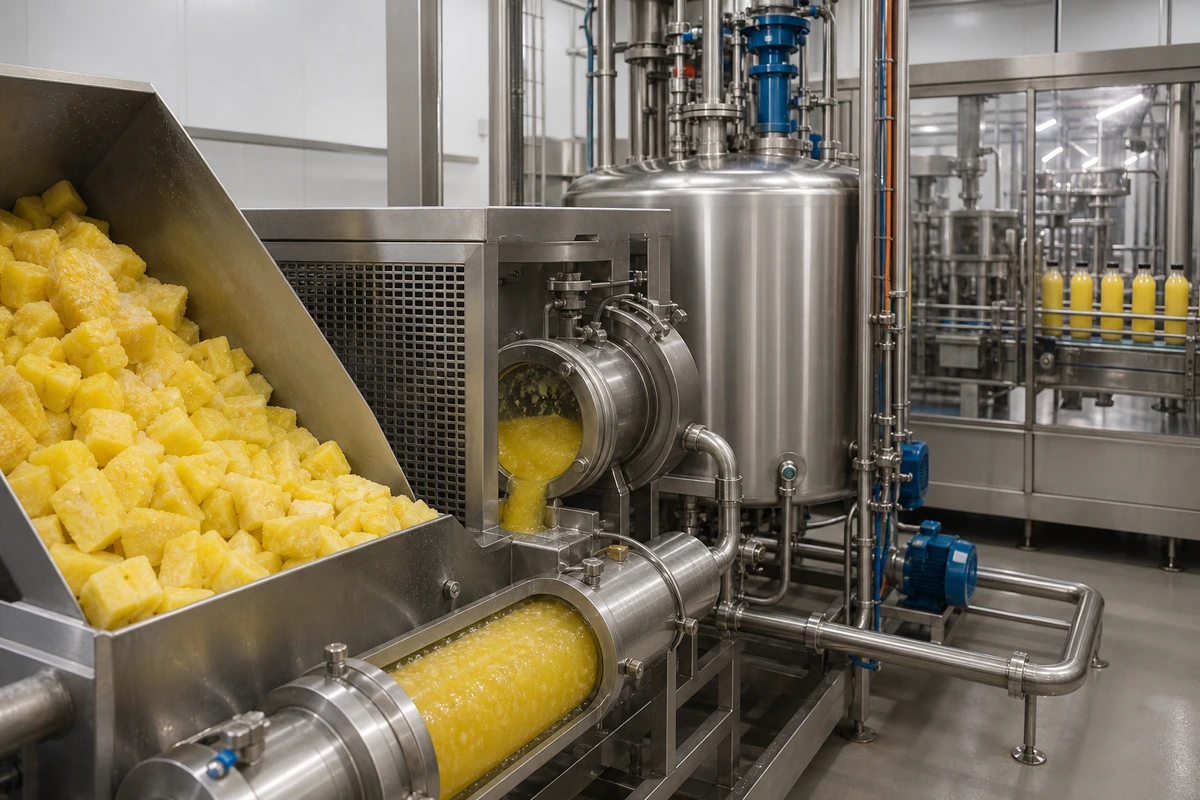
Commercial pineapple processing separates several streams: saleable flesh, core material, peel-associated material, liquid and rejected matter. These streams differ in composition and suitability. A controlled plant may recover useful juice or other material through equipment and processes that are not available at a kitchen cutting board.
FAO's tropical fruit juice processing discussion describes pineapple processing and recovery operations. That context supports a distinction between an engineered recovery stream and arbitrary household skins. Industrial recovery depends on separation, equipment, process control and an intended specification. It should not be described as proof that every discarded rind is suitable for drinking.
For a processor evaluating a side-stream project, characterize the material first. Measure quantity, consistency, contamination risks, collection timing and the cost of moving it to the next operation. Then identify a buyer or internal use with clear acceptance requirements. A technically possible extraction may still be impractical if the side stream is too variable, collected too slowly or expensive to stabilize. The useful commercial question is what acceptable product can be made reliably from the available material.
Measure peel loss without confusing it with flesh yield
Weigh the whole input and each defined output separately. Crown and base trim, peel, core, rejected flesh and acceptable chunks should not all be called "skin." That distinction makes the waste calculation useful. If most discarded mass is actually edible flesh left on thick peel strips, the first improvement may be cutting practice rather than a new peel recipe.
Consider an illustrative 20 kg preparation trial. It might produce 10 kg of accepted chunks, 6 kg of peel and attached trim, 2 kg of crown and base material, 1 kg of core and 1 kg of other losses. These are example accounting figures, not standard pineapple proportions. They add back to the input and make the decisions visible: which losses are unavoidable for the specification, and which deserve investigation?
| Record | Why separate it? |
|---|---|
| Accepted flesh | Establishes the ingredient actually available |
| Peel and attached flesh | Shows the effect of peeling depth |
| Core | Reflects the chosen core-removal specification |
| Crown and base | Avoids calling all non-edible mass peel |
| Rejected or spilled material | Makes quality and handling losses visible |
Repeat the trial across representative fruit. A single unusually large or damaged pineapple is not a purchasing yield standard. Keep the preparation method consistent so the numbers explain the material rather than the operator's changing approach.
A useful waste review can compare two preparation sessions with the same accepted-chunk standard. In the first session, the operator removes thick peel strips quickly. In the second, the first peel is thinner and remaining eyes are removed separately. Record total preparation time, accepted flesh and the amount of flesh visibly attached to the peel stream. Do not change the core specification between sessions, because that would obscure the effect being tested.
The result may favor either method depending on the fruit, labor and required appearance. A fine trim that recovers more flesh can be worthwhile for one operation and too slow for another. The decision should be based on measured output and cost, not a general promise that careful peeling always saves money. Keep spoiled-fruit losses separate so poor incoming quality does not unfairly appear as an operator's cutting loss.
If a peel-recovery project is proposed, compare it with the simpler prevention option. Recovering flavor from skins that carry excessive edible flesh may be less useful than retaining that flesh in the main product. Prevention and recovery are different decisions, and the waste log should make both visible.

When prepared pineapple changes the waste calculation
Buying prepared pineapple moves peeling and cutting away from the customer's kitchen. That can reduce on-site peel volume, labor and preparation variability. It does not mean agricultural or processing waste has disappeared. A responsible comparison distinguishes less waste at the user's site from a verified reduction across the whole supply chain.
We supply frozen pineapple in formats matched to different uses. For a foodservice kitchen, prepared chunks may be useful when demand fluctuates and whole-fruit preparation creates frequent leftovers. For a processing operation, the relevant comparison includes cut specification, usable yield, thawing behavior and the quantity required by the recipe.
Compare incoming cost with acceptable output. Include the labor and waste handling needed for whole fruit and the storage and handling needed for frozen supply. If a frozen ingredient releases liquid during the buyer's process, determine whether that liquid remains useful in the recipe. Do not count it as waste automatically, and do not count it as saleable chunks if the application requires drained pieces. The measurement should follow the actual job.
Build a practical waste-separation workflow
A simple process at the cutting station can prevent most confusion about where skins should go. The containers and instructions should be easy for staff to use during a busy shift, with the food-recovery route clearly distinguished from non-food collection.
- Inspect the incoming fruit. Release suitable fruit for preparation and keep rejected material separate. Do not send spoiled fruit into a food-recovery route.
- Prepare clean equipment and containers. Establish where edible flesh, any approved recoverable food material and non-food scraps will go before cutting starts.
- Separate at the point of cutting. Keep packaging, stickers and unrelated waste out of the fruit streams. Avoid recovering material after it has entered general waste.
- Record useful quantities. Weigh the streams when conducting a yield or waste review, using consistent definitions and tared containers.
- Transfer promptly. Move edible material into its approved process or storage, and transfer non-food scraps according to the collection arrangement.
- Review the cause of loss. Compare results by fruit lot and preparation method. Improve avoidable cutting and spoilage losses before expanding recovery projects.
Assign responsibility for each destination. A container labeled for recovery is only useful if somebody knows when it must be processed or removed. If the approved outlet is unavailable, use the defined alternative rather than allowing material to accumulate without a controlled purpose.
Assigning containers is only half of a separation plan. The kitchen also needs a named next step for each stream. A food-use container needs a defined recipe or process, an appropriate hold and a responsible person. A compost container needs an accepted collection route and removal schedule. A rejected-material container needs a disposition that keeps it out of food preparation. Without these destinations, labels can create the appearance of control while scraps accumulate.
Consider a café that cuts pineapple in the morning but only prepares a peel infusion occasionally. It should not reserve every day's skins automatically. Decide in advance whether the approved preparation will take place, and collect only the amount that fits that process. If the preparation is cancelled, use the defined non-food route instead of carrying an uncertain container forward indefinitely.
Record any extra ingredients and packaging used by the recovery project. A drink that reduces peel disposal but creates substantial unsold beverage and container waste may not improve the operation overall. Track accepted servings, discarded liquid and staff time alongside the amount of peel diverted. This does not require a full environmental analysis to be useful; it gives the business an honest operational comparison.
For external sustainability claims, retain the evidence and the scope. A measured reduction in the kitchen's peel bin is a specific result. It should not be expanded into an unsupported claim about the entire supply chain or a guaranteed environmental benefit from every reuse route.
Discuss frozen pineapple formats and recovery
The right prepared format depends on what the kitchen is trying to eliminate. If the problem is inconsistent portion size, frozen pineapple cubes may deserve a trial. If the product will be blended or cooked in a filling, frozen pineapple pieces may provide a more appropriate specification. Confirm the available forms rather than treating every prepared cut as equivalent.
State the required size range, core and eye tolerance, intended process and accepted texture. Then test a sample in the actual application. Record the prepared input, acceptable finished output and any liquid or fragments removed. These results show whether the change reduces the kitchen's practical burden and whether the eating quality remains suitable.
Send the quantity, packing preference, destination and delivery timing with the inquiry. We confirm MOQ, lead time and order-specific documentation during review. If sustainability reporting is part of the program, identify the evidence needed and the boundary of the claim. Reduced peel handling at one site is a useful operational result; broader environmental claims need broader evidence.
Questions about pineapple peel reuse
Should all pineapple trim be recorded as skin waste?
No. Separate crown and end trim, peel and attached flesh, removed core, rejected material and accepted chunks. Those categories reveal whether loss comes from the fruit, the cut specification, preparation technique or handling, and they support more useful waste-reduction decisions.
What if the planned peel-recovery recipe is cancelled?
Use the operation's defined alternative route within its handling plan. Do not carry an uncertain food-use container forward indefinitely because it was labeled for recovery. A destination, responsible person and time limit should be agreed before collection starts.
Source frozen pineapple with GreenLand-food
GreenLand-food is a professional frozen pineapple supplier and manufacturer in China, providing factory-direct wholesale supply for importers, food manufacturers, foodservice distributors and private-label programs.
Tell us the product form, required specification, packing and quantity, along with the application, destination and delivery timing. Include seed or cut preferences where relevant, private-label requirements and the documents your team needs. We will review the sample, MOQ, lead time and loading arrangement for the proposed order.