


What Does Broccoli Taste Like?
Sep 09, 2026
Leave a message
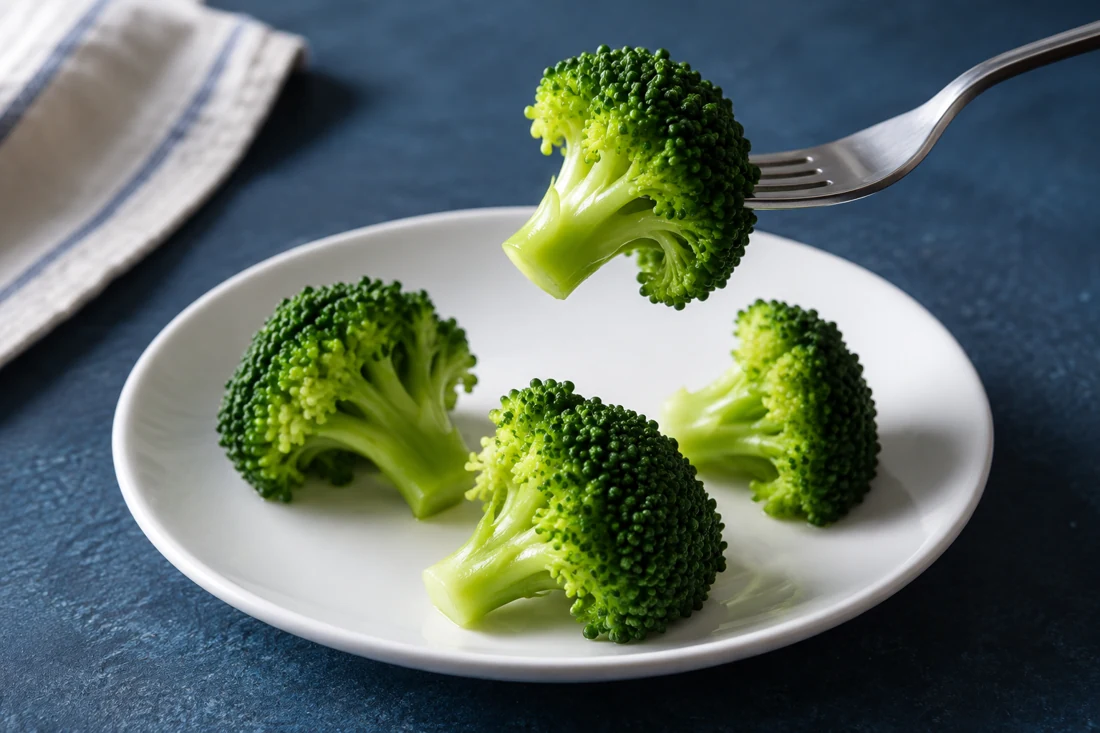
The familiar cabbage-like aroma belongs to its brassica character, but prolonged cooking can make sulfur notes much more noticeable and leave the vegetable soft.
There is no single broccoli flavor independent of the piece and preparation. Buds, peeled stems and leaves feel different, and maturity, storage and cooking change what reaches the plate. For a buyer comparing frozen broccoli, the useful question is how a representative sample tastes after the intended process. At GreenLand-food, we connect flavor discussions with cut size, preparation and the finished application so that a sample result can be understood and repeated.
Broccoli tastes green, mildly bitter and slightly sweet
Green is a practical sensory word for the fresh vegetable character, rather than a claim that everyone will describe broccoli in exactly the same way. Some people notice its slight bitterness first; others notice a mild sweetness after cooking. Earthy or peppery can also fit particular raw samples. The University of Rhode Island's broccoli preparation sheet uses a similar everyday vocabulary to introduce the vegetable. URI's broccoli guide provides a useful starting description without reducing flavor to a single adjective.
Bitterness is not automatically a defect in broccoli. A modest bitter edge can be part of the expected flavor, especially when the vegetable is served plain. The question is whether the intensity suits the product and dish. A strongly seasoned sauce can mask it, while a simple steamed side makes it more obvious. When comparing samples, taste them under the same conditions before deciding that one has a different raw-material character. Seasoning and cooking can otherwise overwhelm the comparison.
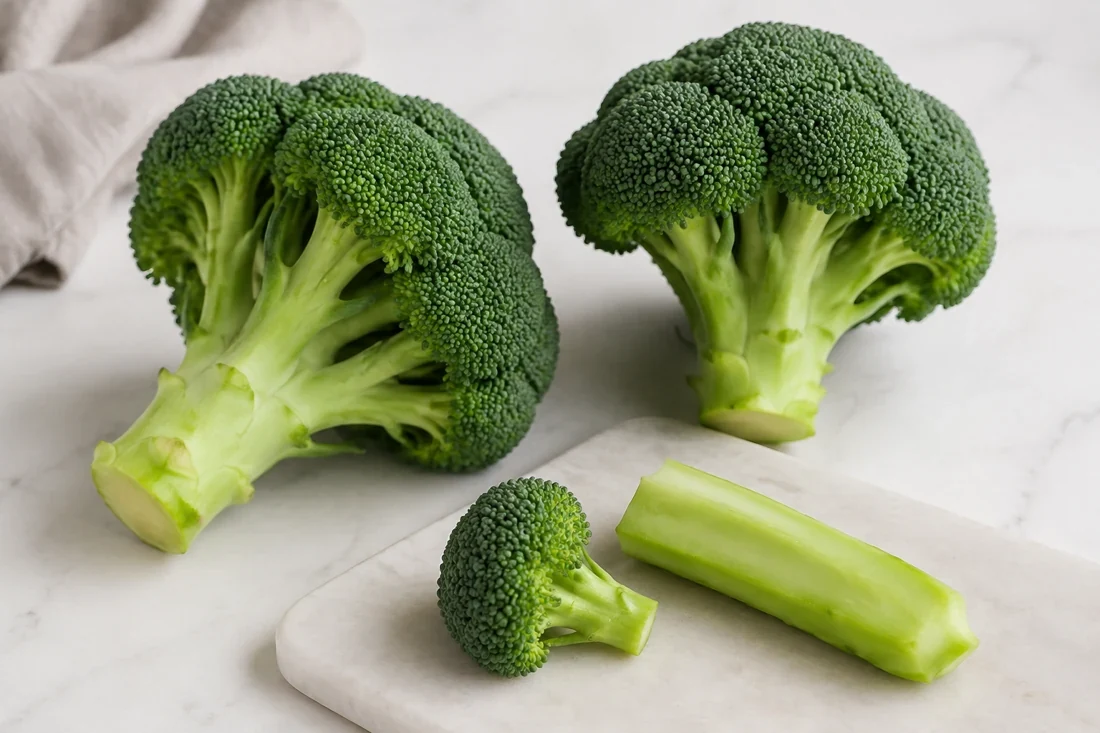
Fresh broccoli usually combines green notes with mild bitterness and subtle sweetness.
Sweetness in broccoli is usually subtle rather than dessert-like. It can be easier to notice in a tender peeled stem or a well-cooked piece that has not become dominated by harsh aroma. Browning adds another layer of flavor, so a roasted floret may seem sweeter or more rounded than a raw one even when no sweetener is added. Describe that as the experience of the preparation, rather than assigning a fixed sweetness score to every broccoli variety and product format.
Aroma and texture influence what people call taste. A soft, waterlogged floret with a strong cabbage smell may be described as tasting bad even if the complaint is partly about smell and mouthfeel. A firm, lightly browned piece can make the same broad vegetable identity feel more appealing. Separating the observations helps a cook make a useful adjustment. Ask whether the problem is bitterness, sulfur aroma, blandness, wateriness or a tough stem instead of treating all dissatisfaction as one flavor defect.
For a simple comparison, use a few plain cooked pieces at a similar serving temperature and describe what is actually present. Note the initial aroma, the first bite, the stem texture and any lingering taste. Avoid adding garlic, cheese or a strong sauce until the basic product has been assessed. Those additions may be excellent in the final recipe, but they make it harder to identify the characteristics of the broccoli itself during an ingredient approval.
Florets, stems and leaves give different sensations
The floret combines many small buds with branching stem tissue. That structure holds water, sauce and seasoning differently from a smooth stem slice. Raw buds can feel coarse or crisp, while cooked florets become more yielding. The ratio of buds to stem changes each bite. A pack with long stem sections may therefore feel different from a pack of compact florets even if both are described simply as broccoli. The cut specification is part of the sensory result.
For a closer explanation, see What Are Broccoli Florets?.
The outer portion of a substantial stem can be fibrous, while the peeled inner tissue is often milder and more tender when prepared appropriately. This is why a tough bite does not necessarily describe the entire stem. In a kitchen using fresh broccoli, trimming or peeling can change the result. In a purchased frozen floret, the agreed stem length and size distribution affect what the customer receives. The product should be evaluated in the supplied form rather than assuming extra trimming will always be practical.
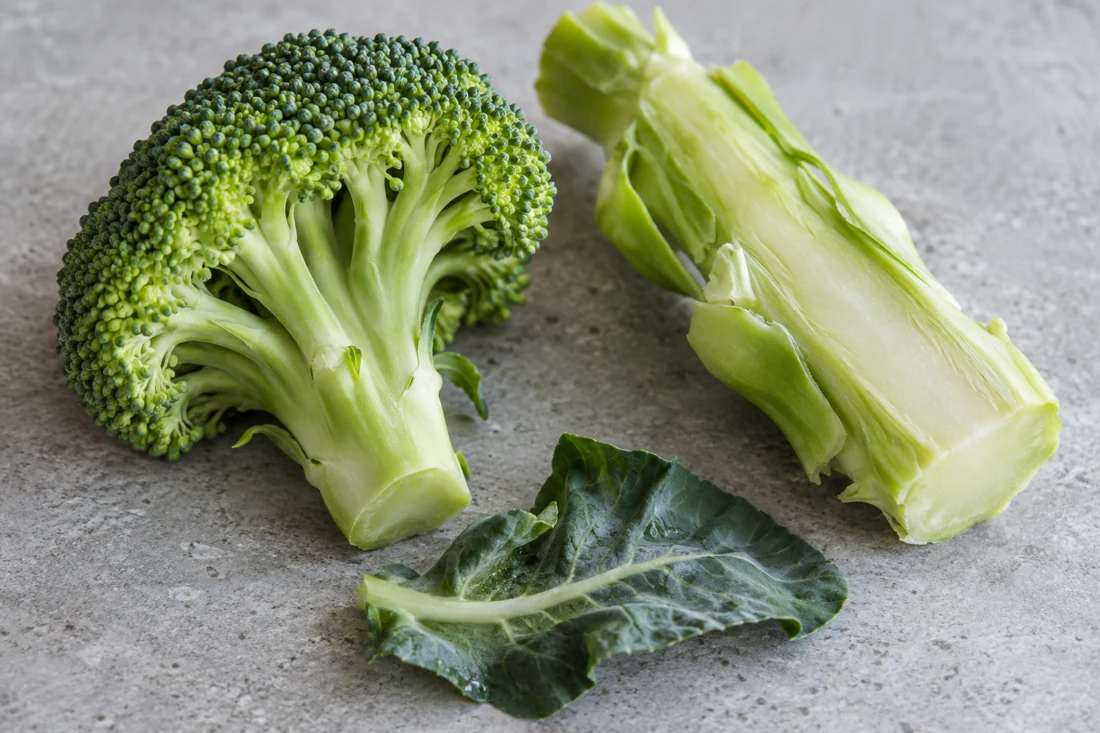
Florets, peeled stems and leaves contribute different textures. Illustration.
Leaves contribute a different texture again. They wilt and fold instead of retaining the branching form of a floret. Their green or bitter notes can be suitable in a dish designed for leafy vegetables, but loose leaf pieces may be undesirable in a pack sold for uniform florets. The sensory question and the specification question are related but distinct. An edible, acceptable-tasting leaf can still be outside the intended product composition when the buyer has ordered a particular floret format.
Piece size changes the balance between these tissues. A larger floret may contain a thicker stem and a greater range of tenderness from surface to center. Small pieces can soften or break more readily during a process designed for large ones. If a tasting sample contains a mixture of sizes, compare like-sized pieces or record the distribution. Otherwise, a difference in cooking through the stem can be mistaken for a difference in the underlying flavor of the vegetable.
For product development, decide which sensation the broccoli should contribute. A chunky soup may need a recognizable tender stem and bud structure. A puree needs a smooth finished consistency. A roasted side may value intact surfaces that can brown without excessive breakage. These uses do not require the same cut. Describing the desired eating role helps the supplier and buyer choose a sample that answers the recipe's needs rather than searching for an abstract best-tasting floret.
Maturity and storage change the flavor
Broccoli is harvested before its flower buds open into a flowering display. As the head matures and condition changes, the appearance and eating quality can shift. Tight buds are a familiar quality cue, while yellowing signals a change that deserves attention. Illinois Extension's growing guidance emphasizes harvesting at the appropriate head stage. Illinois Extension on broccoli provides the crop context behind that visual cue, although a single photograph cannot establish the full handling history of a delivered head.
Freshness at purchase is only part of the story. Time and handling after harvest affect aroma, firmness and moisture. UC Davis identifies temperature, humidity and exposure to ethylene among the factors relevant to broccoli quality. This supports treating storage conditions as part of a sensory investigation rather than blaming variety alone. UC Davis's broccoli produce facts describe commercial postharvest behavior; their controlled-storage figures should not be copied into a household refrigerator promise.
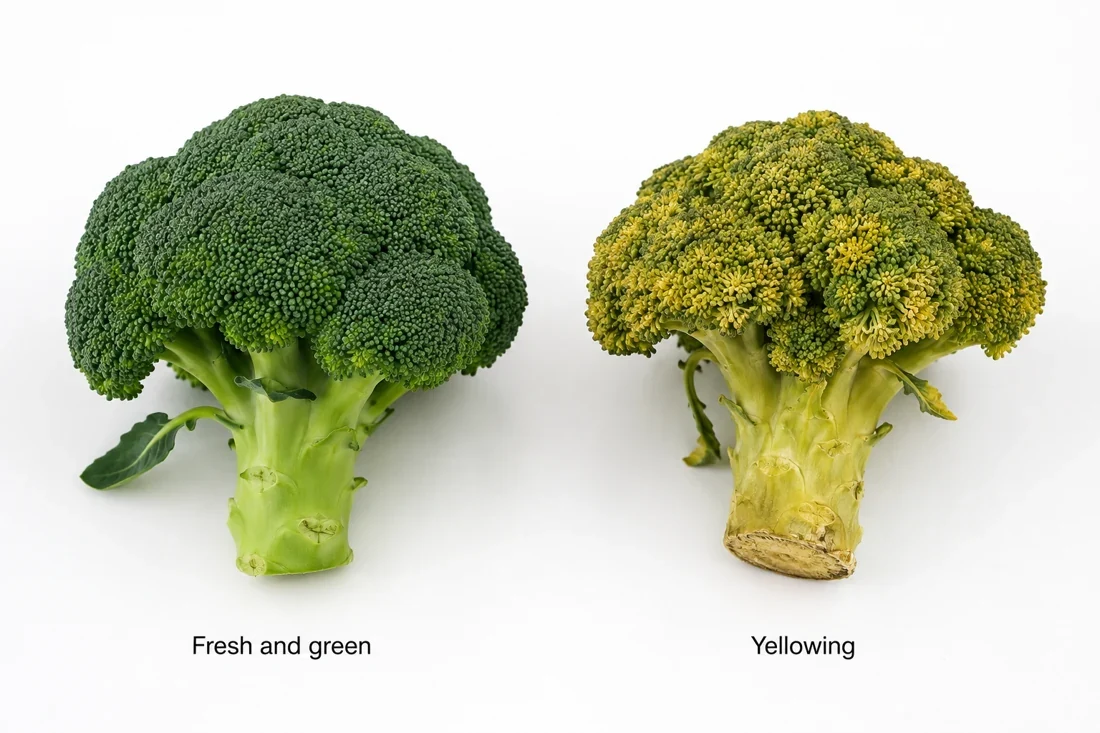
Green tight buds and yellowing tissue represent different quality conditions.
A wilted head and a yellowing head may not present the same problem. Moisture loss can reduce crispness, while yellowing reflects a different visible quality change. Neither can be fully understood from the word old alone. In a sample record, describe the observed condition before cooking and then describe the finished result. That makes it easier to connect a tough or dull eating experience with the material actually received, rather than relying on a vague freshness judgment after the food has been prepared.
Strong off-odors require care. Ordinary brassica aroma during cooking is not the same as a clearly abnormal smell associated with deteriorated product or unsuitable storage. Do not taste a suspect sample simply to decide whether it can be rescued. Inspect the product under the applicable food-quality and safety procedures and investigate the handling history where relevant. A sensory article can explain normal flavor variation, but it should not normalize spoilage or suggest that seasoning can make uncertain material acceptable.
For commercial frozen supply, review the condition of the pack and the lot information alongside the cooked sample. Packaging damage, unplanned thawing or temperature variation can affect the result and should be investigated according to the product's requirements. A poor trial does not automatically establish a crop defect, just as an attractive frozen appearance does not guarantee a good finished dish. Keep the raw-material, processing, storage and cooking possibilities separate until the evidence points to a useful explanation.
Cooking changes aroma, sweetness and bite
Cooking softens broccoli and changes its aroma. A brief, suitable cook can retain a recognizable bite, while longer heating moves the texture toward softness. The best endpoint depends on the dish: a puree needs a different structure from a plated floret. The mistake is to use one cooking time for every size and purpose, then attribute all variation to flavor. A sensory comparison should state the preparation clearly enough that another person can reproduce the same endpoint.
Broccoli's sulfur-containing compounds contribute to its characteristic aroma, and heating can change the volatile compounds that are released. Research on a sulfur-containing broccoli compound, S-methyl cysteine sulfoxide, helps explain one part of that chemistry. The practical kitchen observation is simpler: prolonged cooking can make sulfurous or cabbage-like notes more prominent. The published study indexed by PubMed supports the chemistry connection, but it is not a reason to claim a health effect or predict one exact aroma from every cooking method.
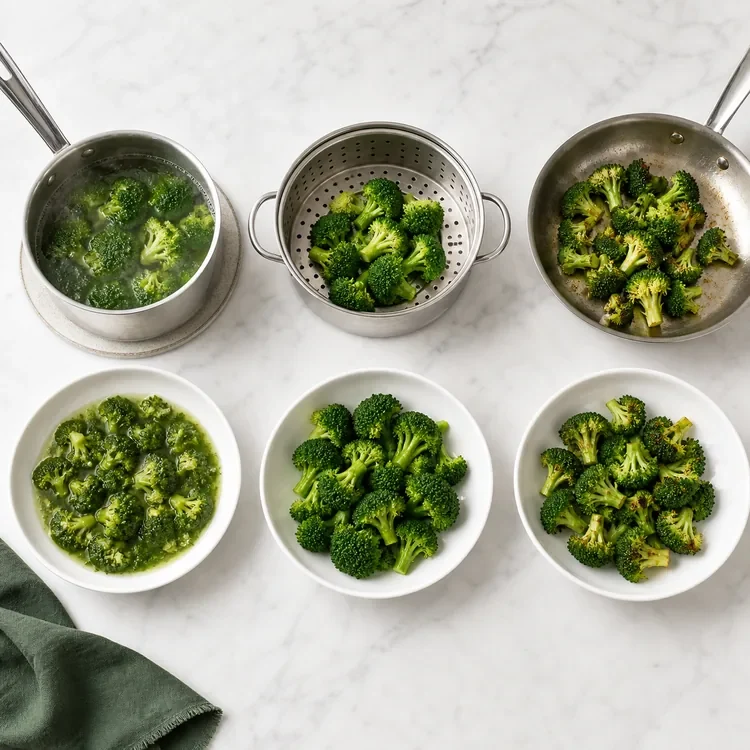
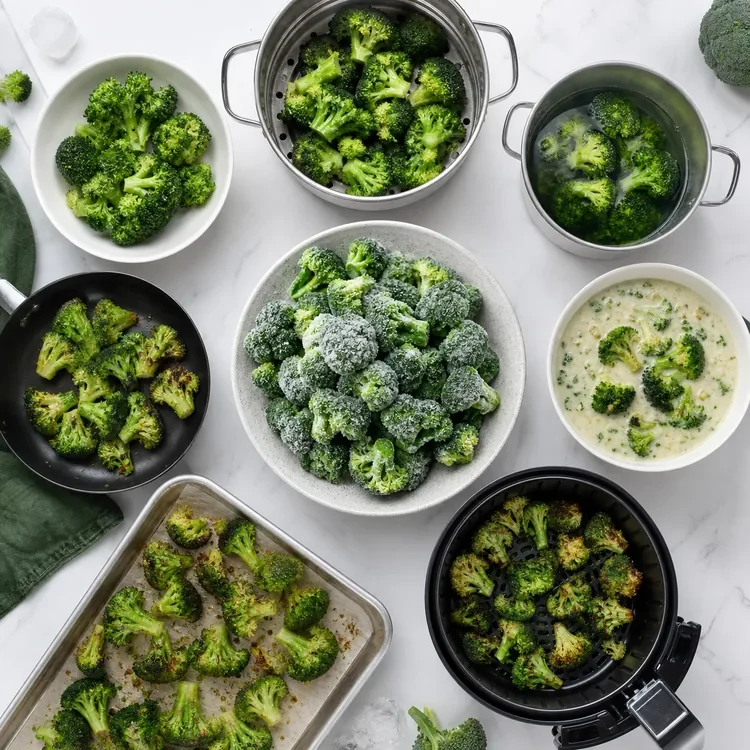
Different cooking methods produce different surface moisture and browning.
| Preparation | Sensory direction | What to watch |
|---|---|---|
| Raw suitable pieces | Firm, green and sometimes peppery | Stem fiber and a more exposed bitter edge. |
| Simply steamed or boiled | Softer bite and characteristic brassica aroma | Excess water and prolonged heating. |
| Roasted | Browning and a drier exterior | Tray loading and uneven piece size. |
| Cooked through a ready meal | Combined effects of sauce and reheating | The final consumer or service preparation. |
Steaming and boiling expose the vegetable to different water conditions, while roasting adds dry heat and surface browning. A boiled floret may carry more surface water into the serving dish; a roasted floret may have browned edges and a drier exterior. These differences influence both flavor and mouthfeel. Compare the method that fits the recipe rather than expecting all cooked broccoli to taste alike. Illinois Extension's preparation guidance also cautions against cooking that sacrifices the vegetable's quality. Its broccoli preparation page gives the practical context.
Crowding and drainage can alter a method's result. A tray intended for roasting may behave more like a moist cooking environment if the pieces release water and have little space around them. A steamed batch can become watery on the plate if it is transferred with excess liquid. These are method observations, not universal defects of frozen or fresh broccoli. When the result is bland or soggy, check the loading and handling before deciding the ingredient itself cannot work in that application.
Seasoning should follow the role of the vegetable. Acid, salt, fat, herbs and other ingredients can change how broccoli's bitterness and aroma are perceived. A lemon dressing may suit a simple side, while a cheese sauce or savory broth creates a different balance. For recipe development, establish an acceptable plain product first, then assess the complete dish. This avoids using strong flavors to conceal a texture or aroma problem that would remain inconsistent across later production batches.
Blanching and freezing affect the finished texture
Commercial frozen broccoli is commonly prepared and blanched before freezing, with the actual process defined for the product. Blanching is part of controlling quality during frozen storage; it is not simply a final serving cook. The supplied vegetable may still require further cooking according to its label and intended use. Buyers should confirm that processing state rather than deciding from the green color or the fact that a thawed floret feels softer than a raw fresh one.
Freezing and subsequent preparation can change the tissue's firmness and water behavior. A thawed floret will not necessarily resemble raw fresh broccoli in texture, and that comparison may be irrelevant to a cooked dish. The more useful test is the finished application prepared from each format using an appropriate method. A soup, sauce or ready meal may use frozen broccoli successfully without reproducing the sensation of raw florets. The required result should be defined by the food being made.

Green broccoli florets with varied stem lengths. Evaluate texture after the intended final cooking process.
Cut size and cooking history interact. A small blanched floret that goes through a long sauce cook and later reheating may become much softer than intended. A larger piece may retain more structure but require a different preparation to avoid a firm center. Neither result can be predicted from the word IQF alone. Include all stages of the customer's process in the sample trial, especially where the broccoli is cooked, chilled or frozen as part of a larger assembled product.
At GreenLand-food, our frozen broccoli floret specifications provide a basis for discussing size ranges and product characteristics. We review the selected format against the application, then confirm the proposed order details. A sample should represent the intended supply and be assessed with a recorded method. That gives texture comments such as too soft or too much stem a clear context, rather than leaving the supplier to guess what preparation produced the observation.
Frozen storage and packaging also belong in the discussion when quality changes are observed. Follow the labeled conditions and keep the sample handling consistent before the trial. Do not compare a properly held sample with one that has undergone unknown thawing and refreezing, then attribute the difference solely to the product source. Where the history is uncertain, obtain a sound representative sample. A reliable tasting begins with material whose identity and handling can be understood.
Match broccoli's flavor to the finished dish
Broccoli's green flavor can work well where the dish gives it a clear role. In a simple side, the vegetable remains exposed, so a pleasant bite and balanced brassica aroma matter. In a rich sauce, its slight bitterness can provide contrast, while the sauce contributes much of the overall flavor. In a broth or soup, the cooking time and piece size determine whether the broccoli remains distinct or becomes part of the body. These are different briefs for the same ingredient.
For a closer explanation, see Is Broccolini the Same as Broccoli Rabe?.
For pasta and grain dishes, consider how the pieces distribute through a portion. Large florets can dominate individual bites, while very small pieces may break into the sauce. A cut that mixes evenly can make the broccoli's flavor more consistent across the dish. The sauce's salt, acidity and fat then shape the final balance. Test the completed portion rather than only a plain floret, because an ingredient that is acceptable alone may be too prominent or too faint once the other components are present.
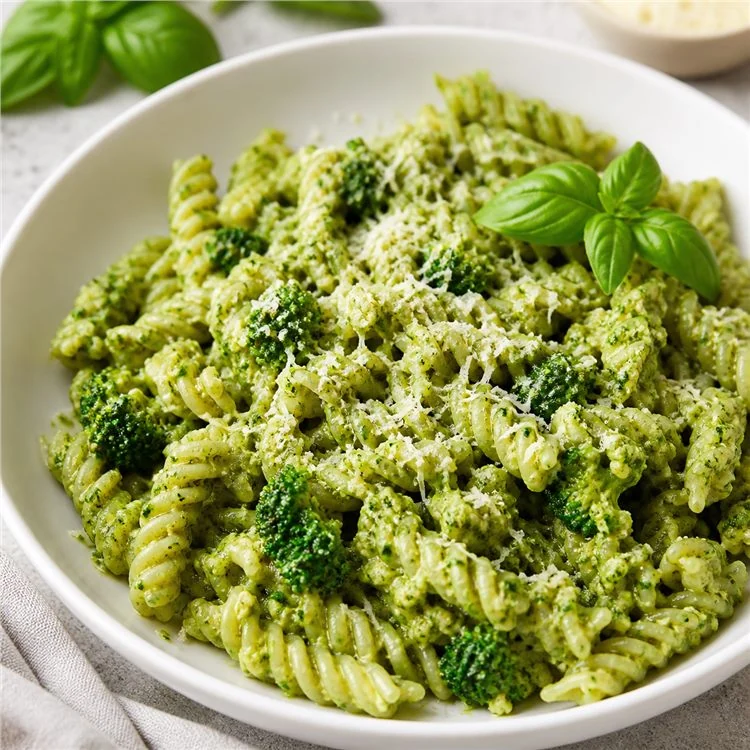
A pasta sauce changes how broccoli's flavor and piece size are experienced.
For puree, the emphasis shifts toward smoothness, color and the absence of an objectionable lingering aroma. Stem proportion and the full cooking process can affect the texture that reaches the blender. A supplier's attractive whole-floret photograph is less informative here than a trial of the actual puree. Conversely, a format suitable for blending may be a poor choice for a retail bag where intact appearance matters. Application fit should guide the purchase more strongly than a general premium description.
For ready meals, include the final reheating step in the tasting. Broccoli can be acceptable at assembly and too soft or aromatic after the consumer's cook. The sauce and packaging can also influence the eating experience, so the complete product needs evaluation. Our article on ways to use frozen broccoli offers related application ideas. This flavor guide focuses on the sensory questions that help choose among them rather than repeating a full set of recipes.
If a dish is intended for customers who dislike pronounced brassica flavor, start with the preparation and portion rather than promising broccoli will become flavorless. A suitable cook, complementary seasoning and an appropriate amount can produce a more balanced result. The ingredient still has its own identity. Describe the desired outcome honestly, such as a mild green note within a creamy sauce, so development trials have a practical target and do not depend on an unrealistic expectation of no vegetable flavor at all.
Evaluate a frozen broccoli sample consistently
Begin by identifying the sample: supplier, product name, lot, size range, pack and supplied state. Record how it was stored and prepared before tasting. This information may seem administrative, but it determines whether two results can be compared. A note that one sample was better has limited value if one was steamed from frozen and the other was thawed and boiled for much longer. Keep the method stable enough that the product difference is the main variable under review.
Use a plain preparation appropriate to the product for the first sensory check. Compare representative pieces, including the expected range of stem and floret sizes, at a similar serving temperature. Describe aroma, bitterness, sweetness, stem tenderness, bud texture and water release separately. A short vocabulary agreed by the tasting team is more useful than a long list of abstract descriptors. The goal is to make observations that can guide product selection or process adjustment, not to make the tasting sound elaborate.

A broccoli floret measured with a caliper. Compare samples using the same cooking method.
- Record the sample identity, size range, supplied state and handling history.
- Prepare representative pieces with the same suitable plain method and serving conditions.
- Describe aroma, bitterness, sweetness, bud texture and stem tenderness separately.
- Repeat the assessment in the complete dish, including holding or reheating where relevant.
Then test the sample in the actual application, including sauce, holding and reheating where relevant. Record which differences remain noticeable and which no longer matter. A small difference in plain aroma may disappear within a strongly seasoned filling, while excessive softness may remain a problem. This second trial prevents the team from rejecting or approving an ingredient on a plain-tasting feature that has little relationship to the finished product's requirements.
We can review a frozen broccoli inquiry more effectively when the buyer shares those observations with the intended cut, pack and order volume. If a sample has too much stem for the dish, the next discussion can focus on the format. If it becomes too soft after a long cook, the process and size can be reviewed together. We will confirm the available options against the proposed order rather than claiming that one generic broccoli specification will deliver every possible sensory result.
Broccoli's usual flavor is a combination of green, mildly bitter and subtly sweet notes, supported by the texture of buds and stems. Strong sulfur aroma, wateriness or toughness often points to a more specific question about condition or preparation. Naming that question makes improvement possible. For a commercial buyer, the most useful flavor description is one tied to a representative sample and the finished dish, so the approved result can be recognized when the next delivery arrives.
Discuss frozen broccoli supply with GreenLand-food
GreenLand-food is a professional frozen broccoli supplier and manufacturer in China, providing factory-direct wholesale supply for importers, food manufacturers, foodservice distributors and private-label programs.
Share the broccoli cut, cooking process and sensory target, together with pack, volume and destination.